![[personal profile]](https://www.dreamwidth.org/img/silk/identity/user.png)
Operation Gran Tofurismo: Part 2
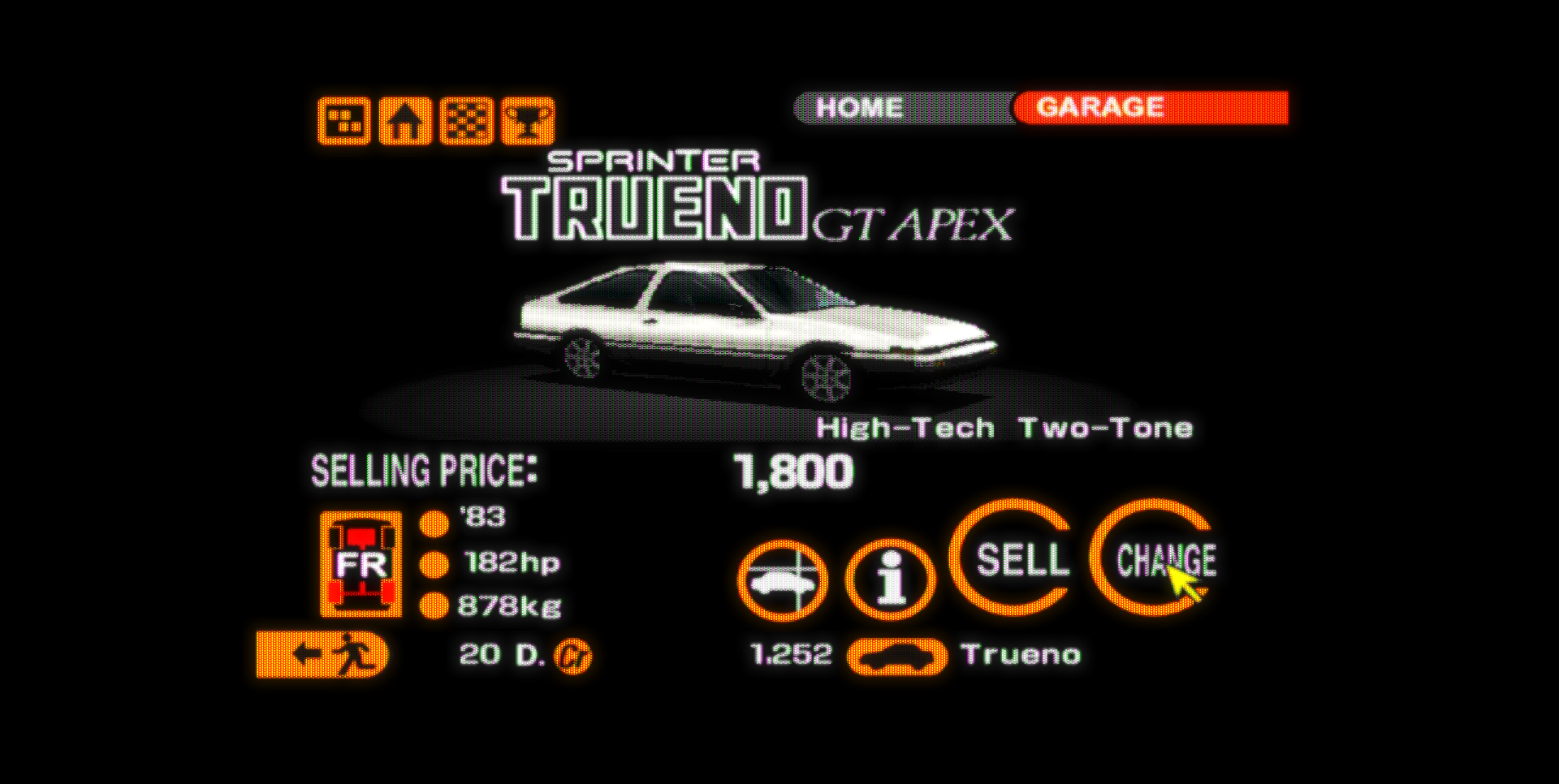
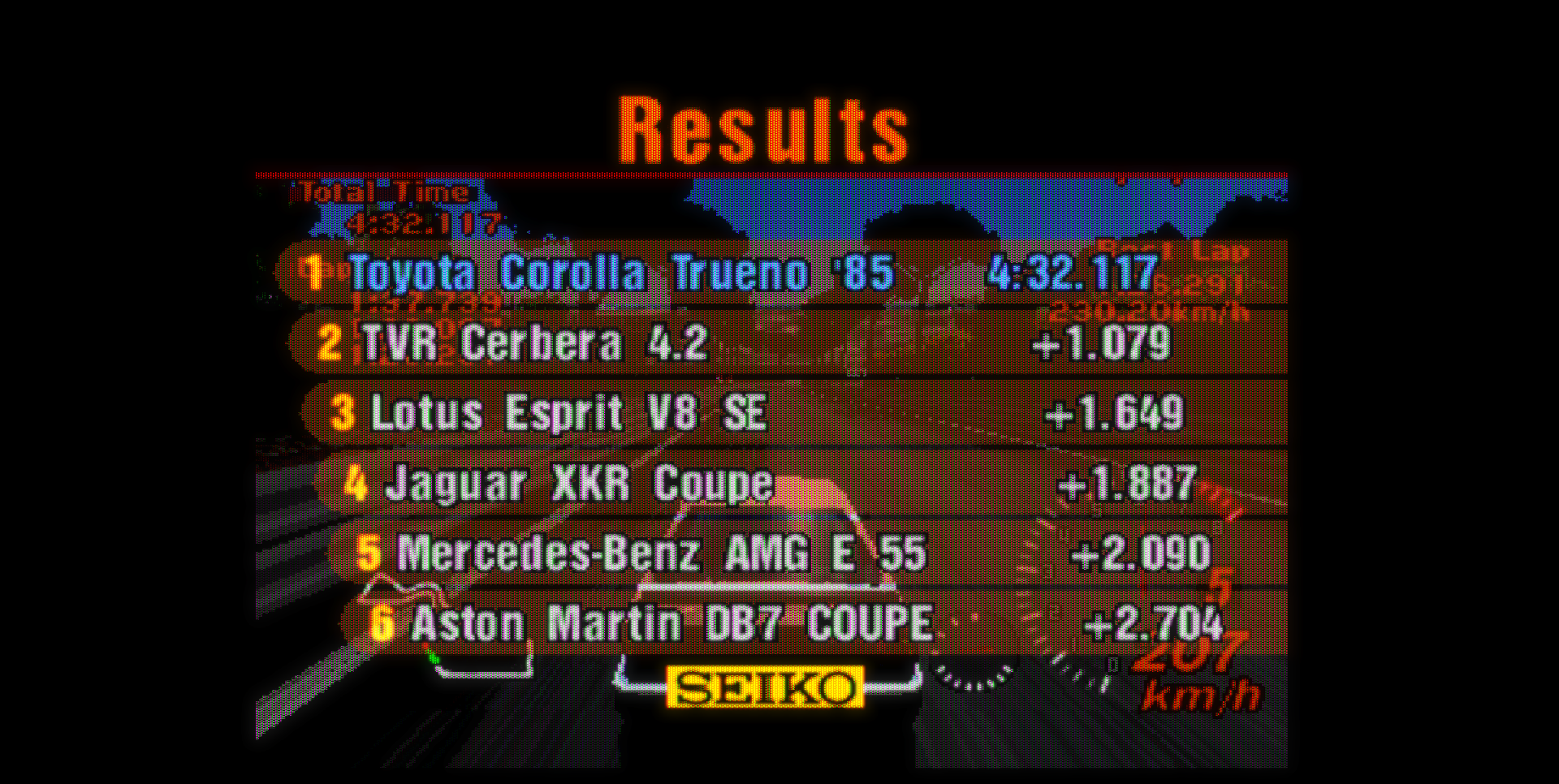
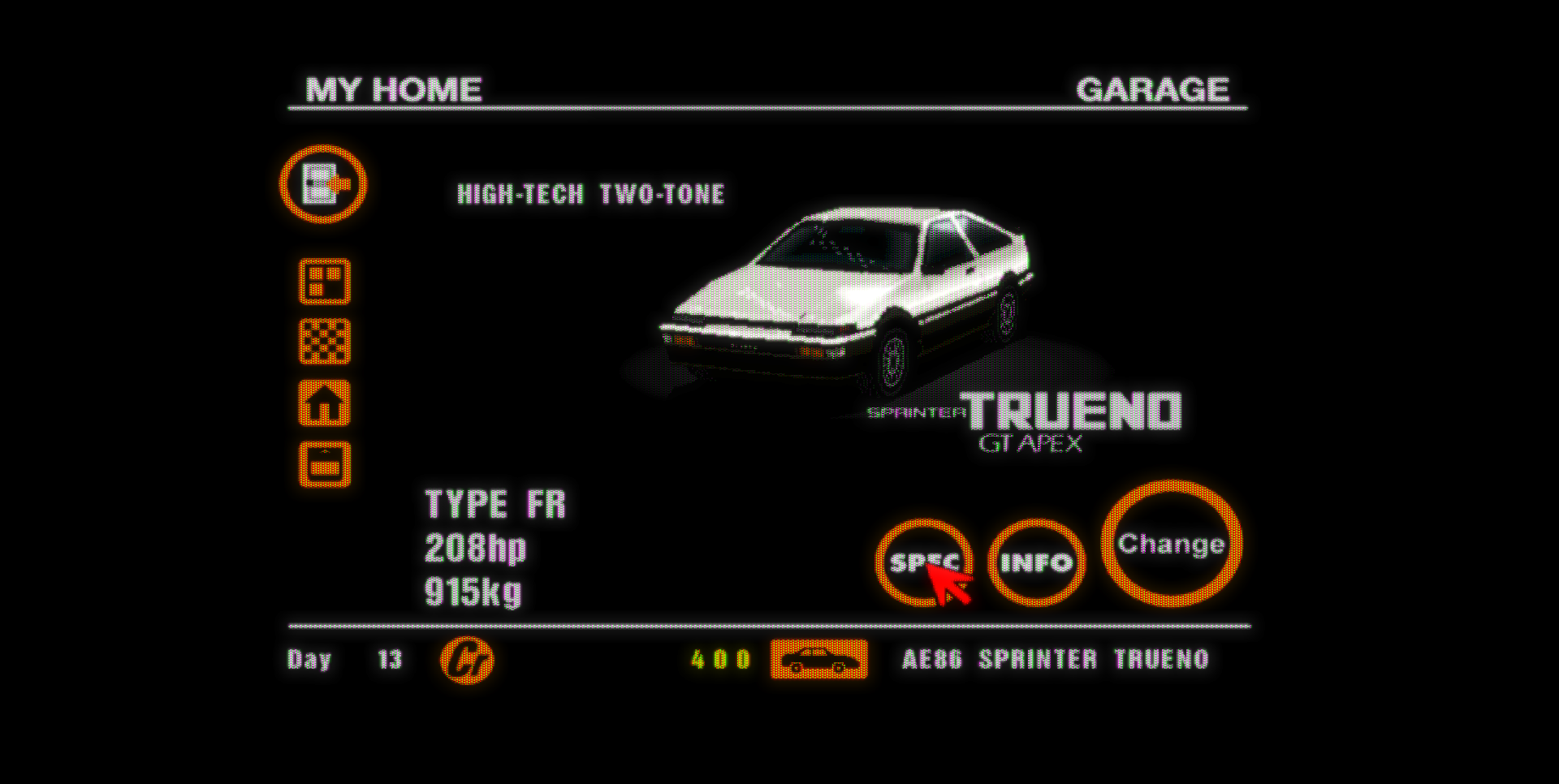
Dec. 14th, 2025 11:16 pmGran Turismo - in which I tried to play through the entire single-player campaign in a Toyota Sprinter Trueno similar to the one Takumi Fujiwara drove in Initial D, and got closer than I thought I would to completing it - was released in Japan in December 1997 and the rest of the world in May 1998, immediately became a massive hit, and went on to become the biggest-selling game in the history of the PS1, with nearly 11 million copies sold, Final Fantasy VII being the only other game to reach the 10 million mark. During the game's development, Sony had no idea that it would become the global juggernaut that it did, and so the car lineup, as massive as it was, consisted mostly of Japanese cars, with a few token British and American sports cars, such as the Aston Martin DB7 and Chevrolet Corvette.
A consequence of this was a massive explosion of interest in Japanese cars in the rest of the world - for example, the Official UK Playstation Magazine's review of GT2 noted an influx of companies dedicated to importing Japanese cars in the two years since GT1's launch. Just across the Irish Sea, this video essay - aside from mentally transporting me to one night in summer of 2004, when, as a teenager on holiday in Tramore, I came across a tuned car meet in a car park - directly credits Gran Turismo with a shift in focus towards Japanese cars in the Irish car scene:
In contrast, GT2's car list is much more balanced in geographical terms - while enough Japanese cars have been added to the point that GT2 is practically a playable encyclopaedia of the '90s Japanese car industry, a much wider range of European and American manufacturers are now represented. Nevertheless, I'm sticking with my trusty AE86 as I tackle the sequel to "The Real Driving Simulator".
What's changed since GT1?
Not only has the car count massively increased, but so has the variety of tracks, with a real-world track appearing for the first time (Laguna Seca), another one kinda-sorta appearing (the oval track at Motegi), and a few others based on real-life locations. This means more events to accommodate them, and not only that, but these events generally take the form of several individual races rather than multi-race championships. Within each event, except for some of the late-game events, each race is more difficult than the last, with faster opponent cars and higher licence requirements to enter. There are also maximum power levels for each race, starting at 98hp for some of the kei car races and going up in nearly-but-not-quite 50hp intervals (since these would have been 100ps, 150ps, 200ps, etc., in the Japanese version, with "ps" being a rough equivalent to horsepower - ps is short for pferdestärke, which is German for horsepower - based on metric units) until the Grand Valley 300 endurance race and race 3 of the 4WD Challenge, with the highest power limit in the game at 690hp, while the Sunday Cup, Clubman Cup, and some late-game events have no power limit at all. Finally, although it isn't relevant to this playthrough, rallying (or at least driving on loose surfaces, as the rally events aren't structured like actual rallies at all) appears in the GT series for the first time. Some aspects of GT1 did not make it into the sequel, though - most notably, there are no qualifying sessions, so you start every race in 6th place.
Starting out
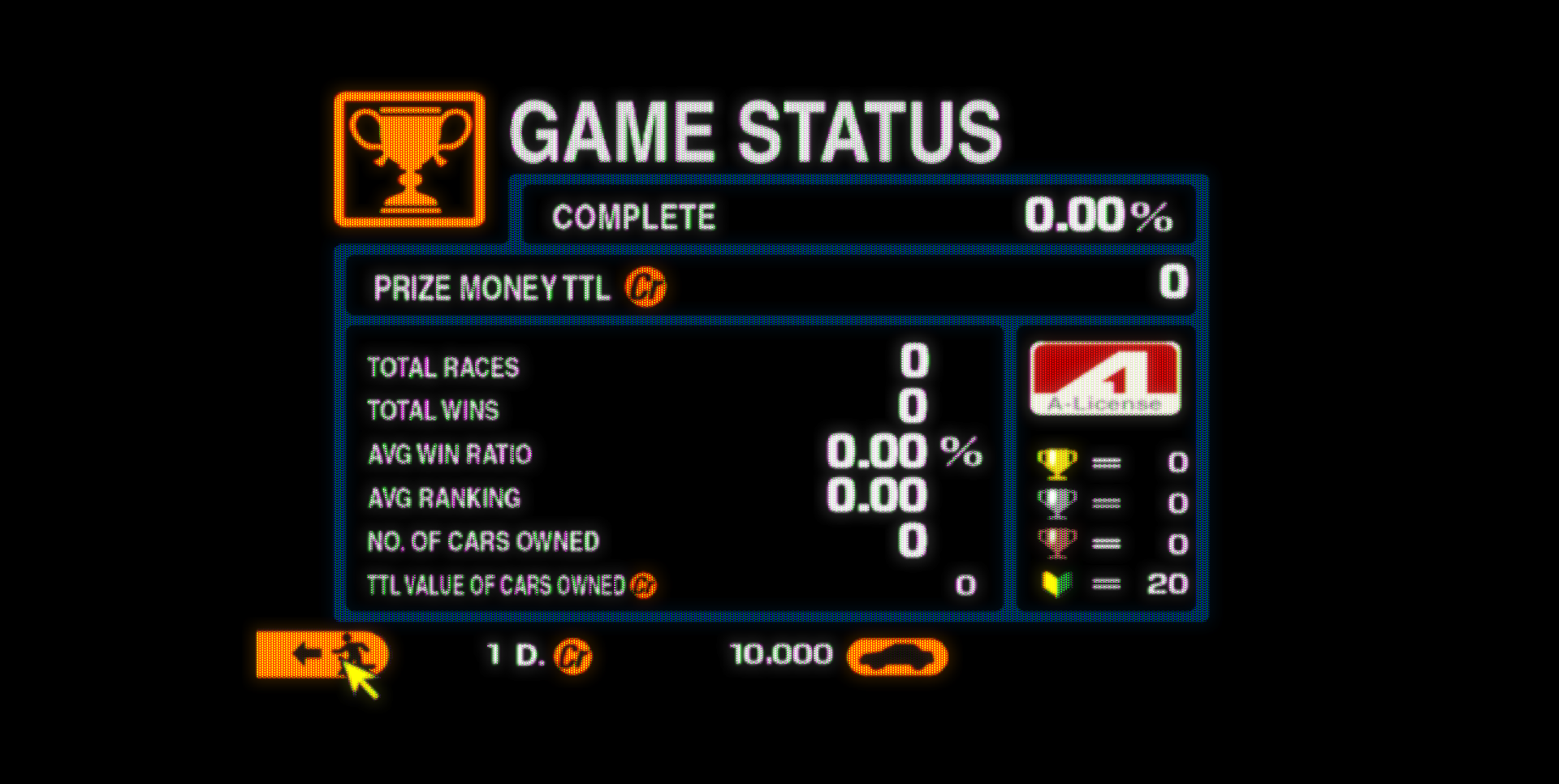
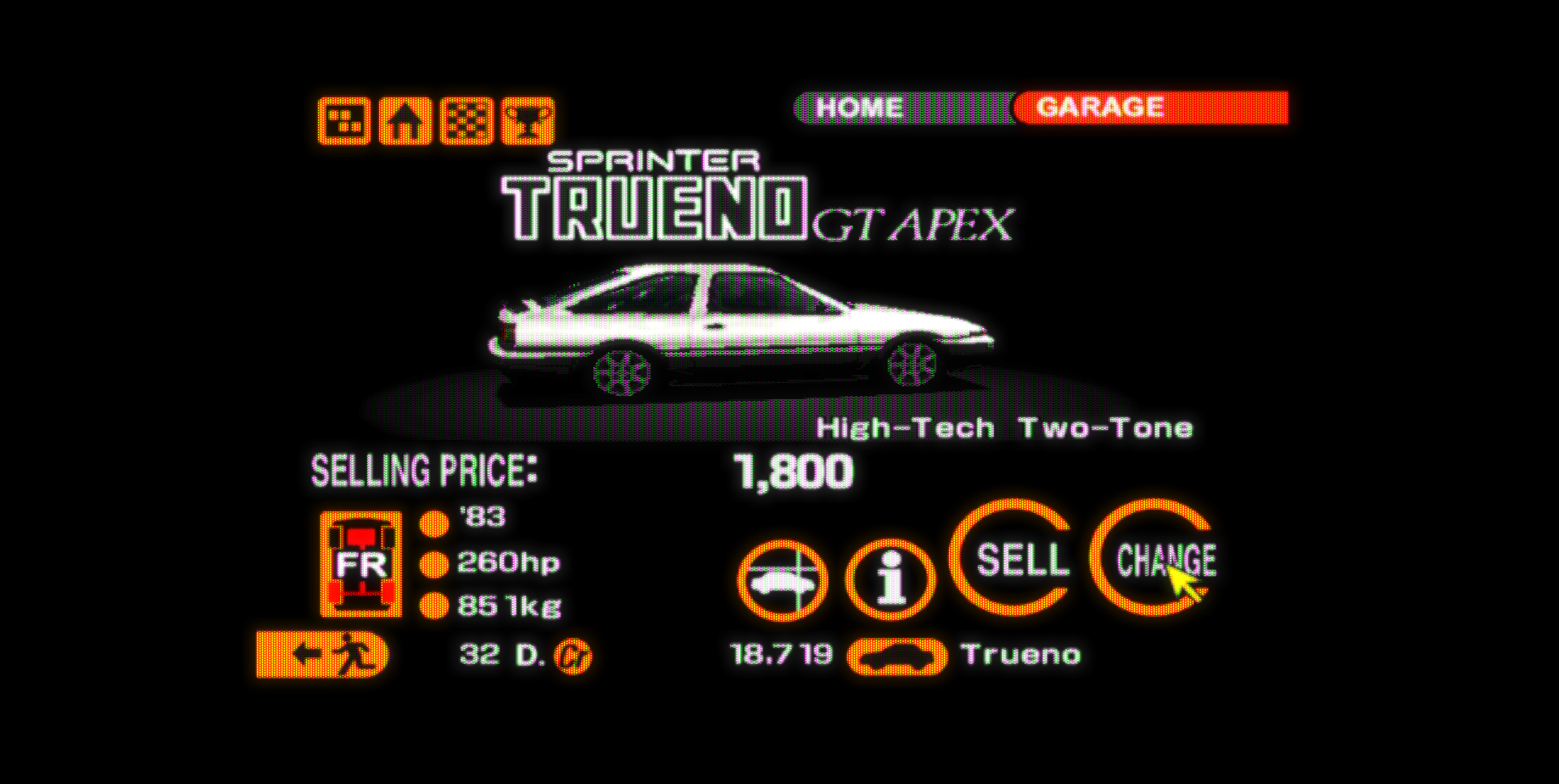
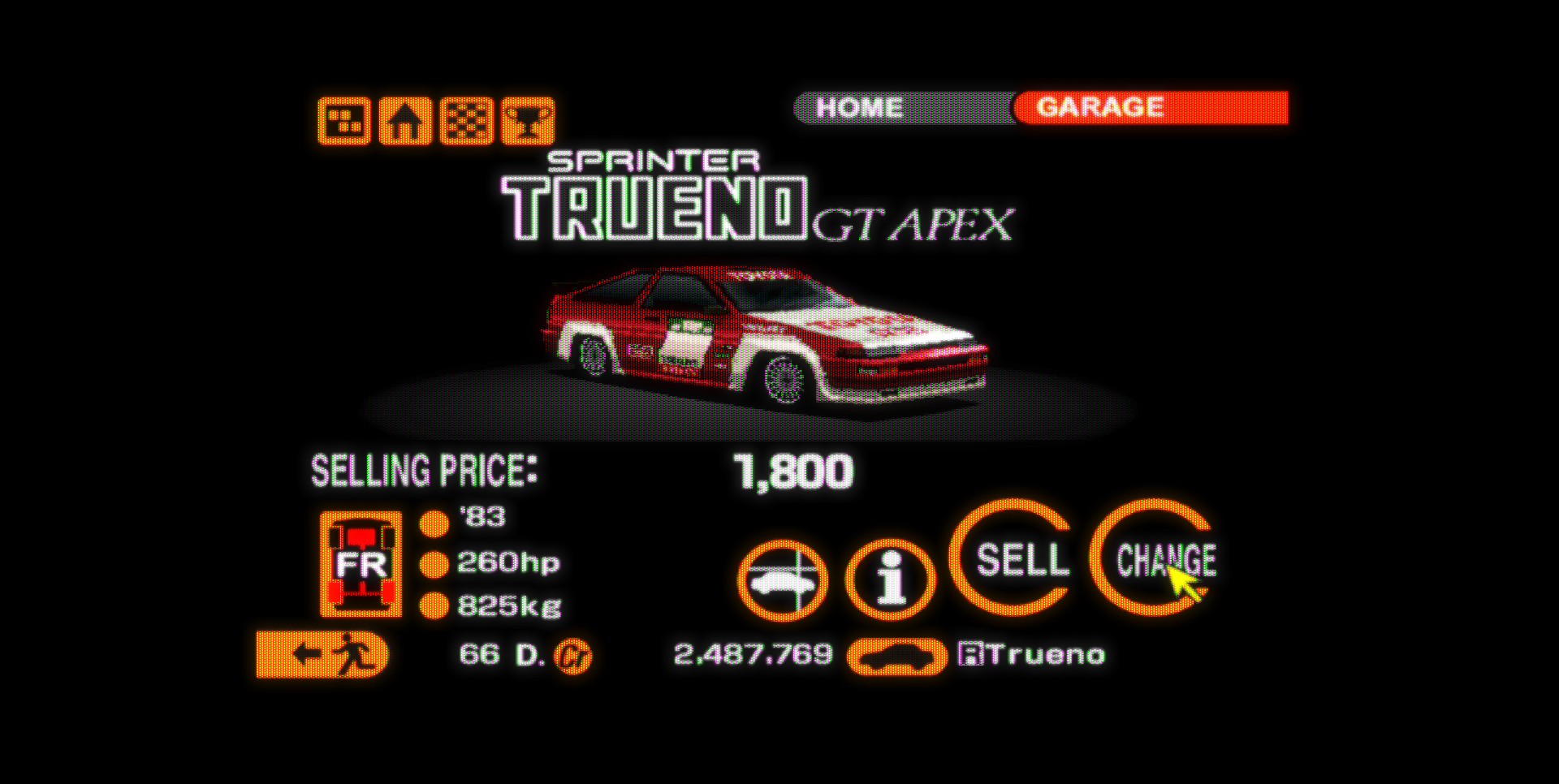
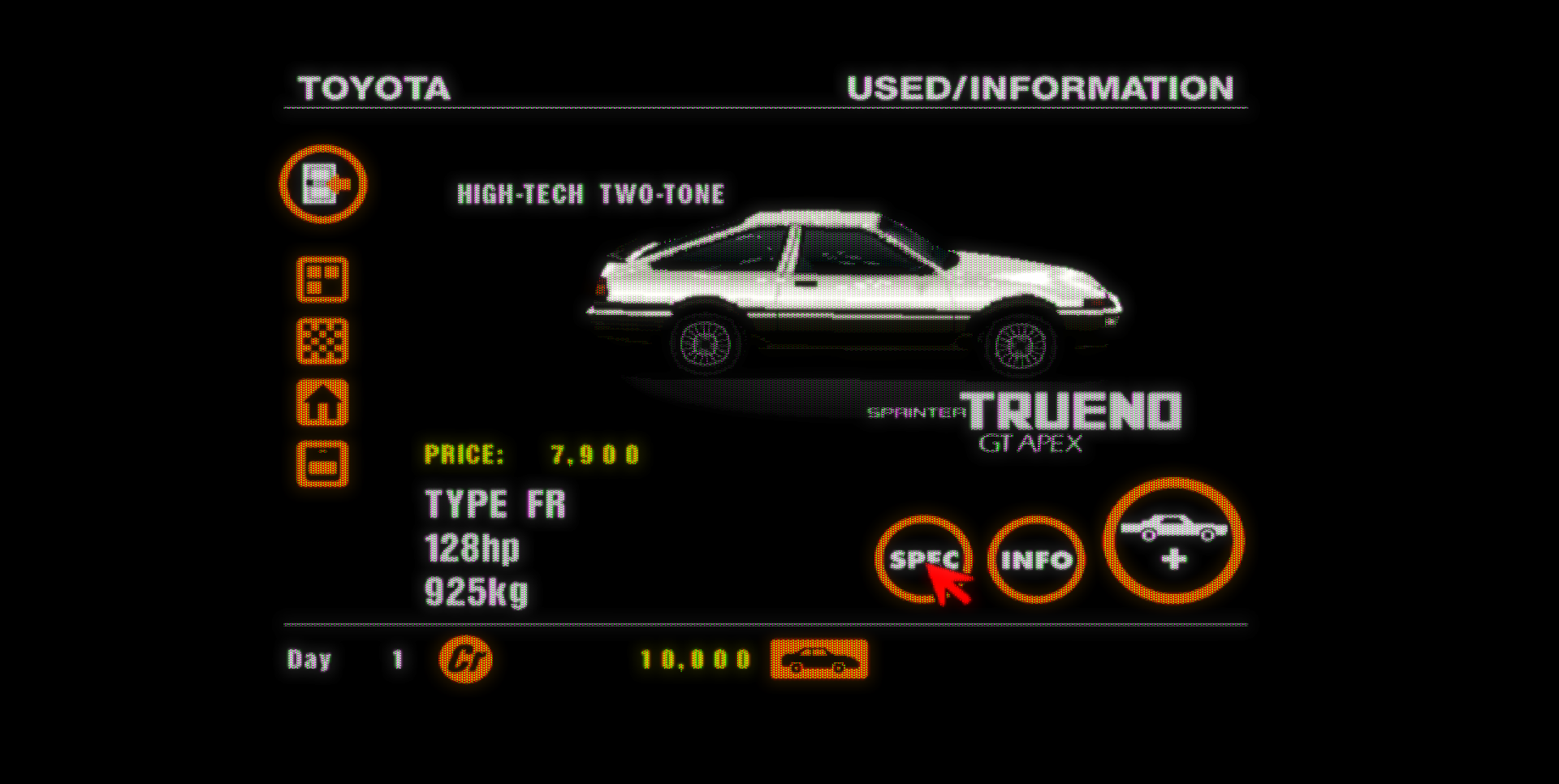
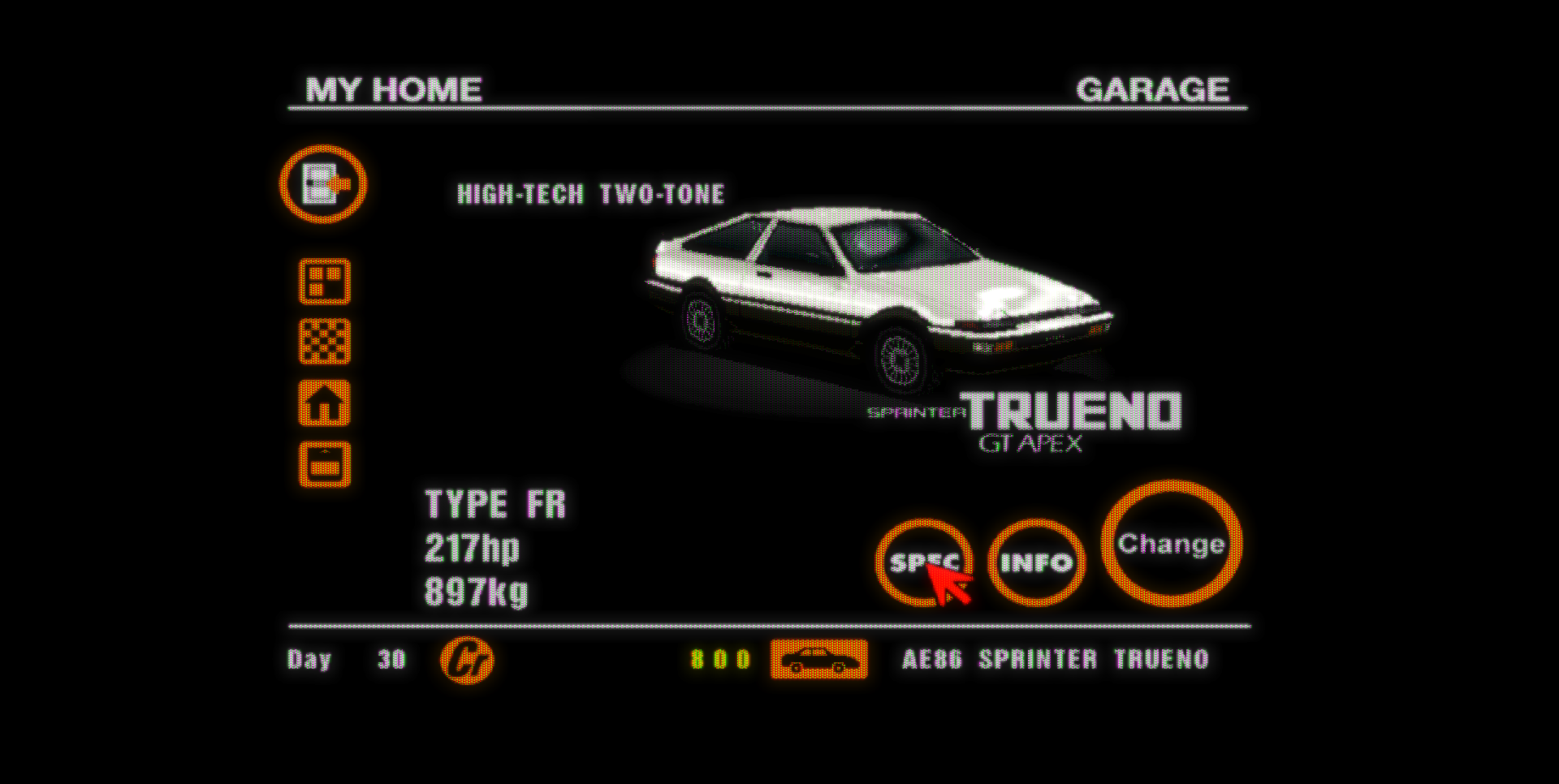
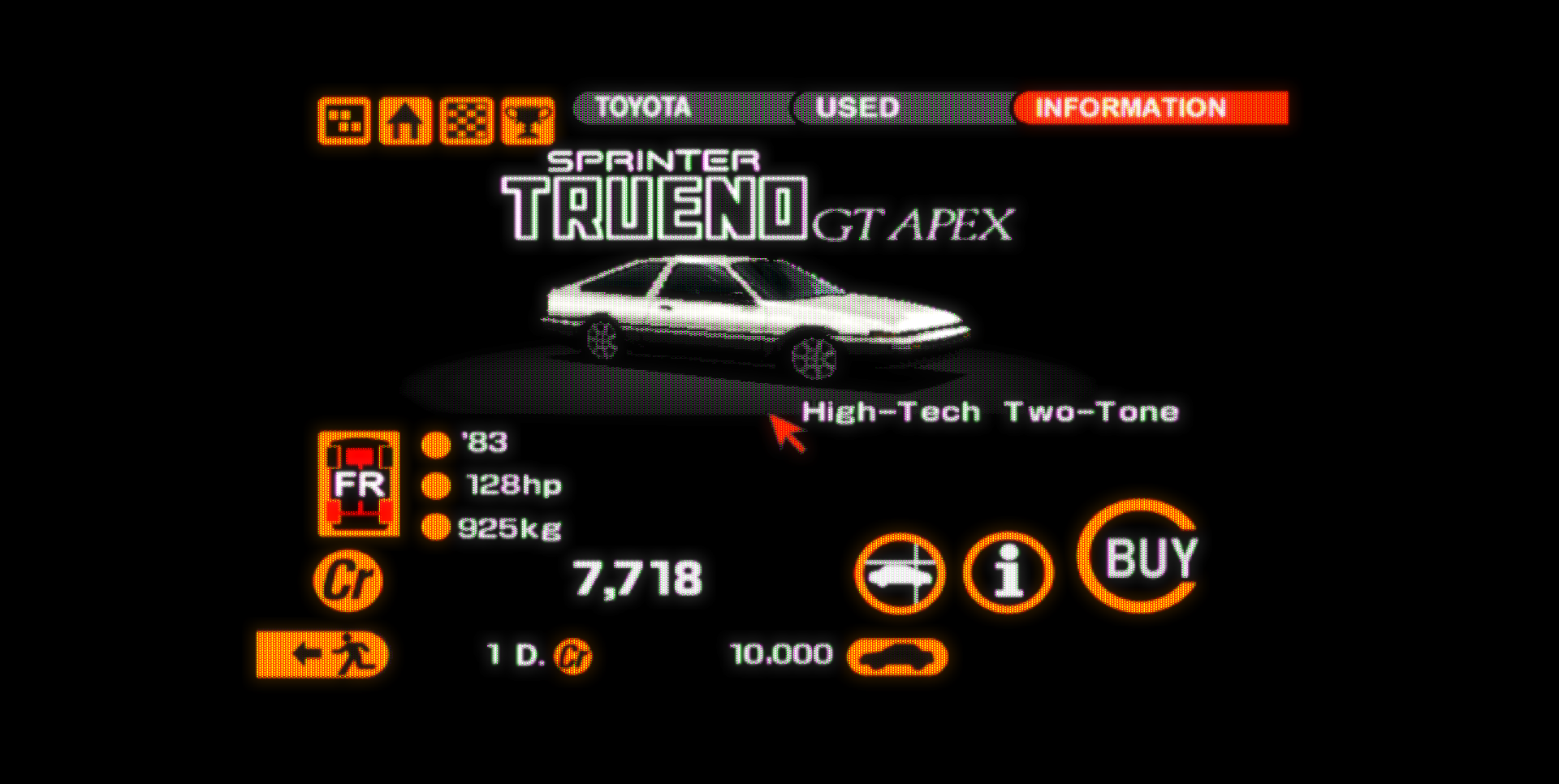
GT2 included a feature where you can carry over the B and A licences from a GT1 save - I take advantage of this to speed up the early game. I then head to the Toyota used car dealership, where I find the two-tone Trueno for 7,718 credits.
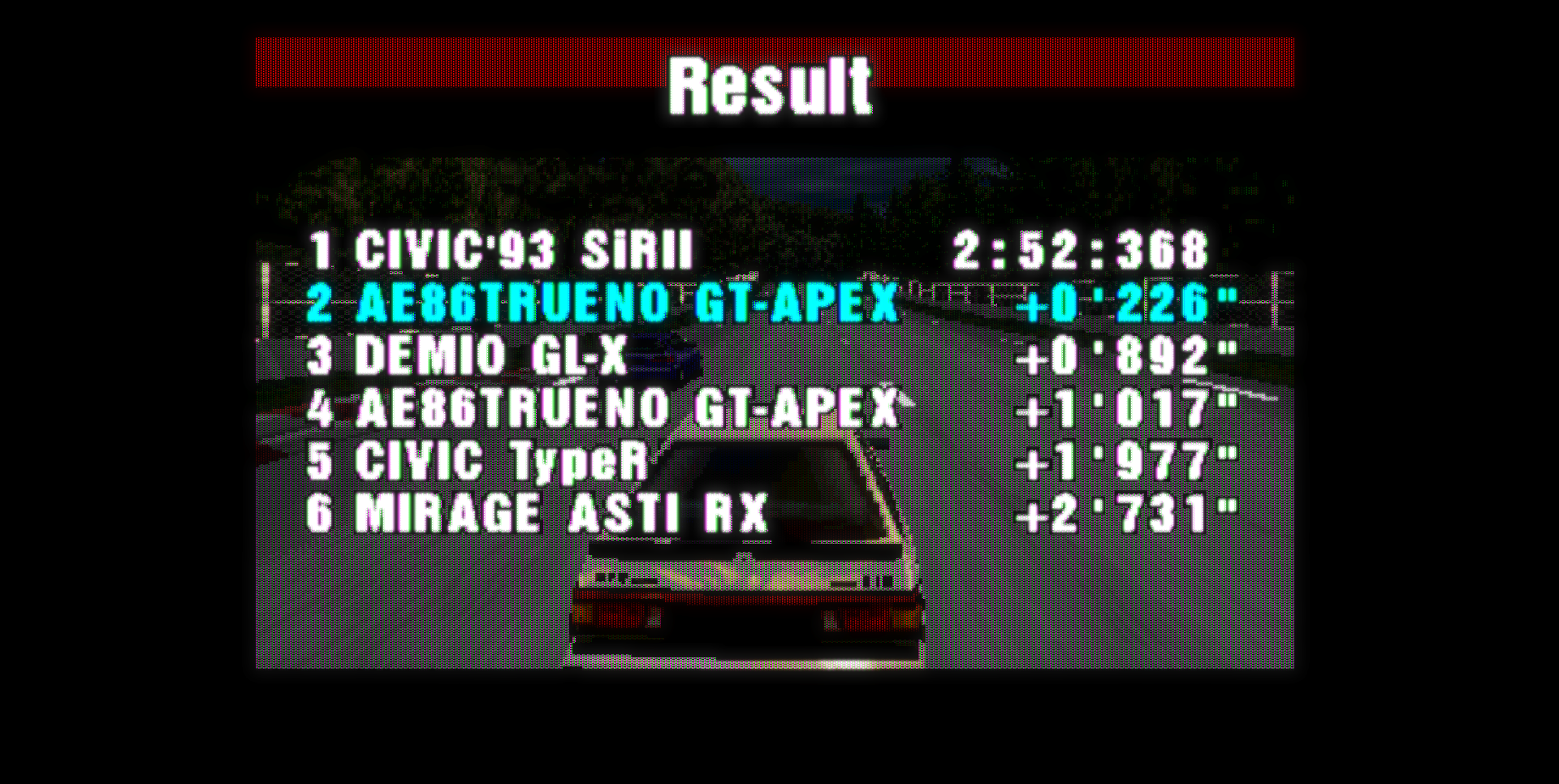
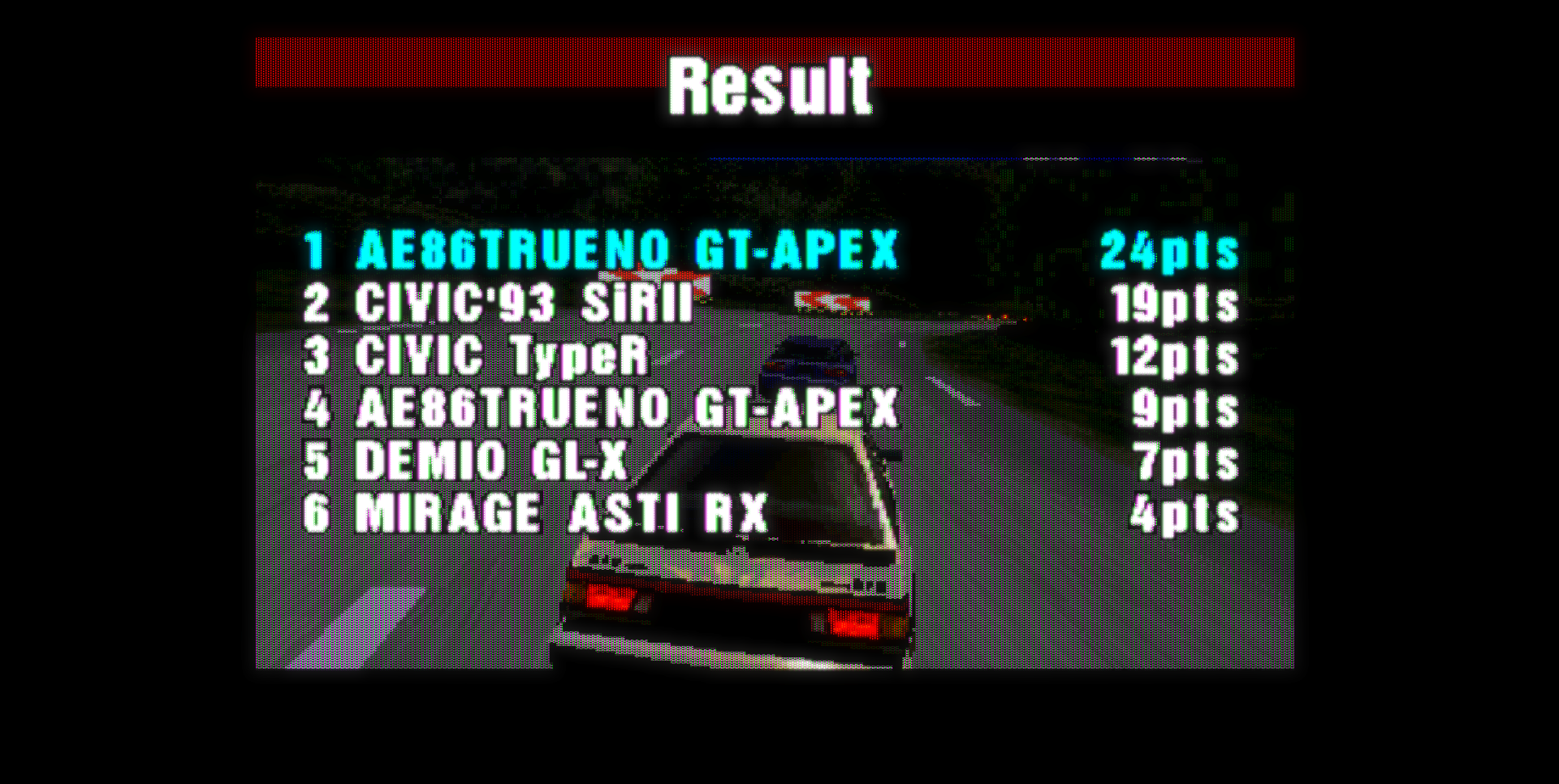
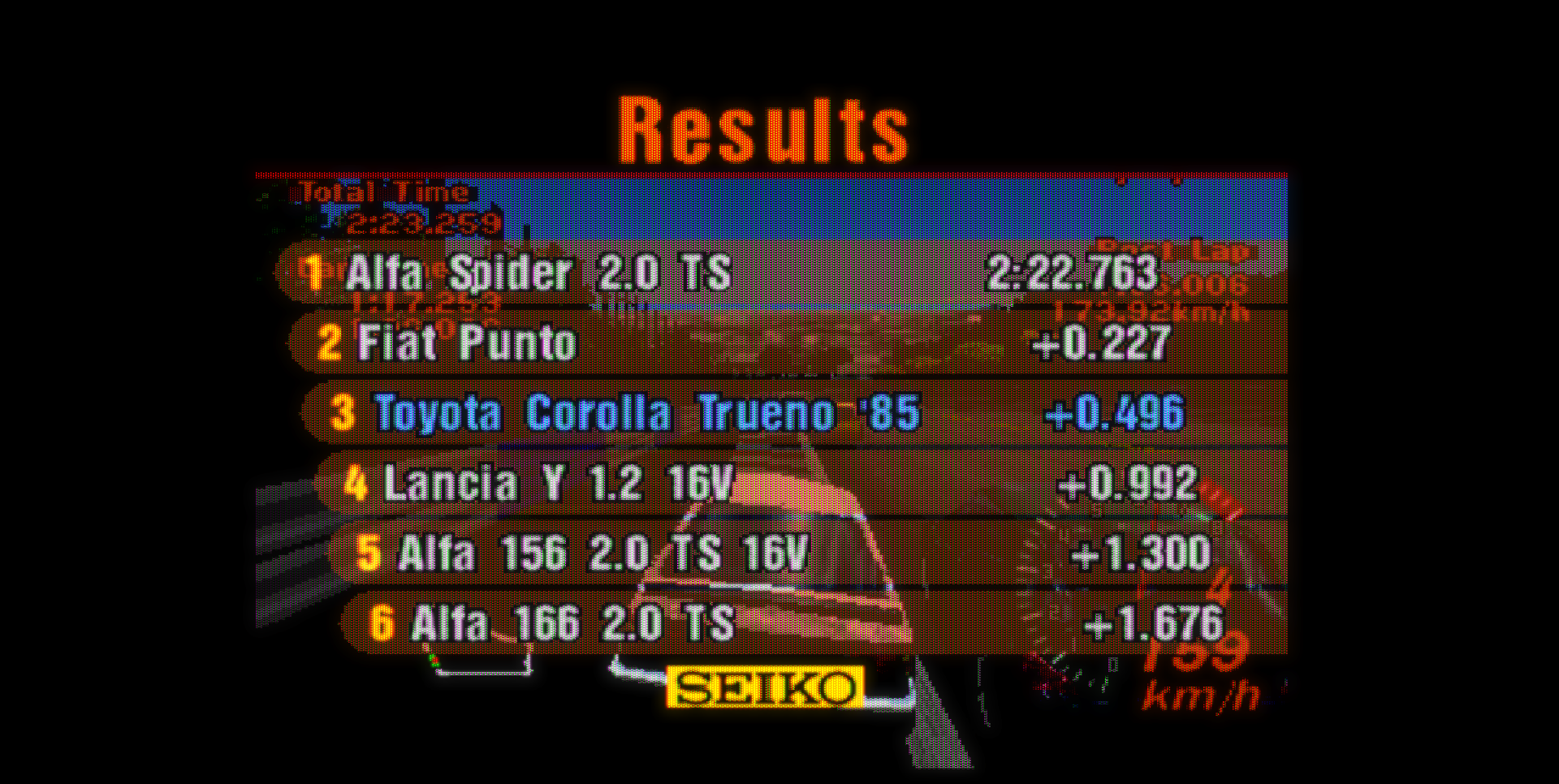
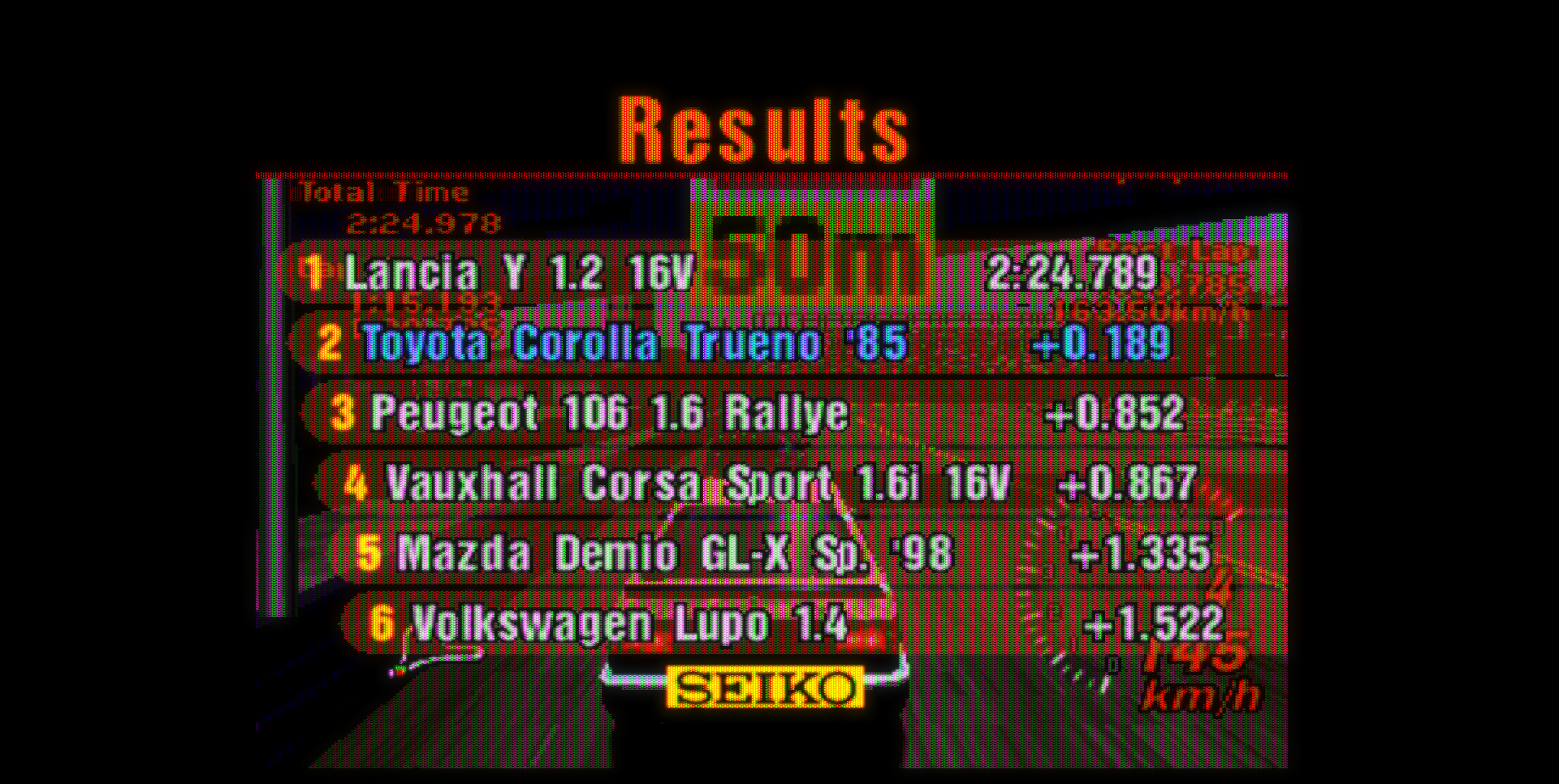
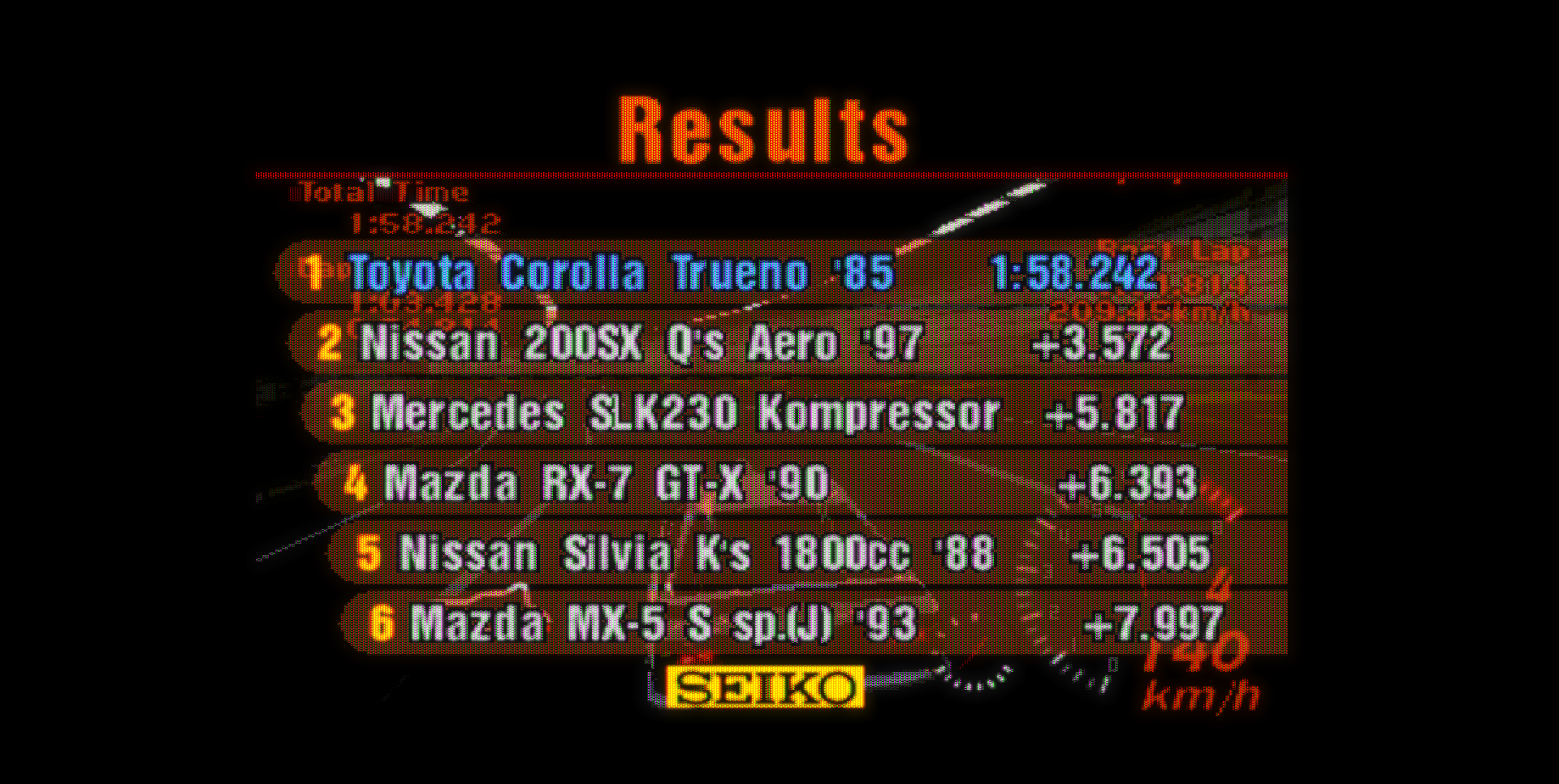
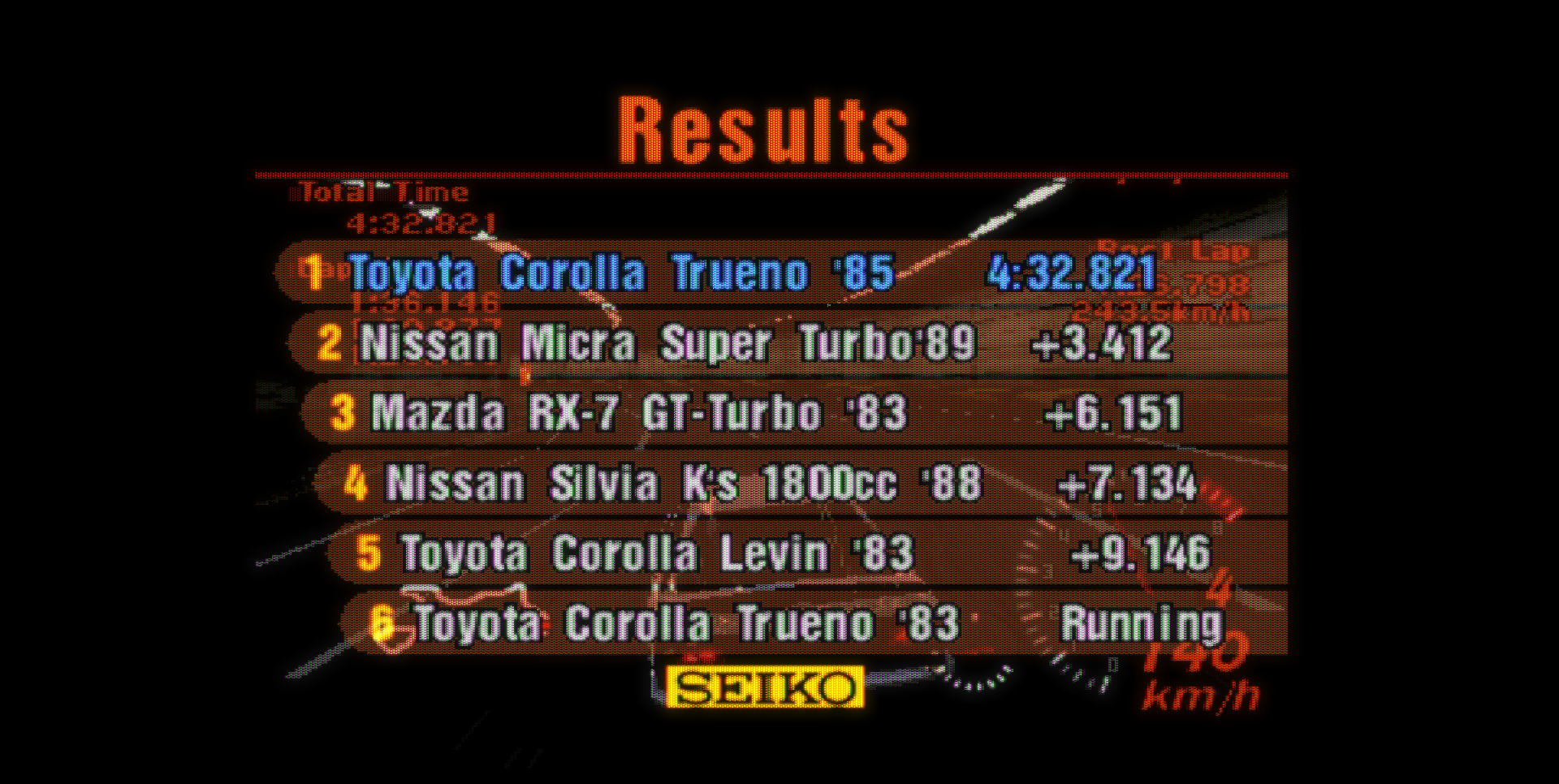
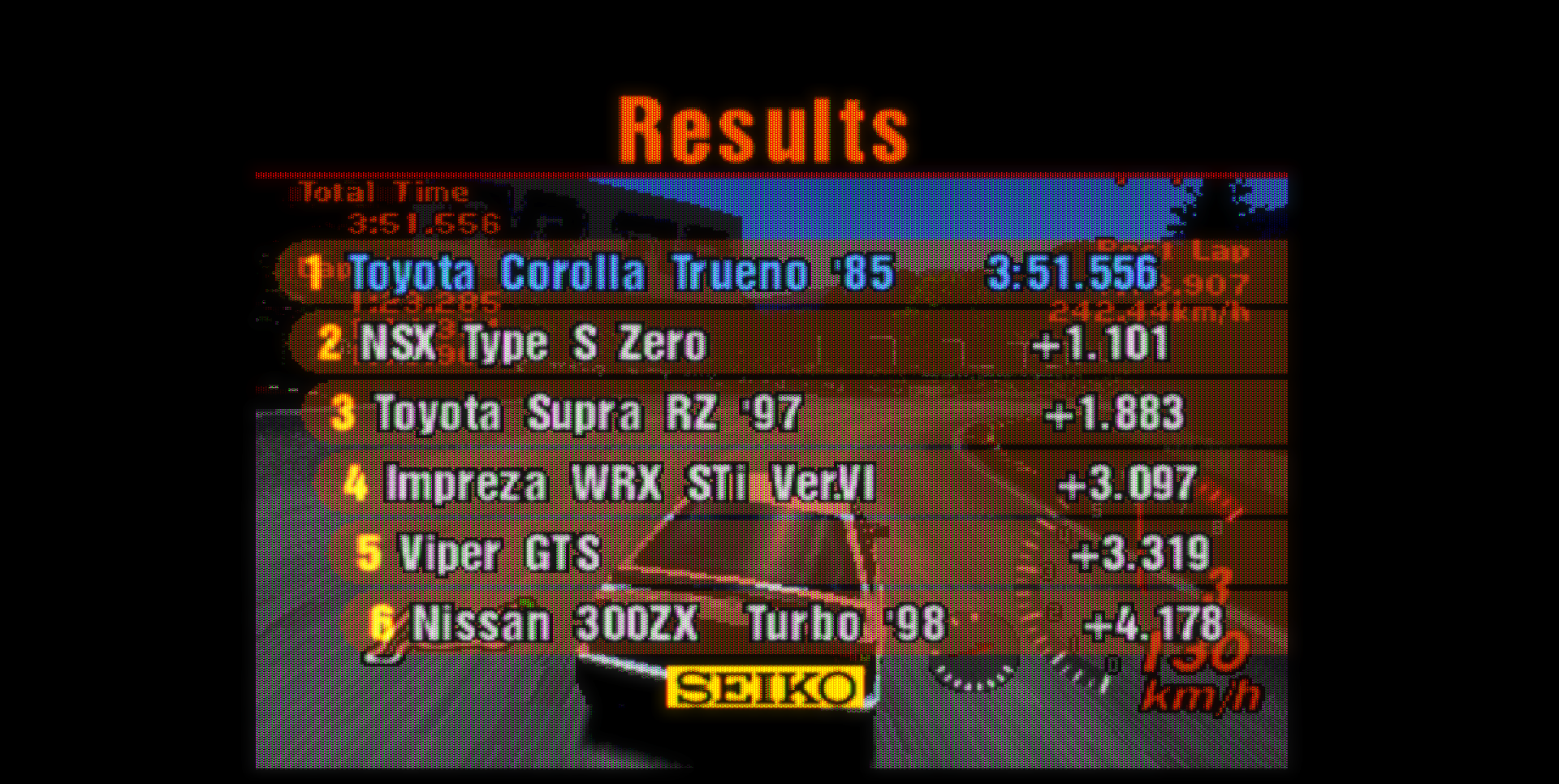
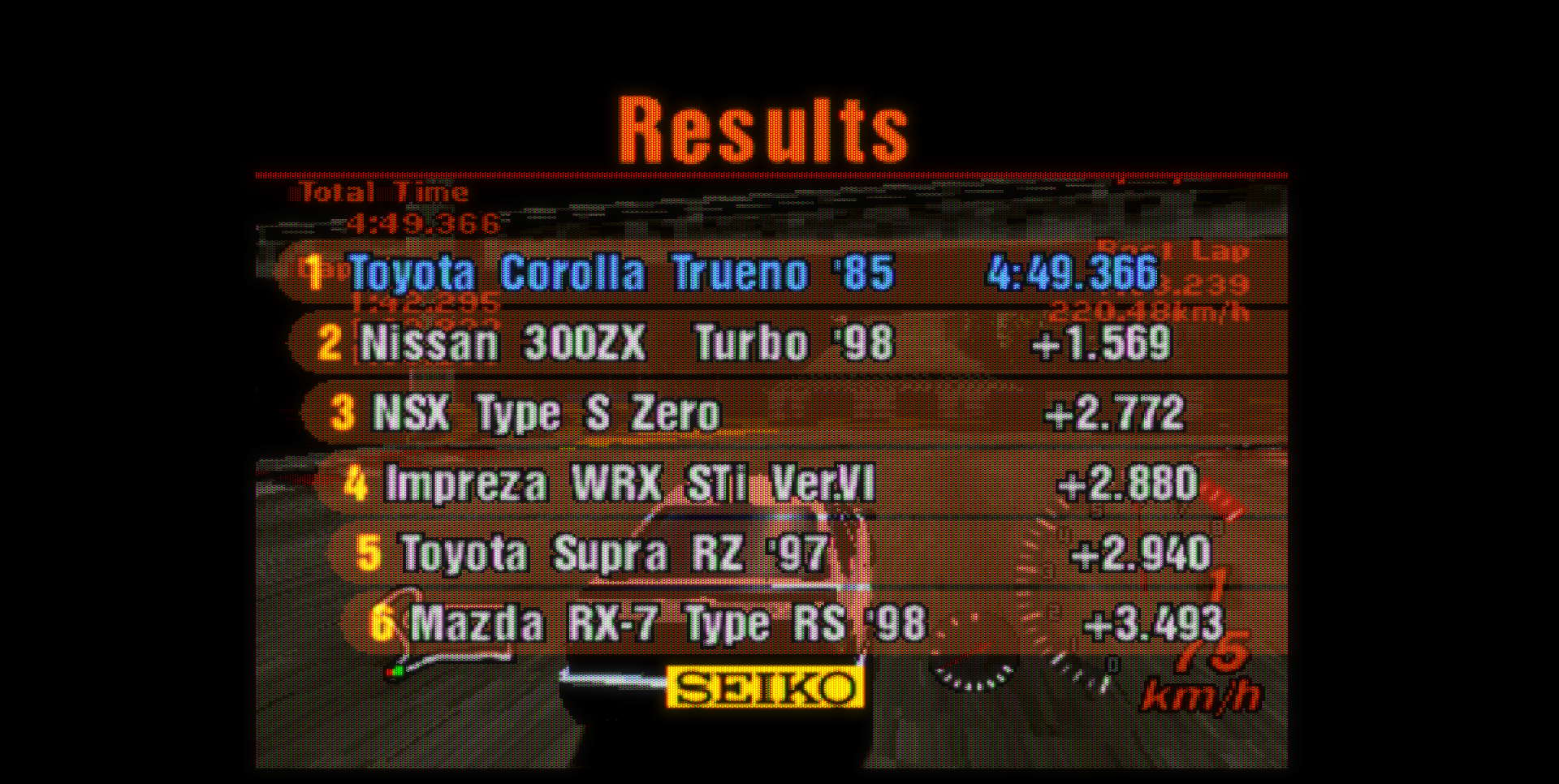
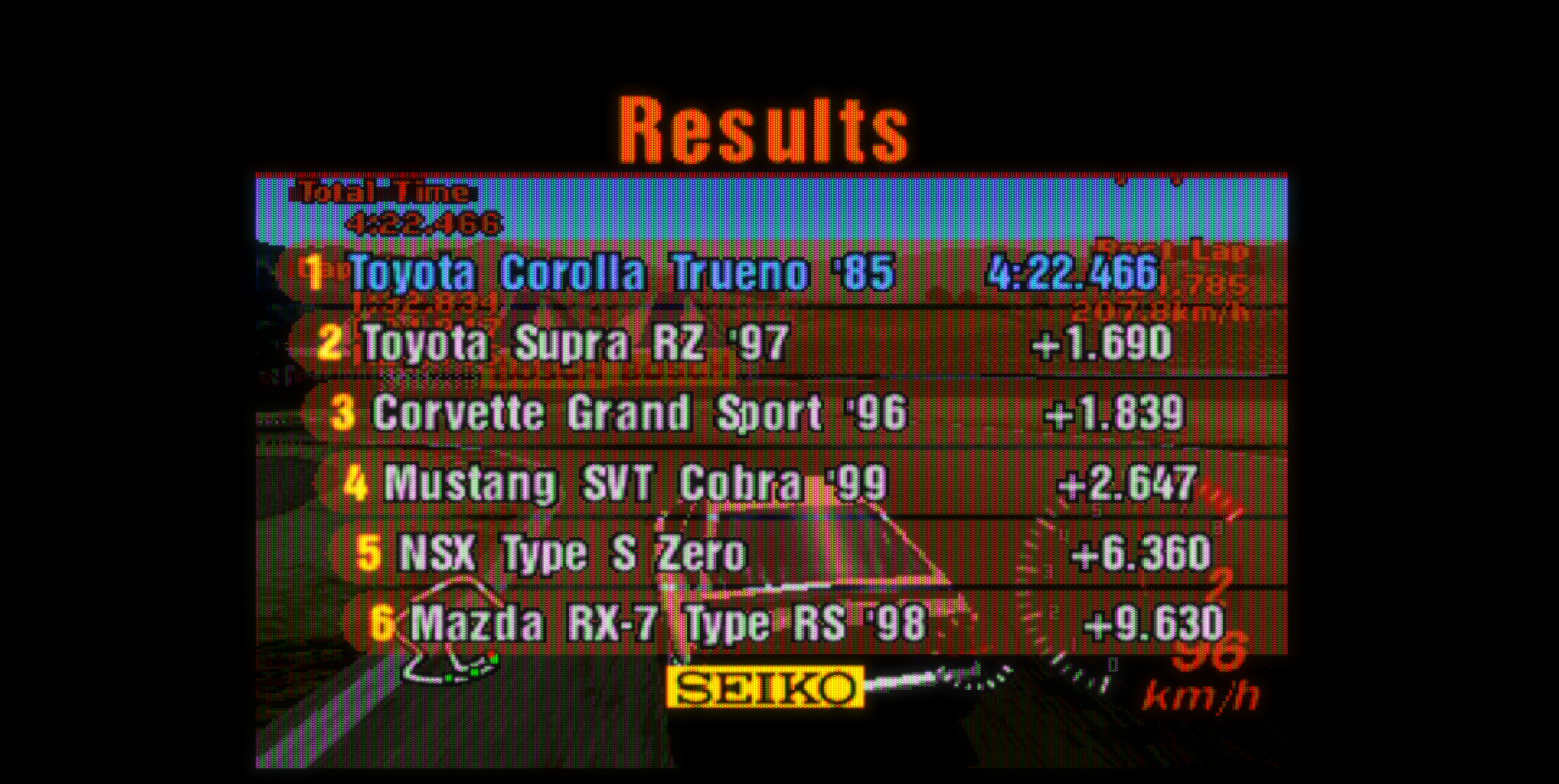
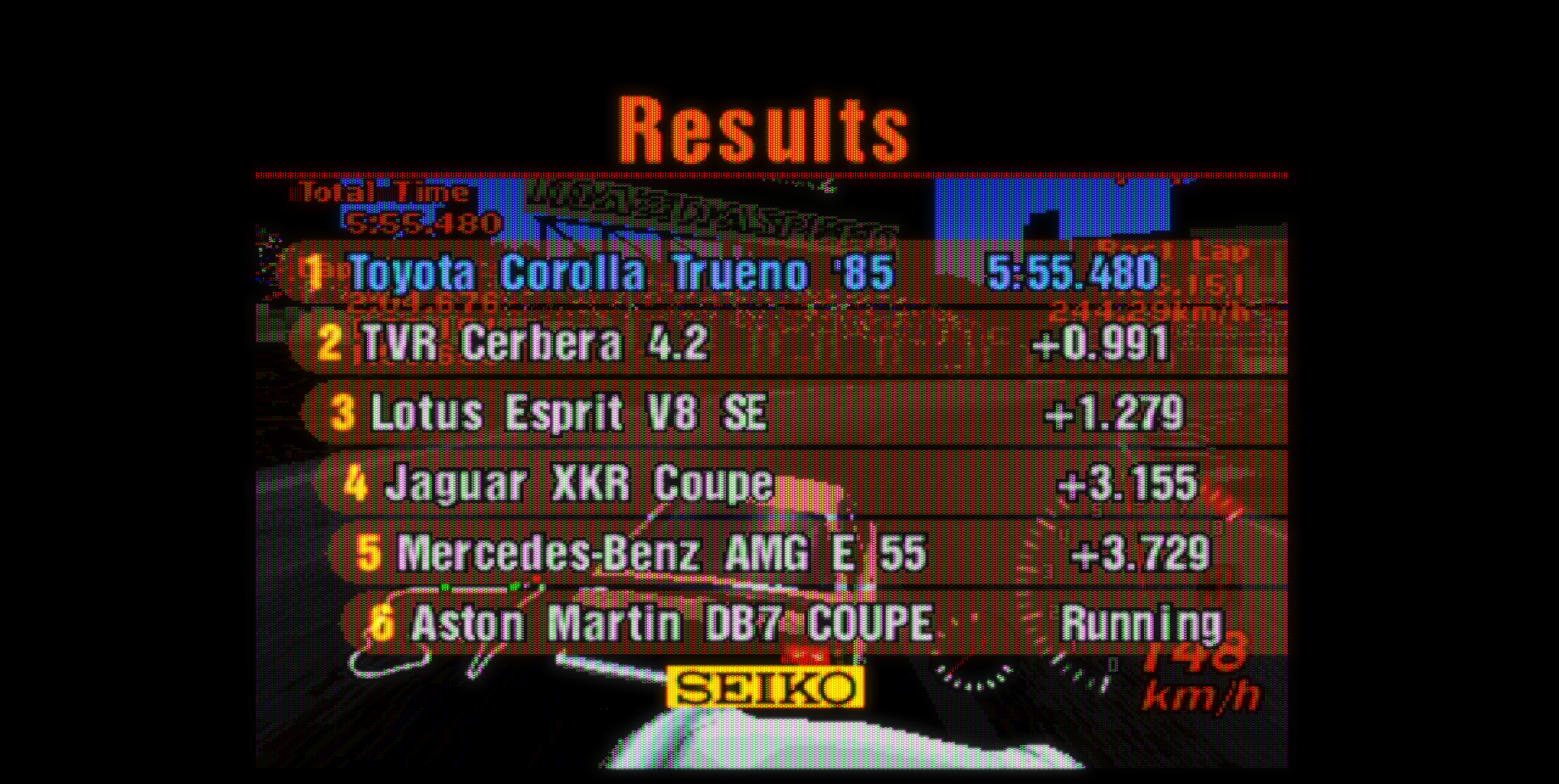
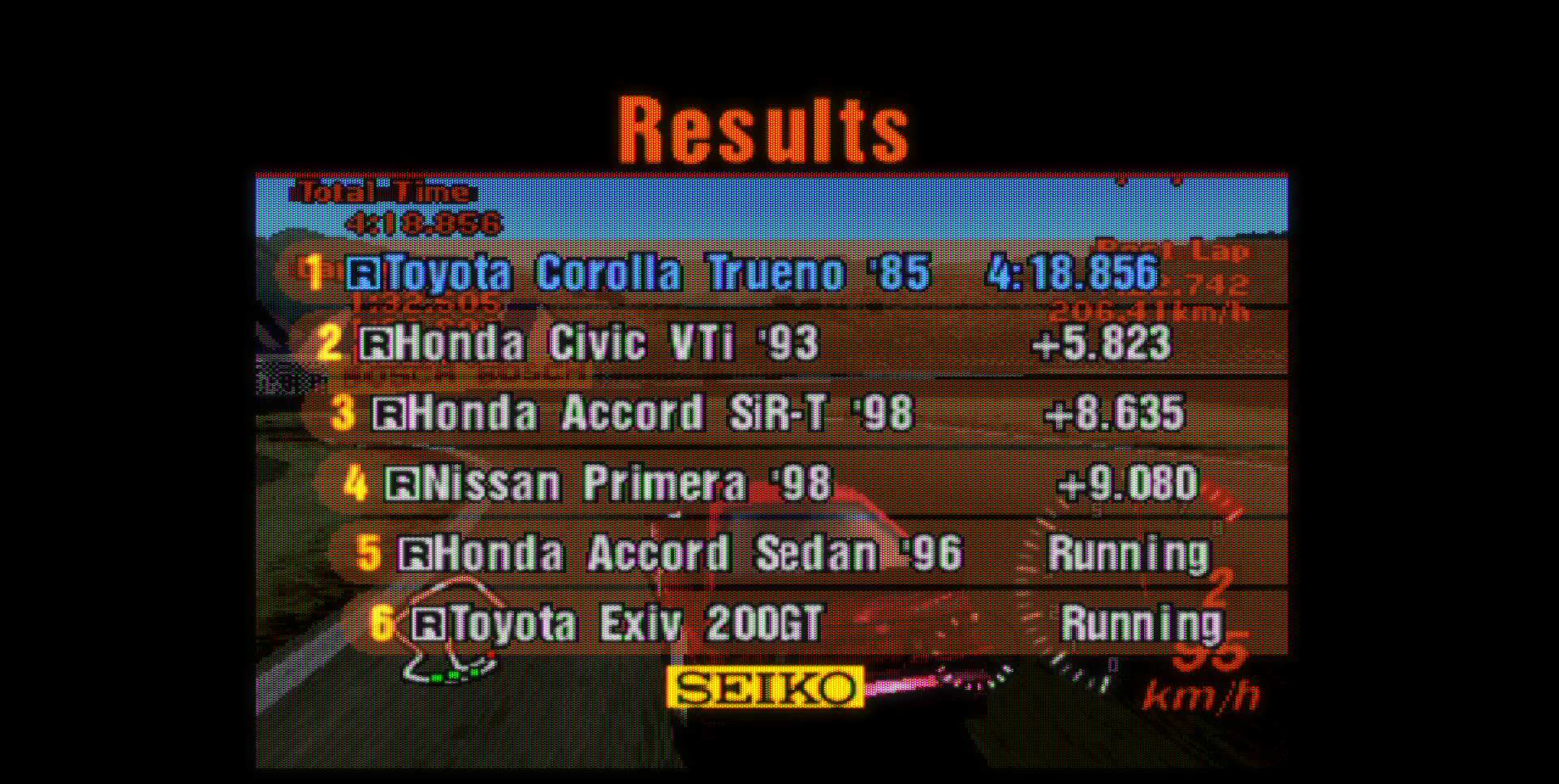
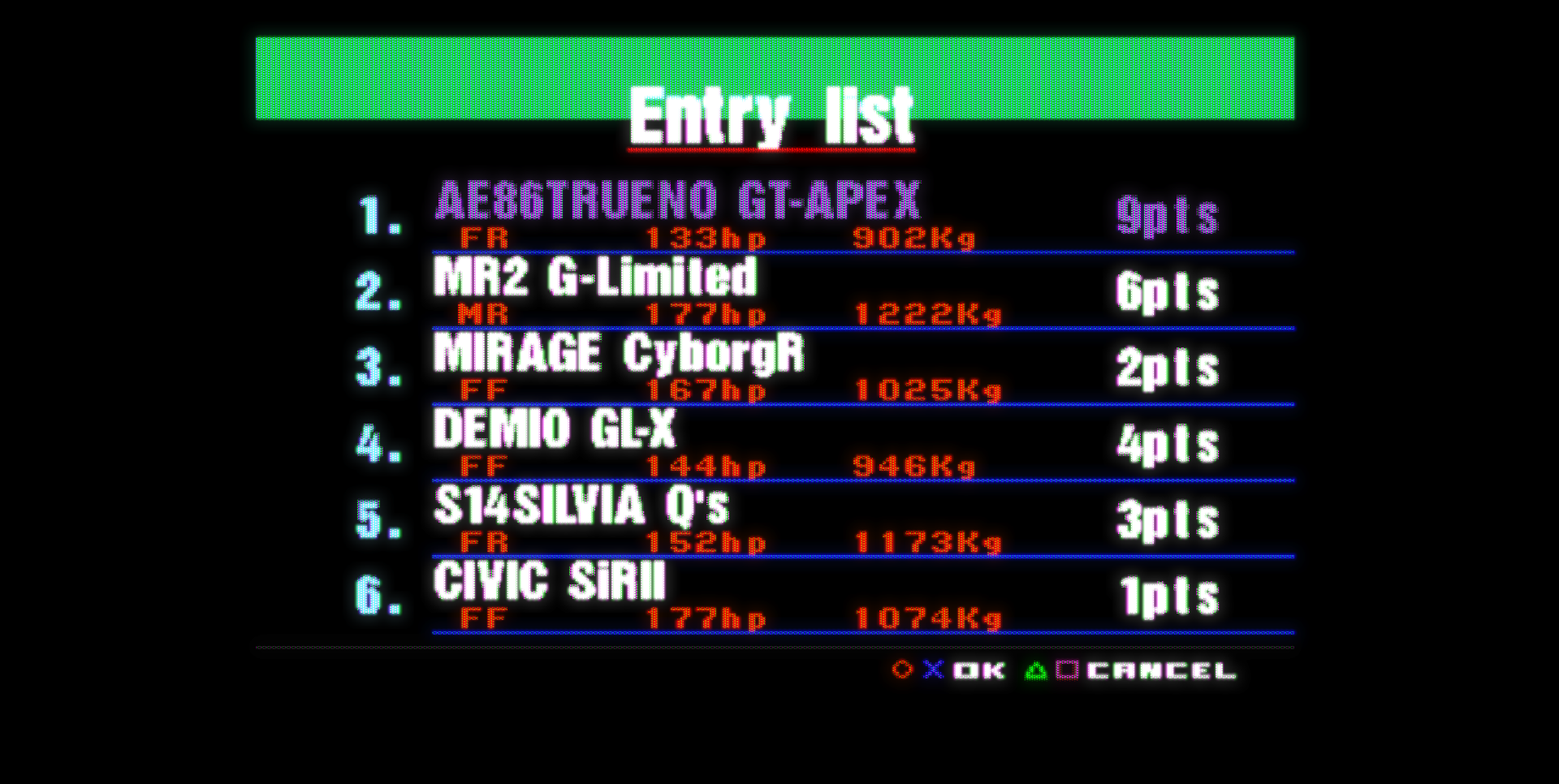
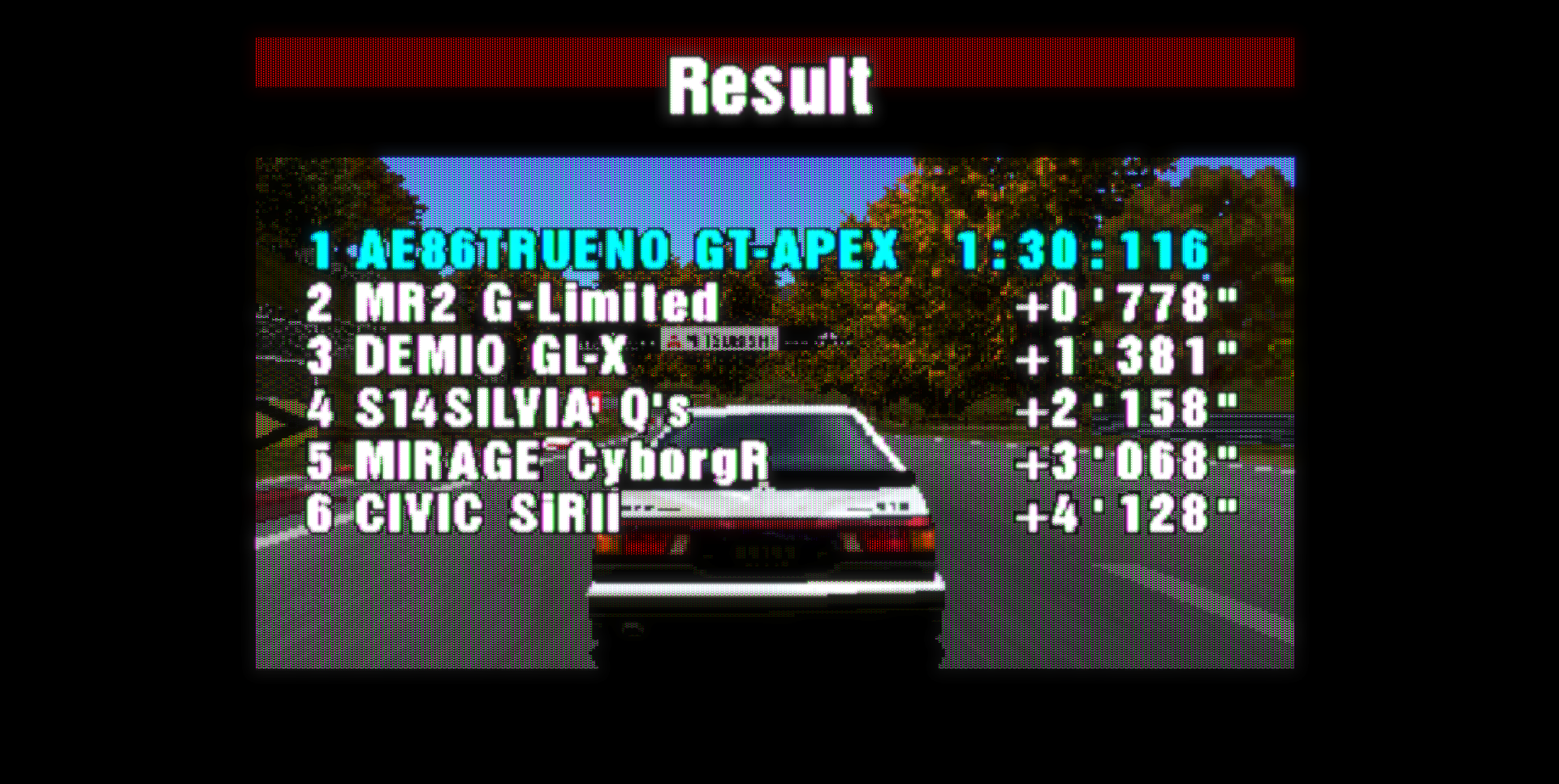
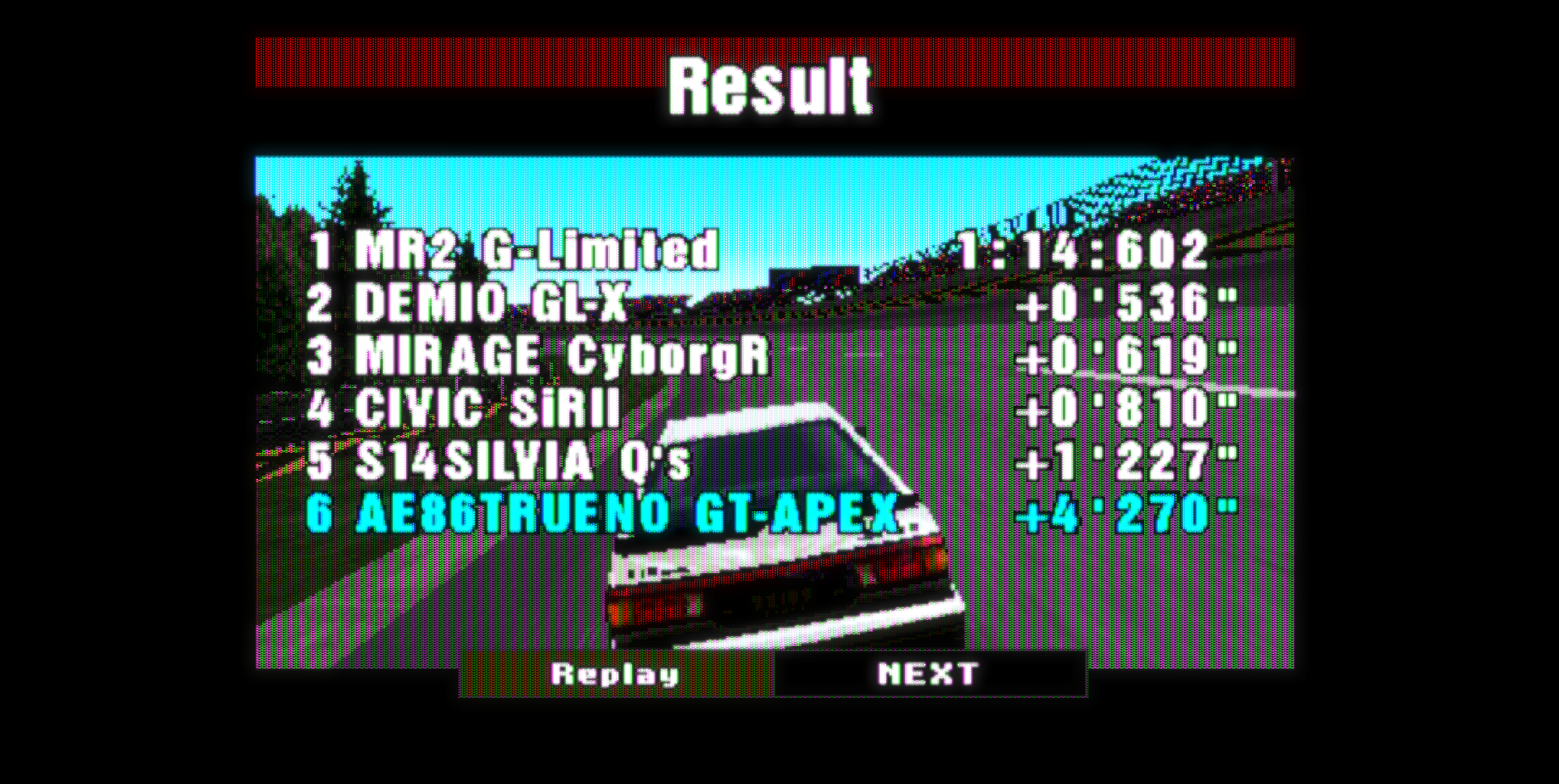
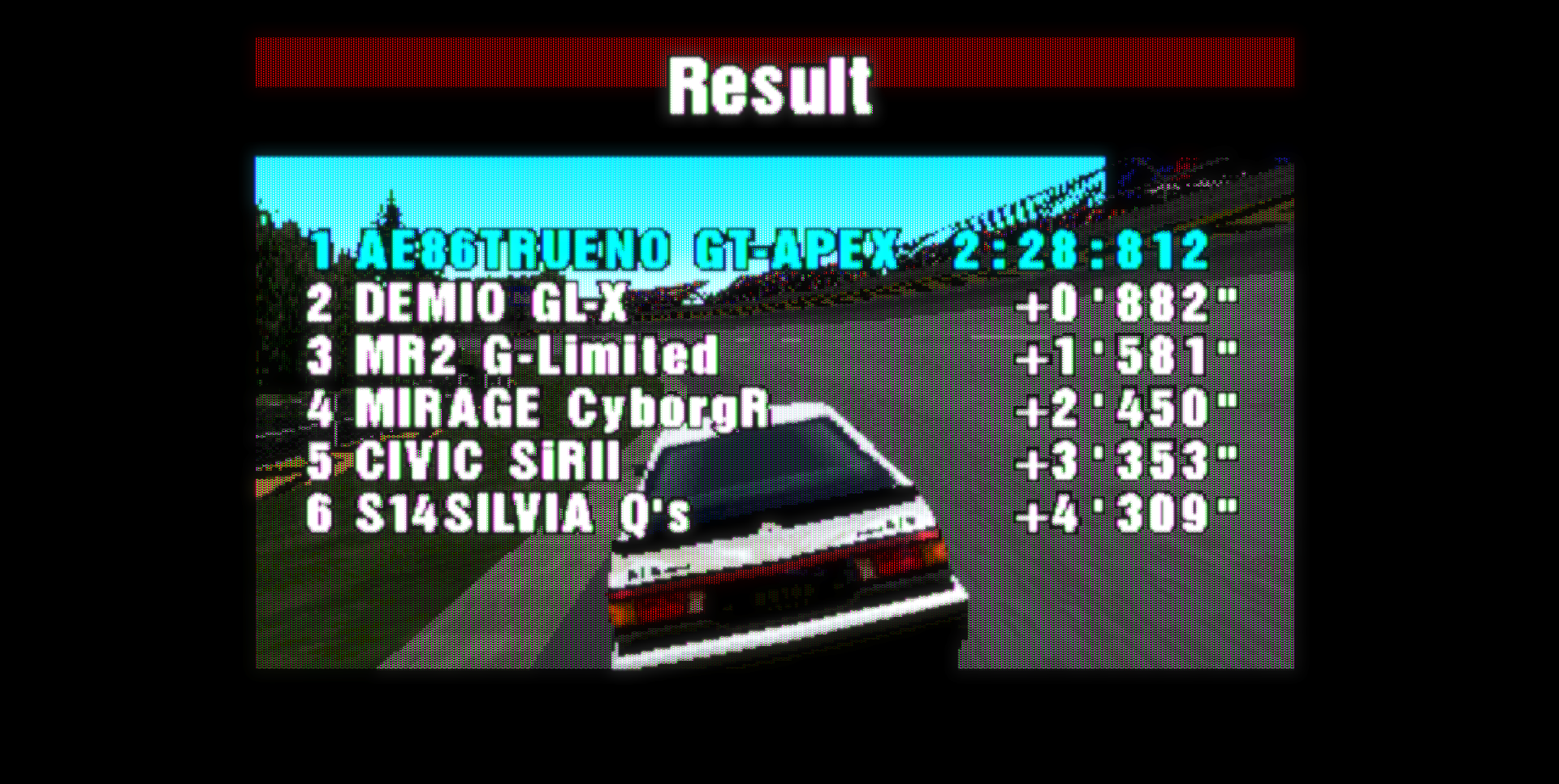
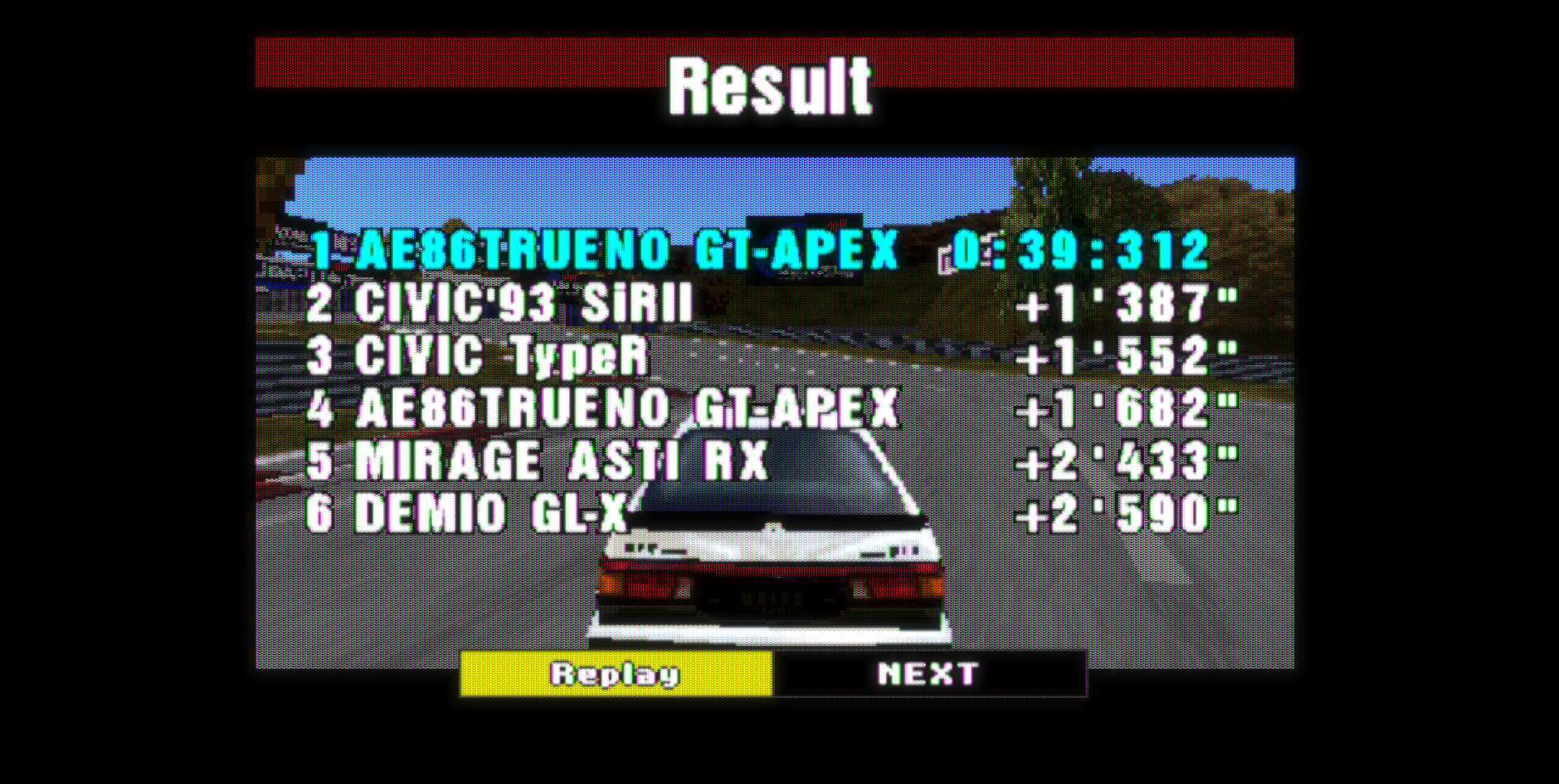
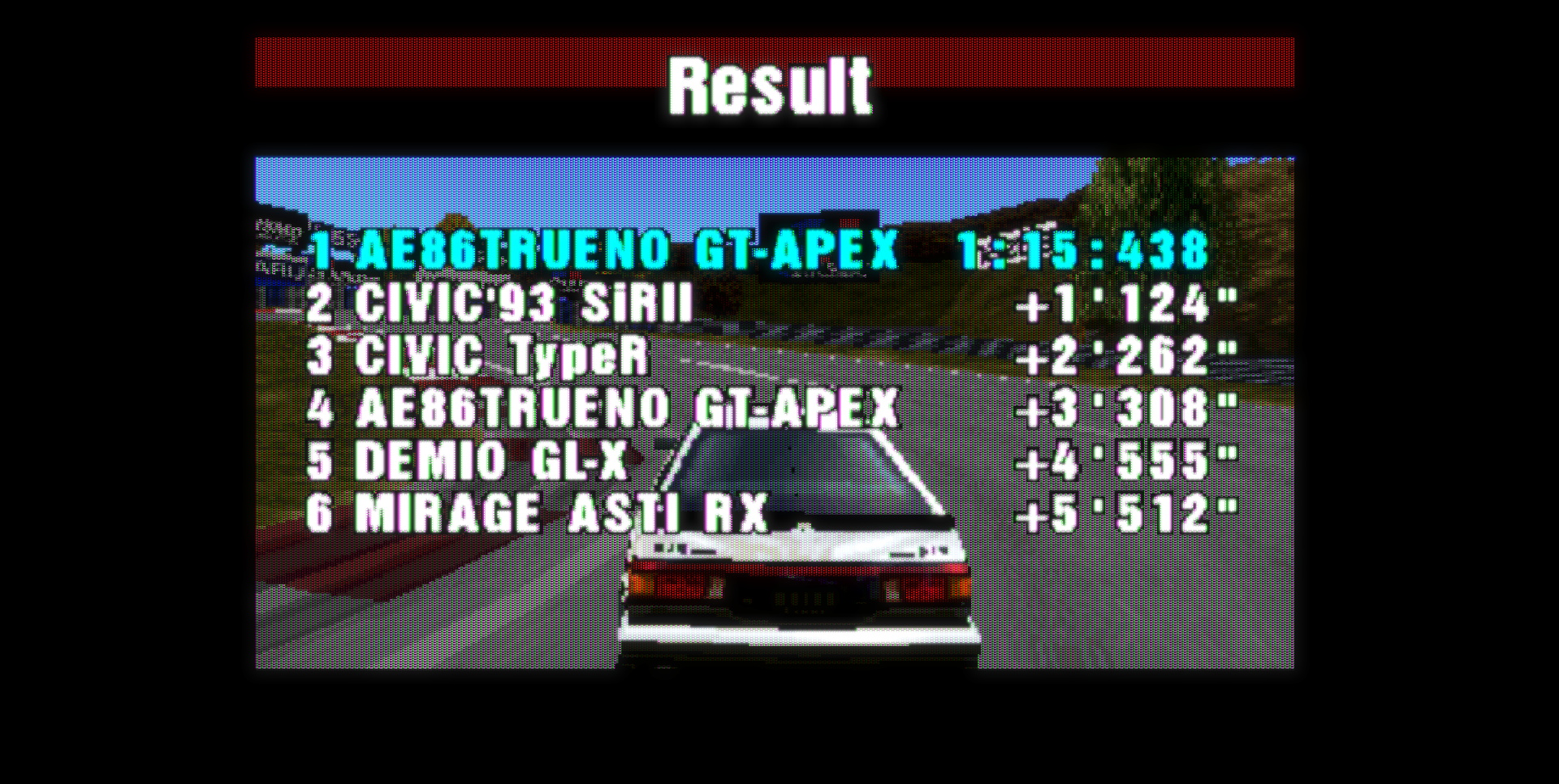
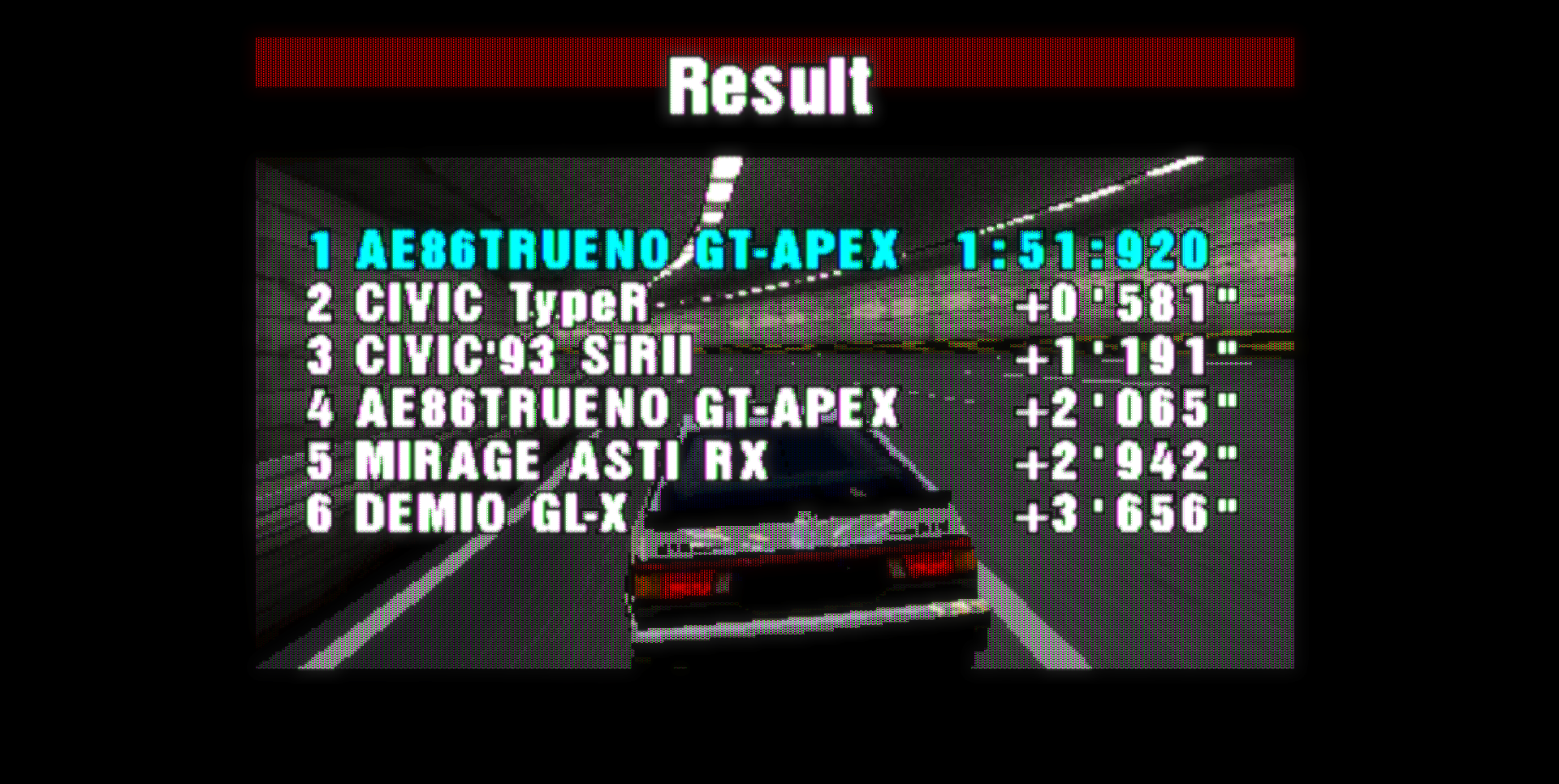
My first order of business is to head to the Sunday and Clubman Cups. I win race 1 of the Sunday Cup without difficulty, but have to settle for fourth in race 2 and second in race 1 of the Clubman Cup.
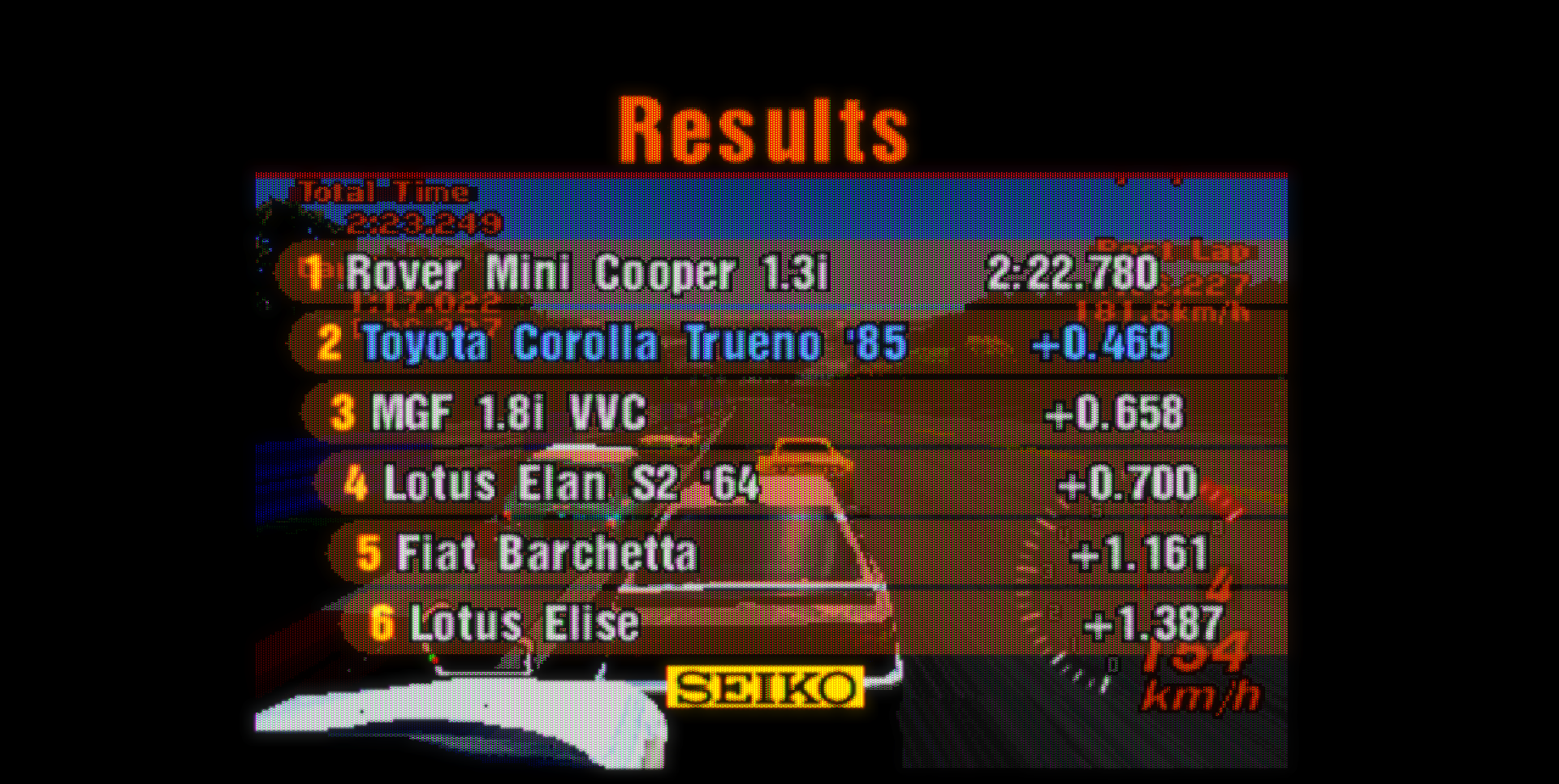
Not so much Initial D as Mr Bean. Also, notice that at some points in the game the car is referred to as the "Corolla Trueno" - I believe this is because Polyphony Digital made more of an effort to localise the names of the cars, so the Mazda Roadster is now known as the MX-5 in the PAL version of GT2, and the Mitsubishi GTO as the 3000GT. As the Sprinter appears only to have been sold in Japan and Australia, it's renamed as the Corolla in international versions, leading to oddities like this.
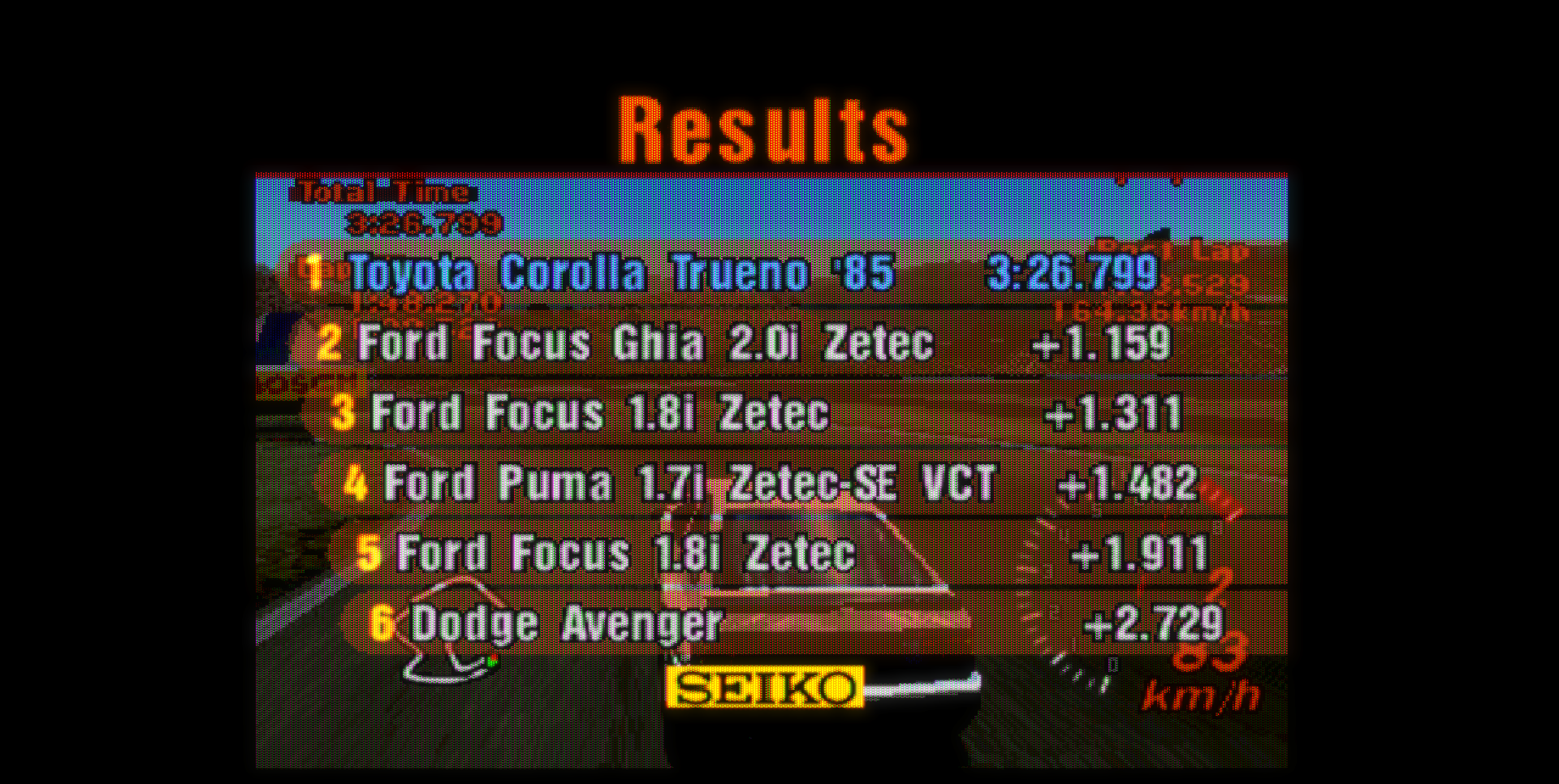
Going forward, the plan for this run is to tackle the events in order of their power limit. Since the Trueno starts off with 125hp, I will start with the sole 147hp event in the game, race 1 of the Lightweight K Cup for kei cars. Erm, hang on...
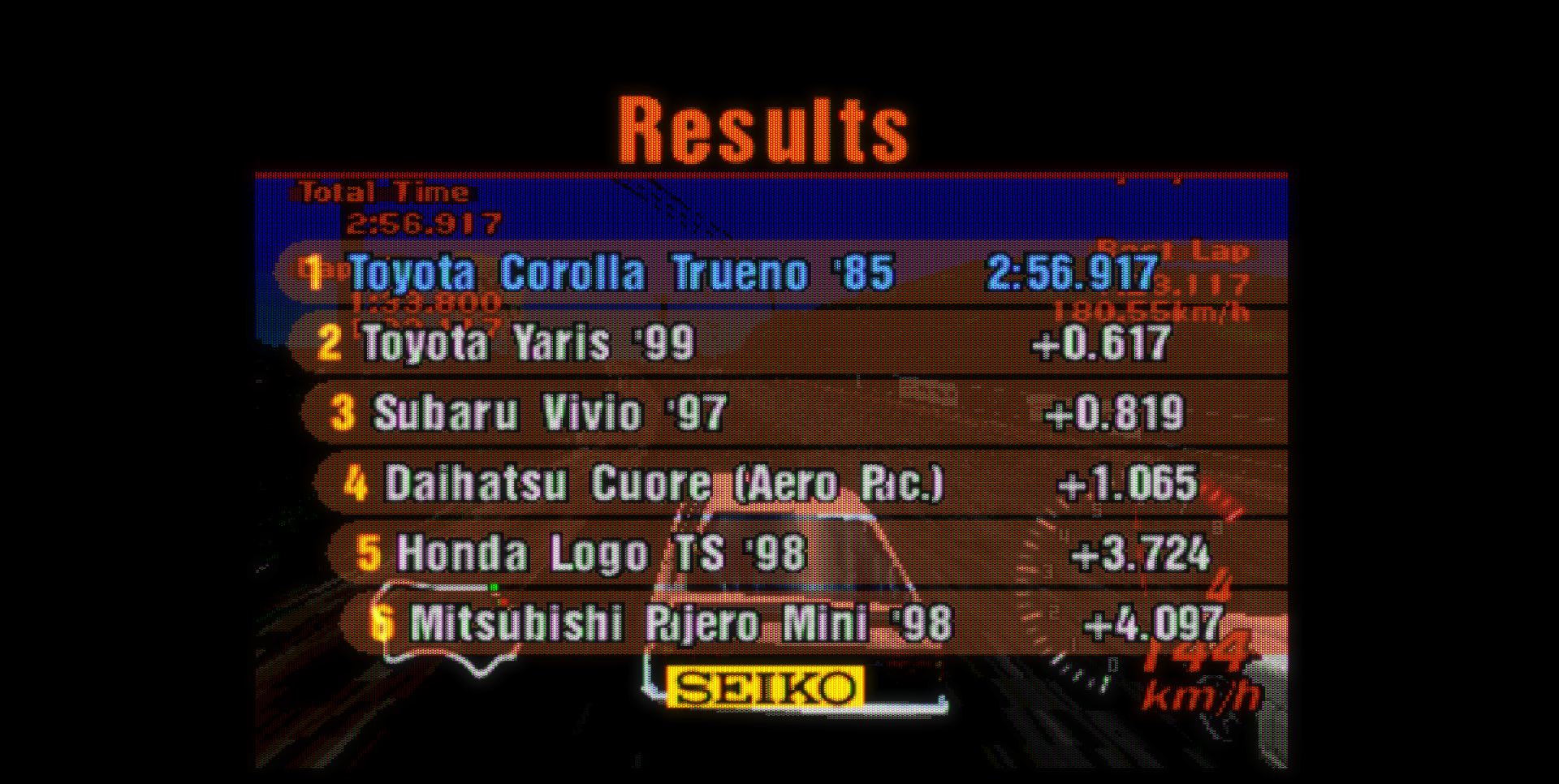
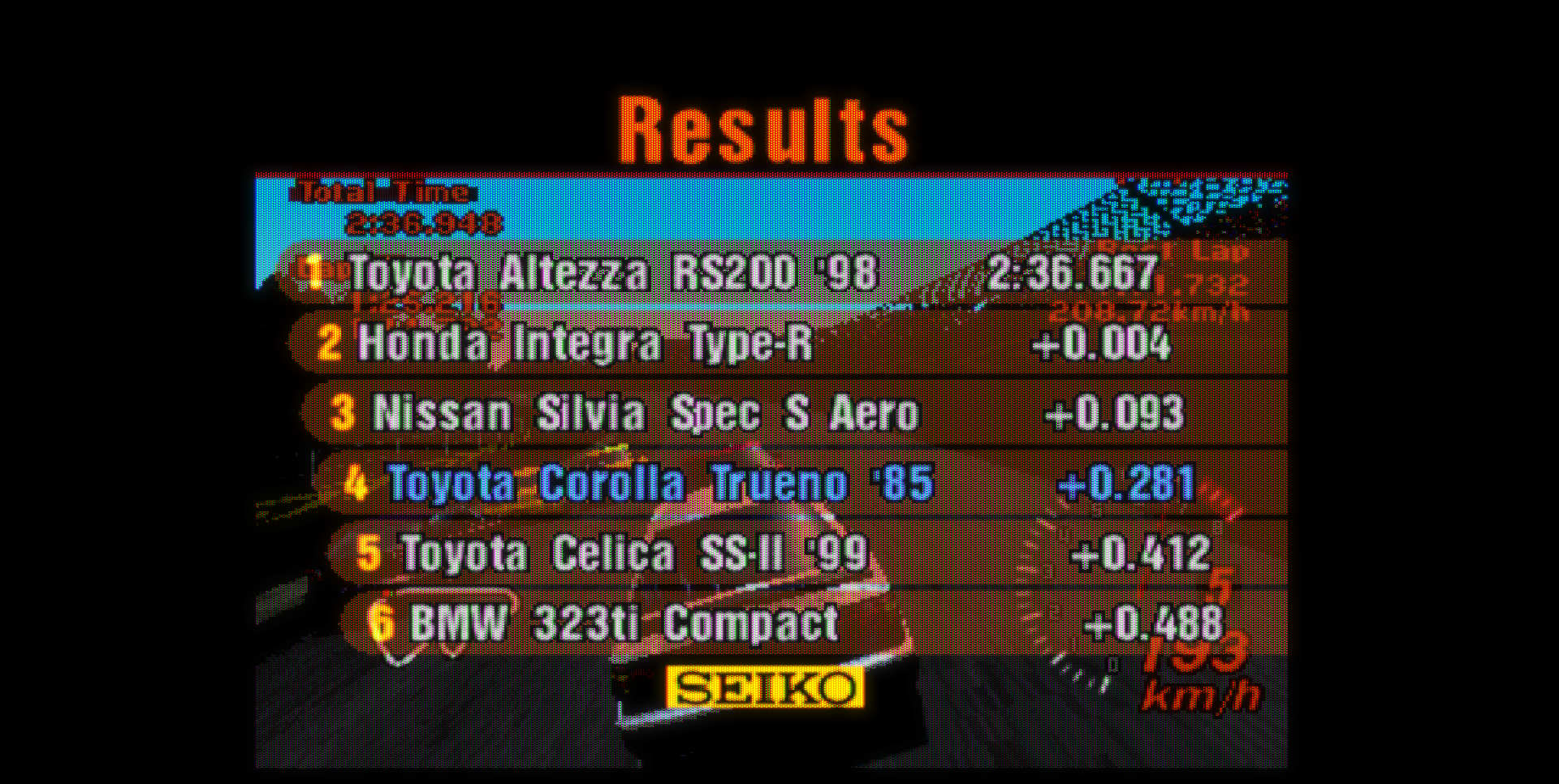
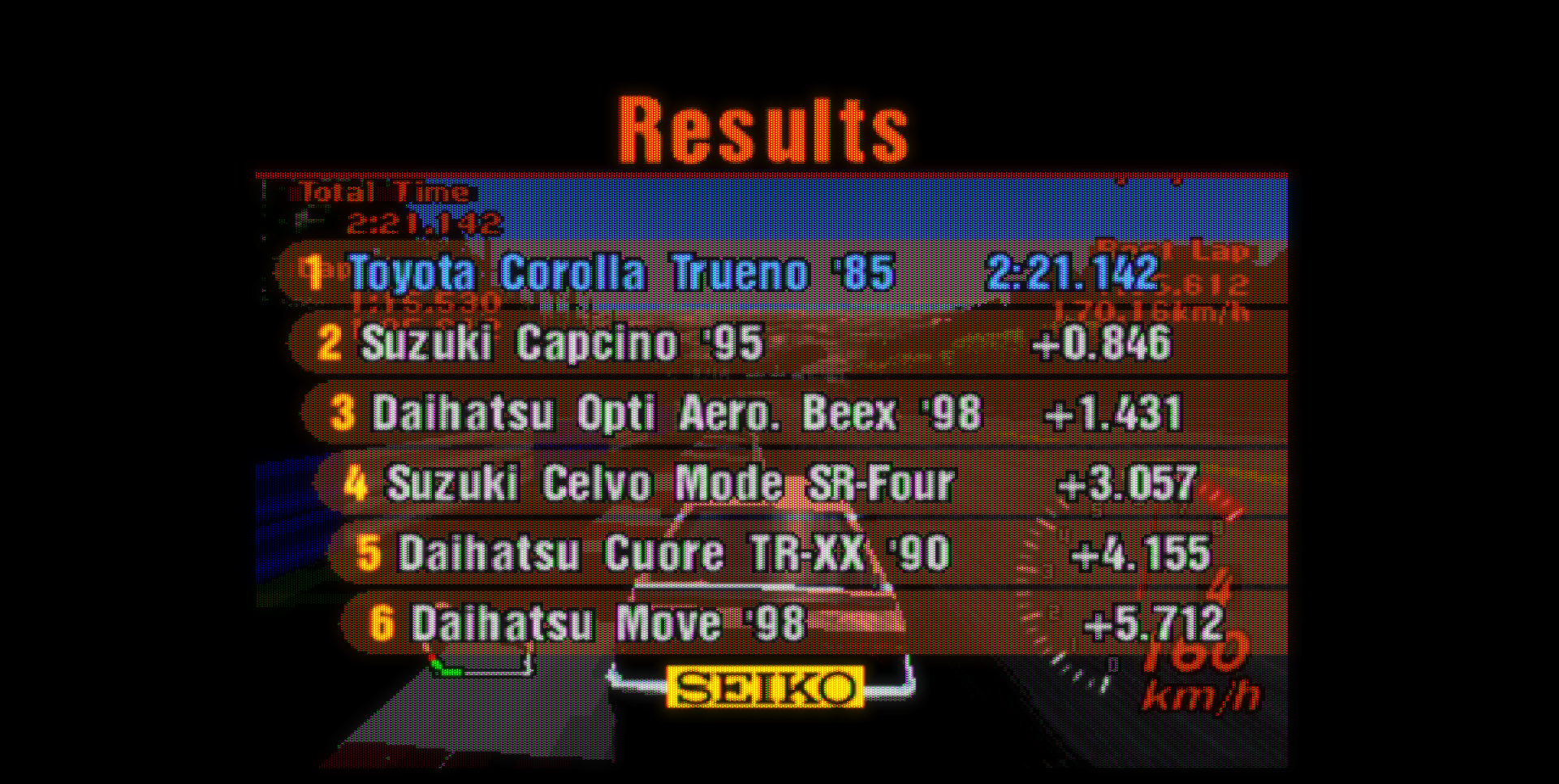
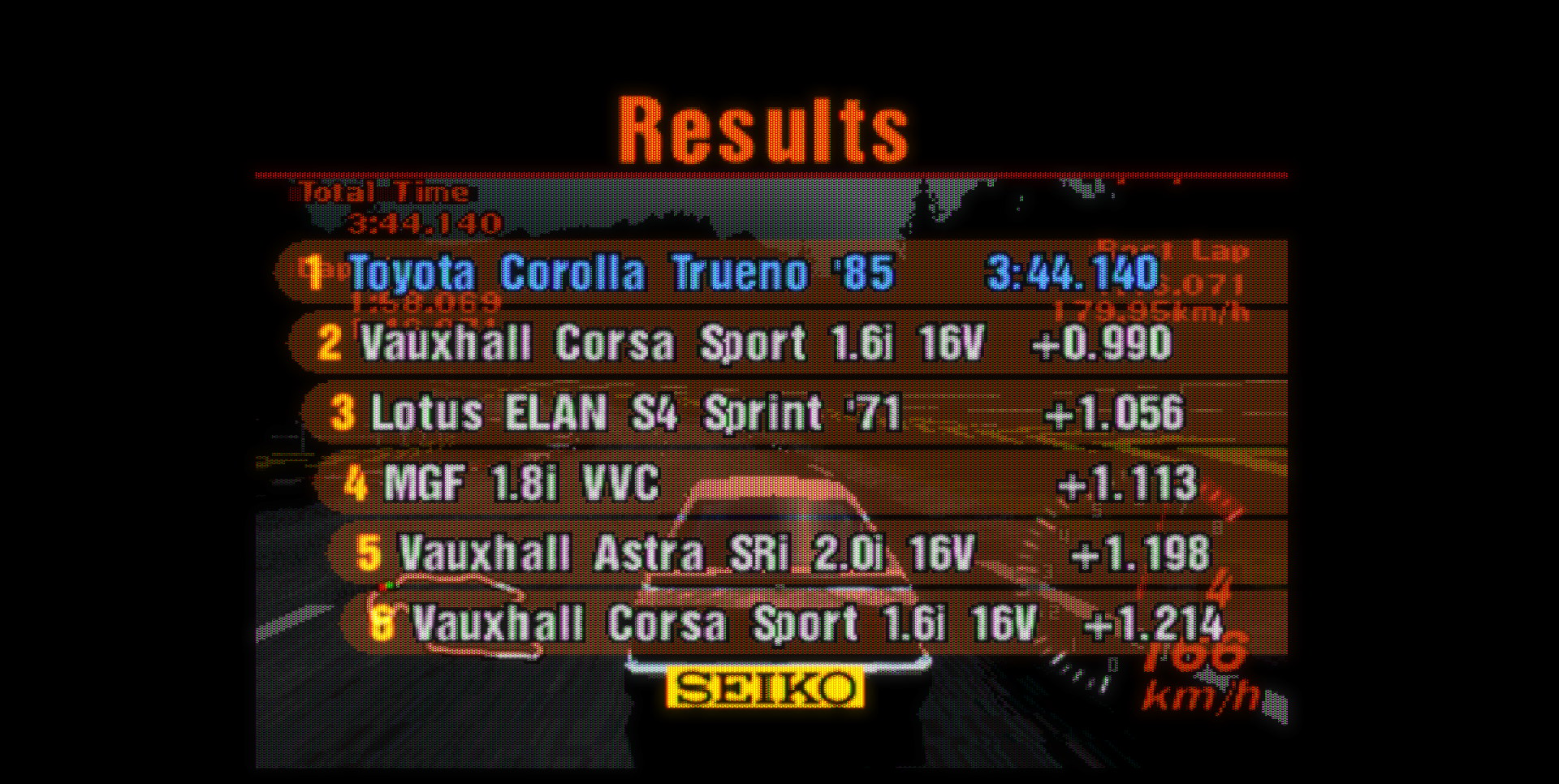
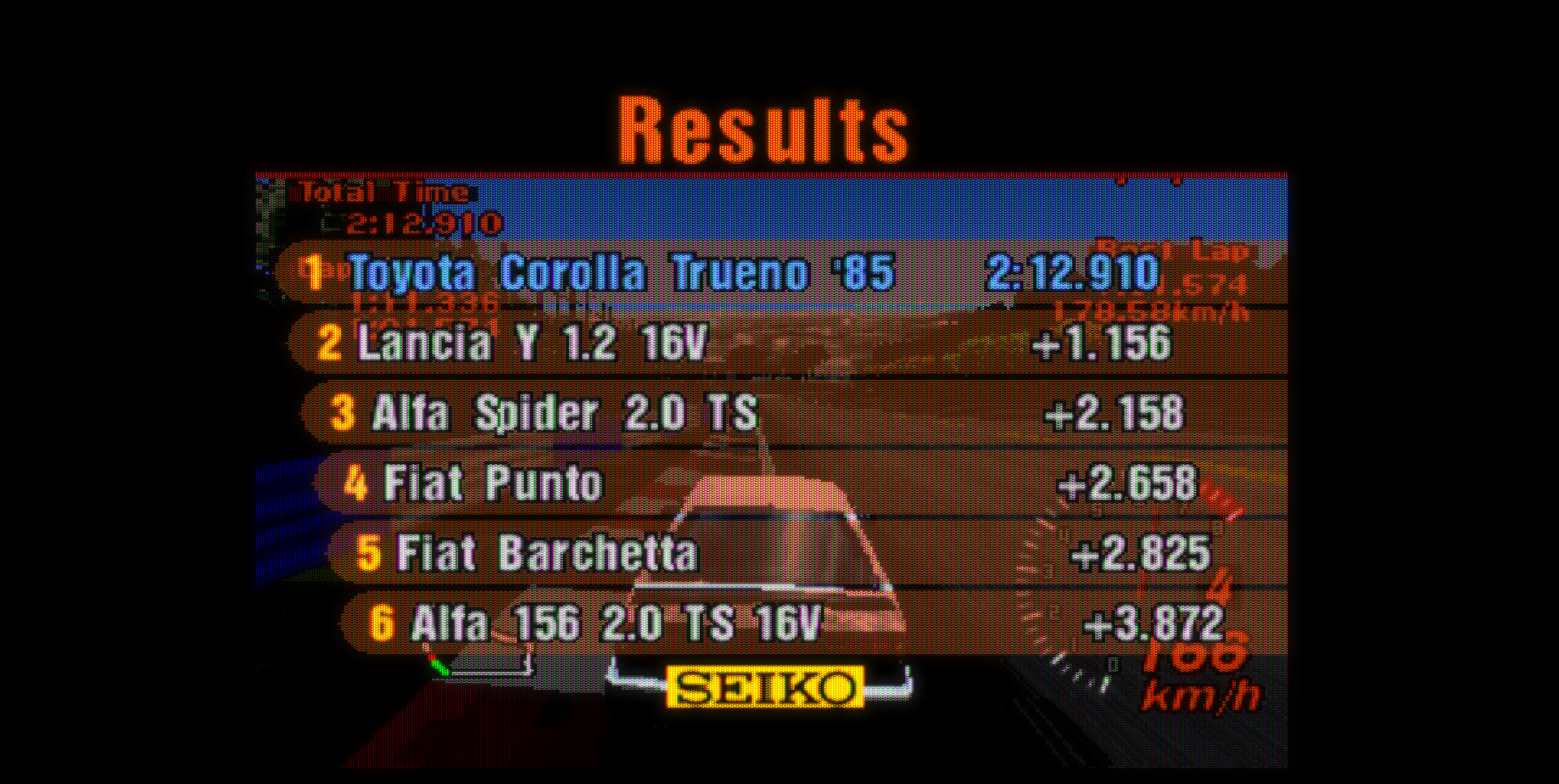
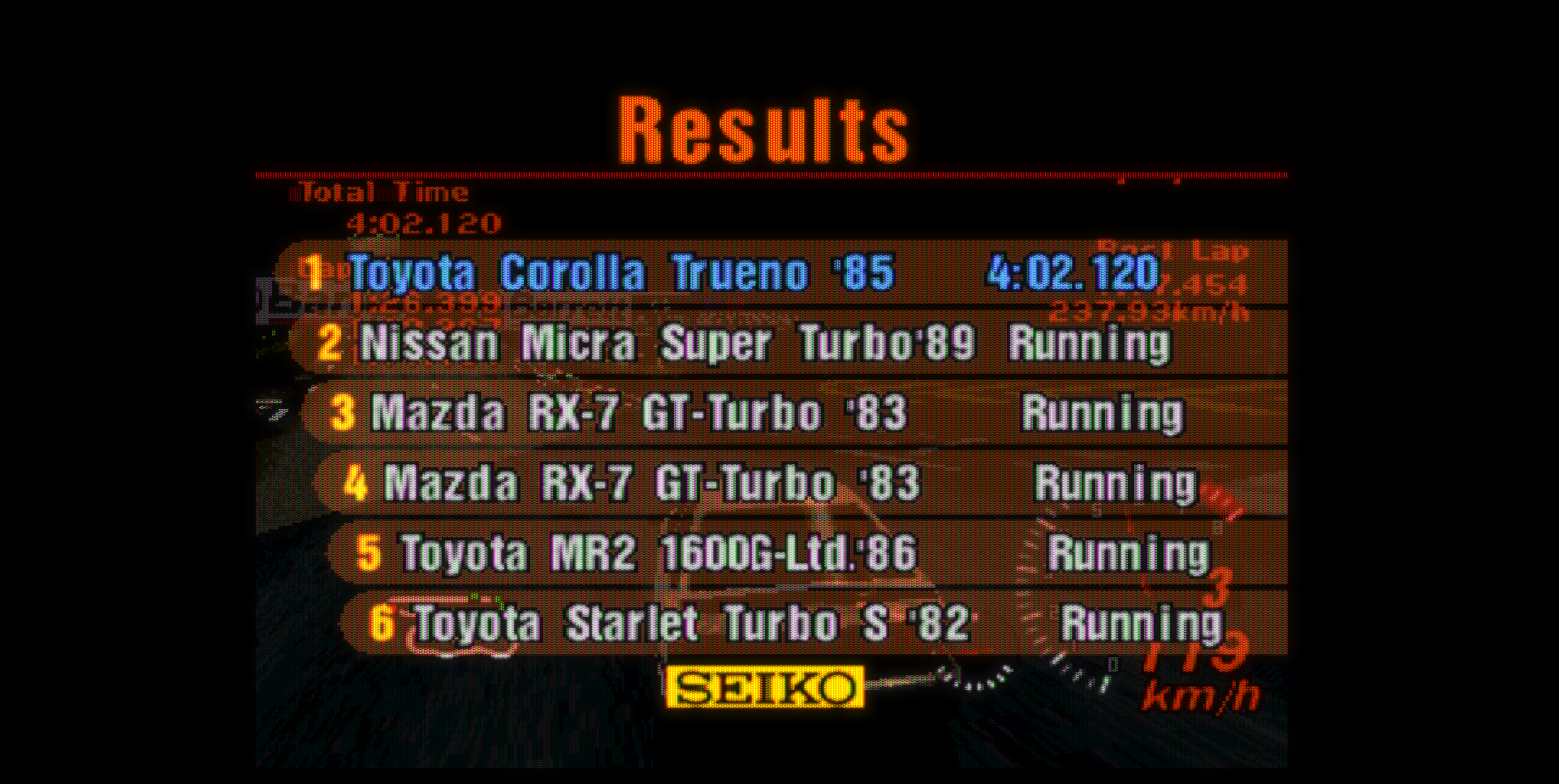
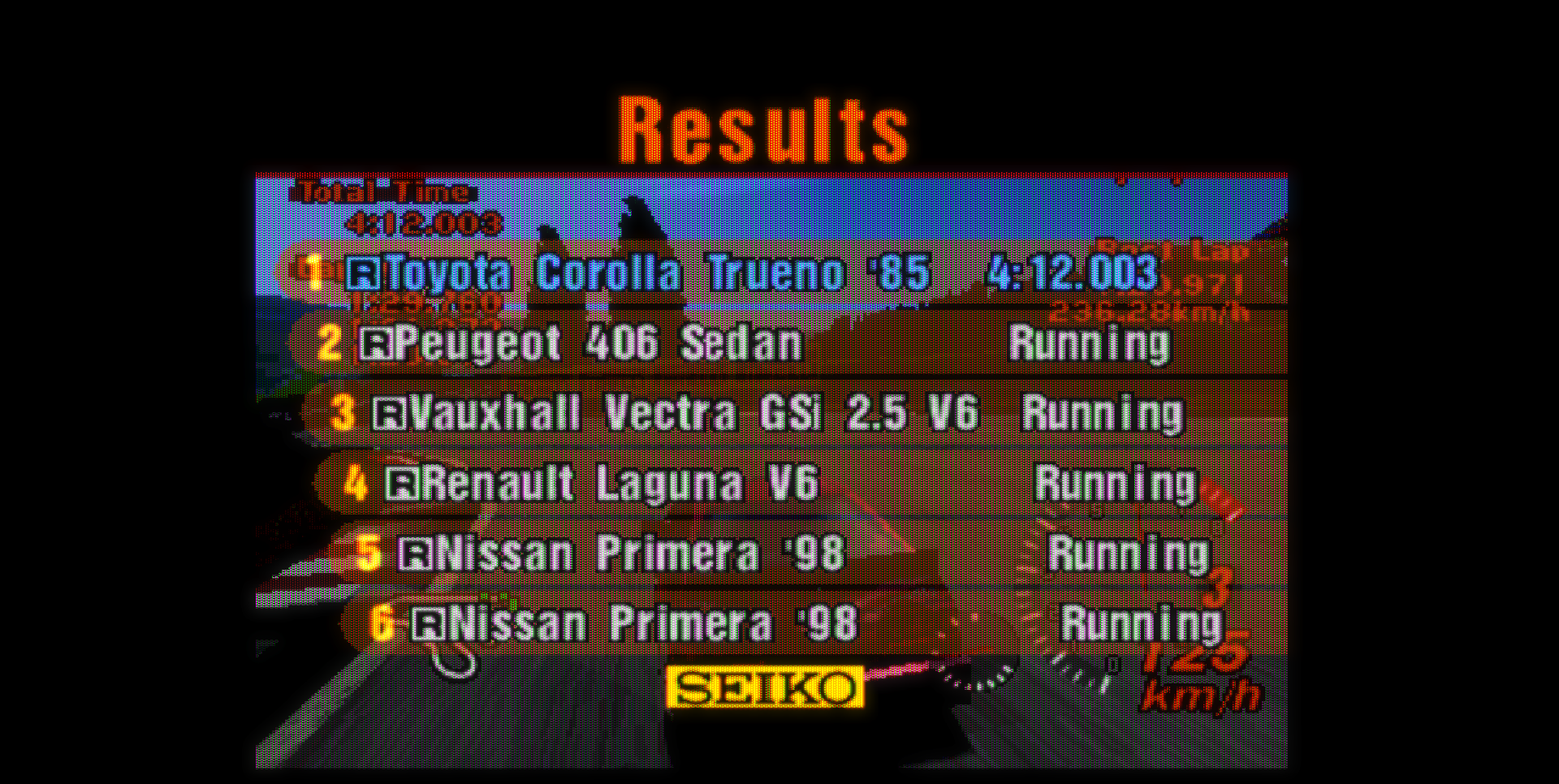
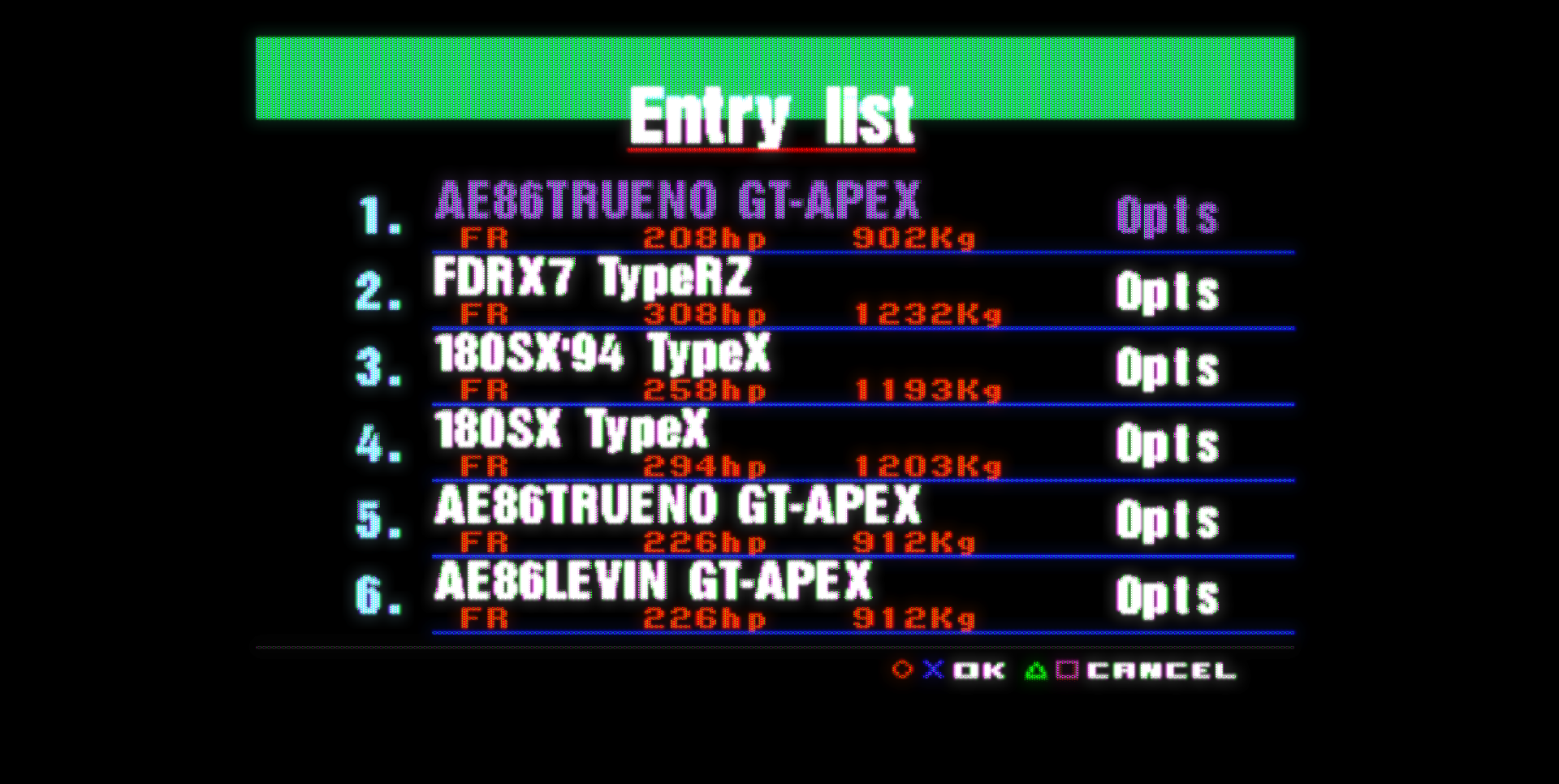
Obviously the Trueno isn't a kei car, but for the majority of GT2's special events - everything except for the drivetrain (FF/FR/MR/4WD) and aspiration (NA/Turbo) races - there is no requirement that your car actually fits into the category that the event is for. Over the course of this run, the Trueno will race against four-door saloons, convertibles, and estate cars, among others. Unsurprisingly, I win the race without much difficulty.
197hp races
I now start working on the GT League, the main meat of the playthrough. It consists of three stages which must be completed in order (unless you're playing the Japanese version):
246hp races
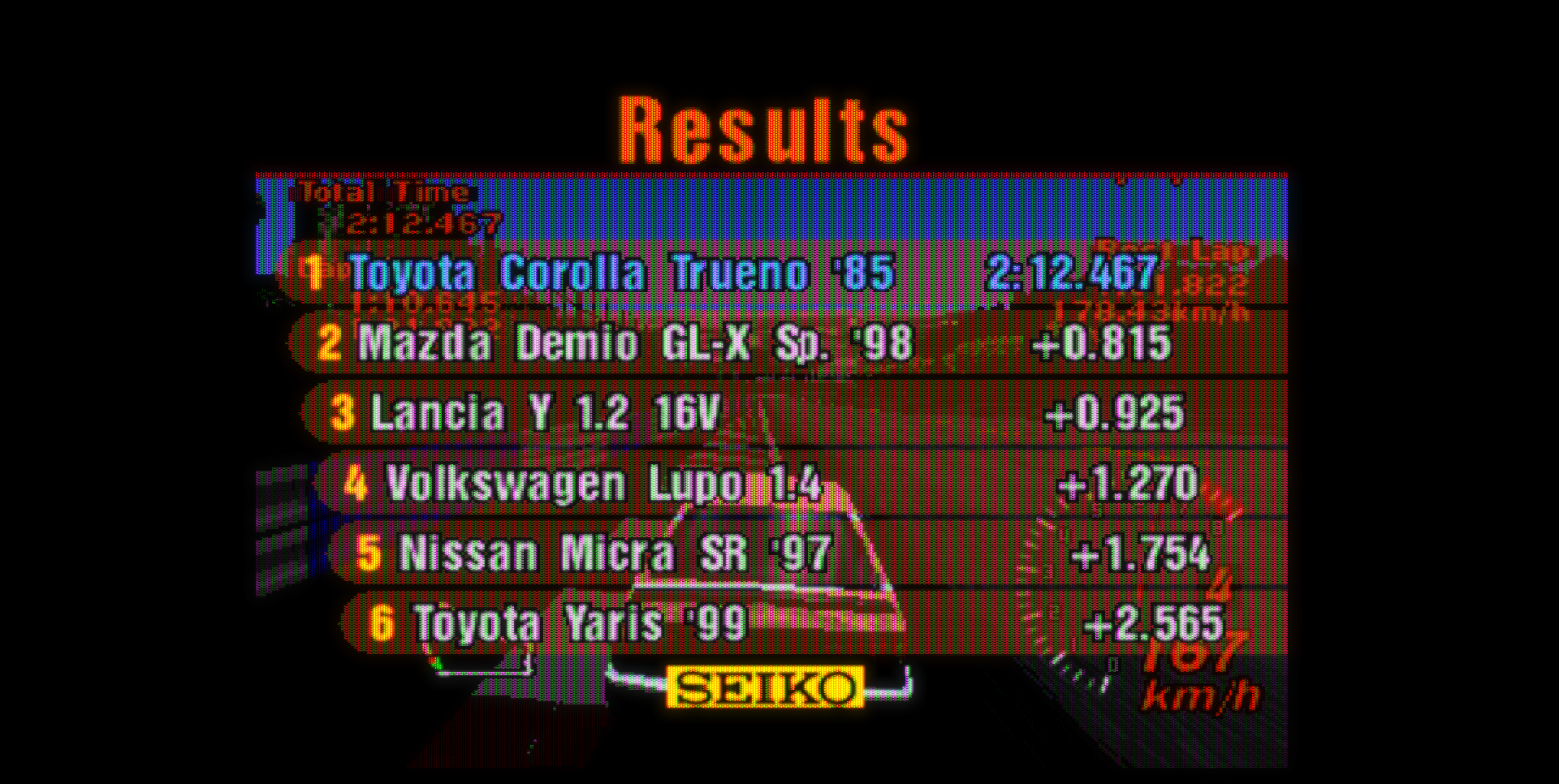
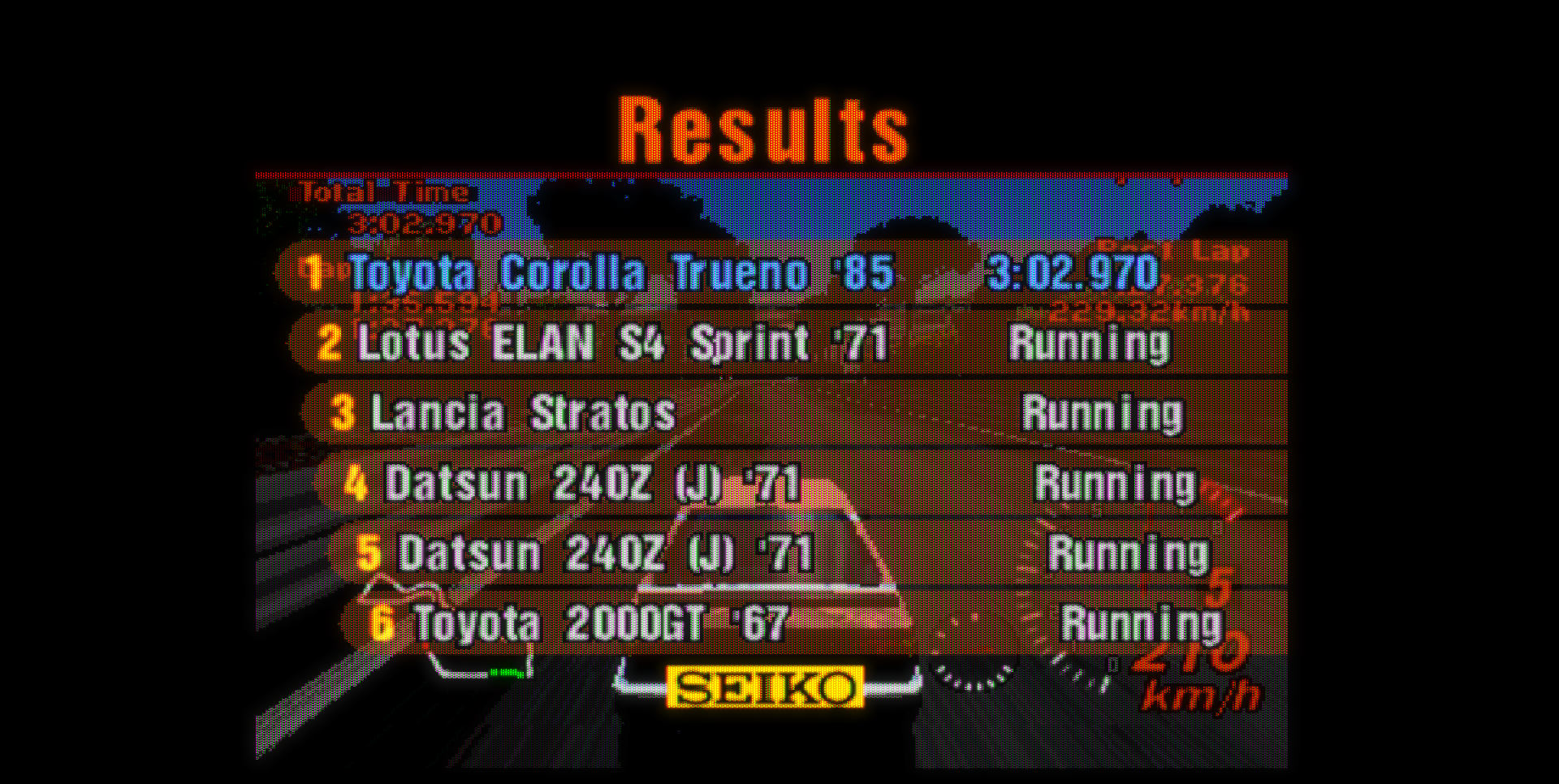
I continue to work my way through the National Leagues, winning race 1 in each of the USA and France, as well as race 1 of the Compact Car World Cup at the Rome Short Course, but just falling short at race 2 at the Seattle Short Course. Another round of upgrades, resulting in a significant power increase later, I finish off the last of the Sunday Cup races before returning to claim victory in Seattle. The first races of the Convertible and Historic cups are taken care of, both at Tahiti Road.
295hp races
Five more National League races, race 1 of the FR Challenge, and race 3 of the Compact cup are taken care of with ease, but now I arrive at one of the most infamous races in the entire GT series - race 2 of the Historic cup at Rome Circuit.
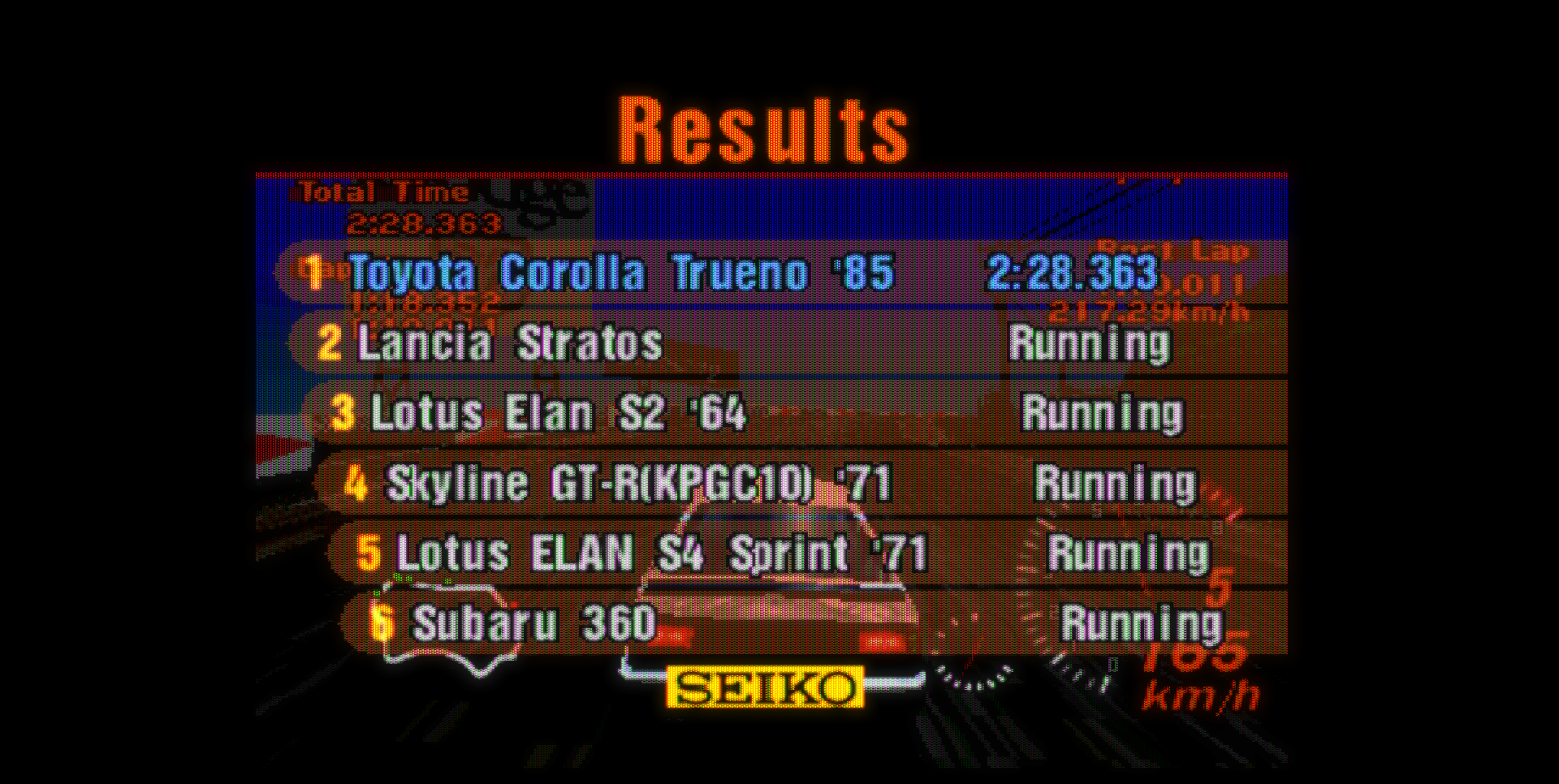
In this race, your opposition consists of pre-1980 sports cars with around 200hp - various Lotuses, a Toyota 2000GT and a Lancia Stratos, for example. Oh, and a Ford GT40 Mk1 with 305hp (10 more than any car you can enter with) and with stock tyres that are equivalent in grip to racing medium tyres on most other cars. Unsurprisingly, this is considered the most difficult race in the game (unless you had the early US version where a Vector M12 race car could show up as an opponent in the Trial Mountain 30-lap endurance race), and the first time most players win this race is when the GT40 doesn't show up on the grid. Nevertheless, skilled players can beat the GT40, even with further handicaps. TeaKanji on YouTube has quite a few videos of this, such as beating the GT40 with stock tyres, or with a car with only 142hp, or while only using first gear, or even while giving the GT40 a 30-second head start:
I don't manage to beat the GT40 on my first attempt, but I'll leave it for now as it isn't essential to this run.
345hp races
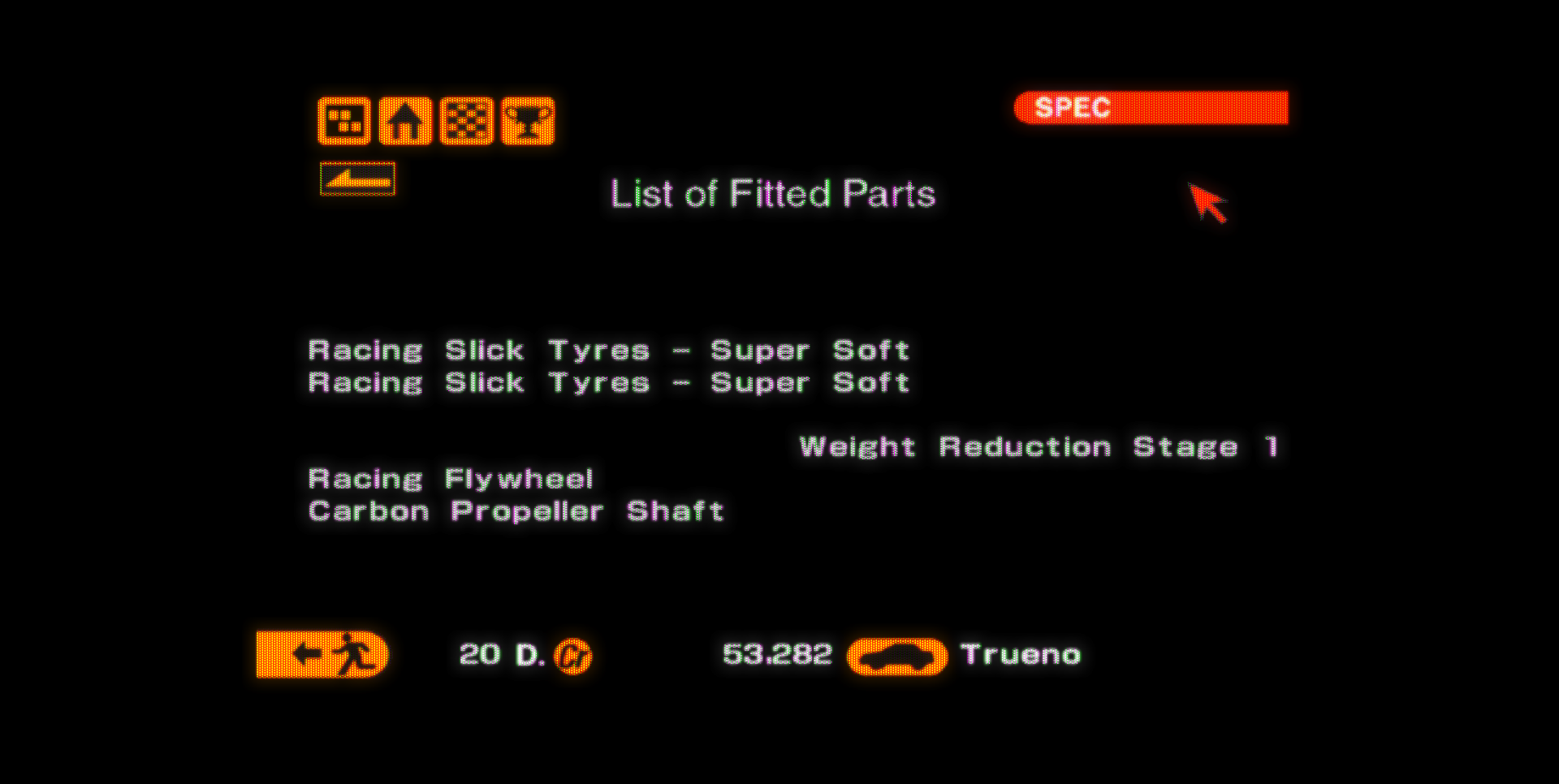
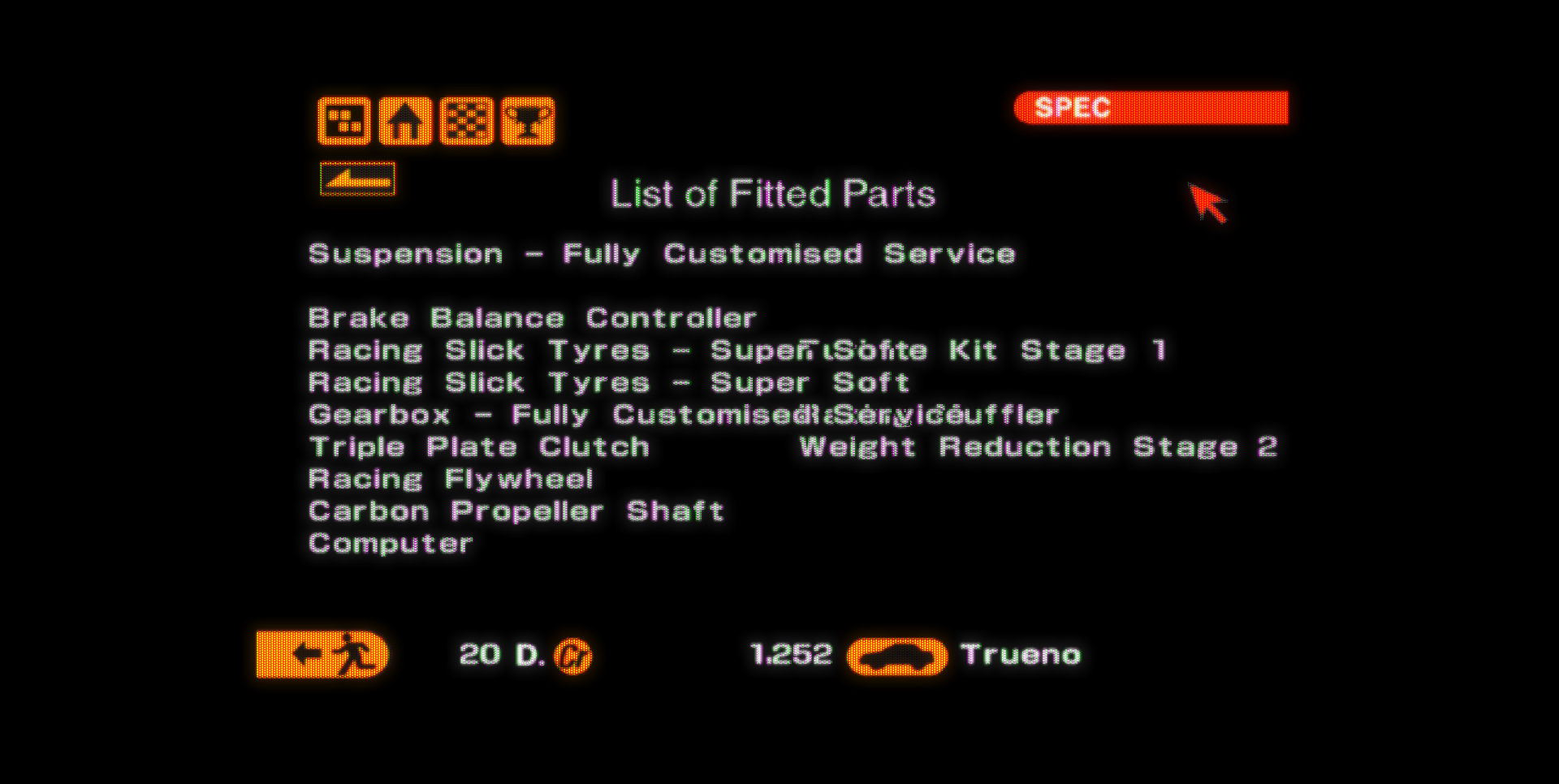
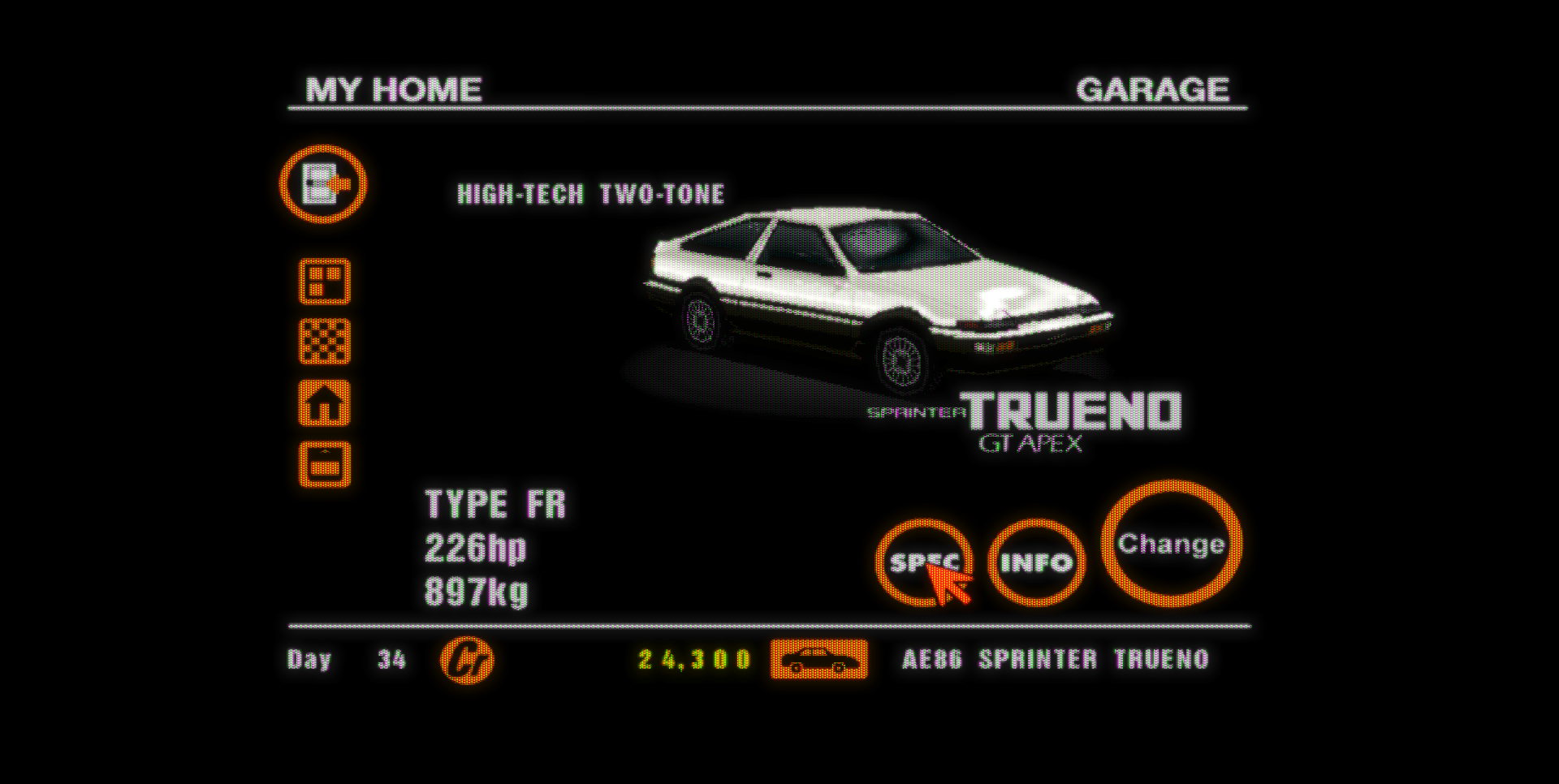
After selling off my prize cars, I have more than enough credits to fully upgrade my car, except for the racing modification (and stability control and traction control, but they're very expensive and not that useful). In the GT League, race 3 in Japan and race 2 in the UK are taken care of, and in the special events, race 2 of the Convertible cup and races 2 and 3 of the 80s cup are all won easily.
394hp races
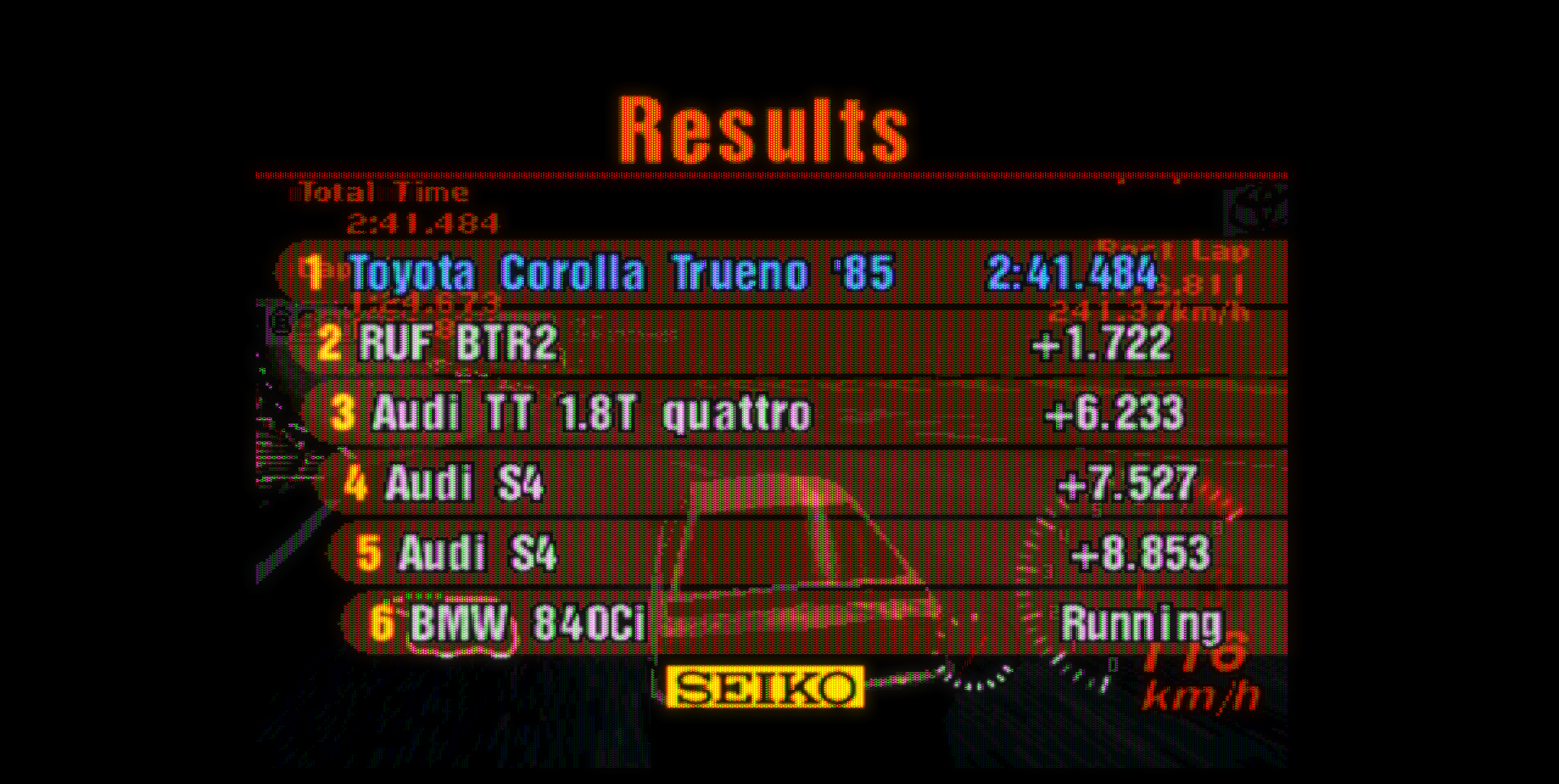
The USA and UK leagues are finished off, while a whole host of special events are ticked off - the entirety of the Wagon Cup, the remaining races in the 80s and Historic cups (although there was no GT40 in the field for race 2 at Rome this time) and the first races of the 4-Door Cup, Grand Touring Car Trophy, and Pure Sports Car Cup.
443+hp races, and the final push
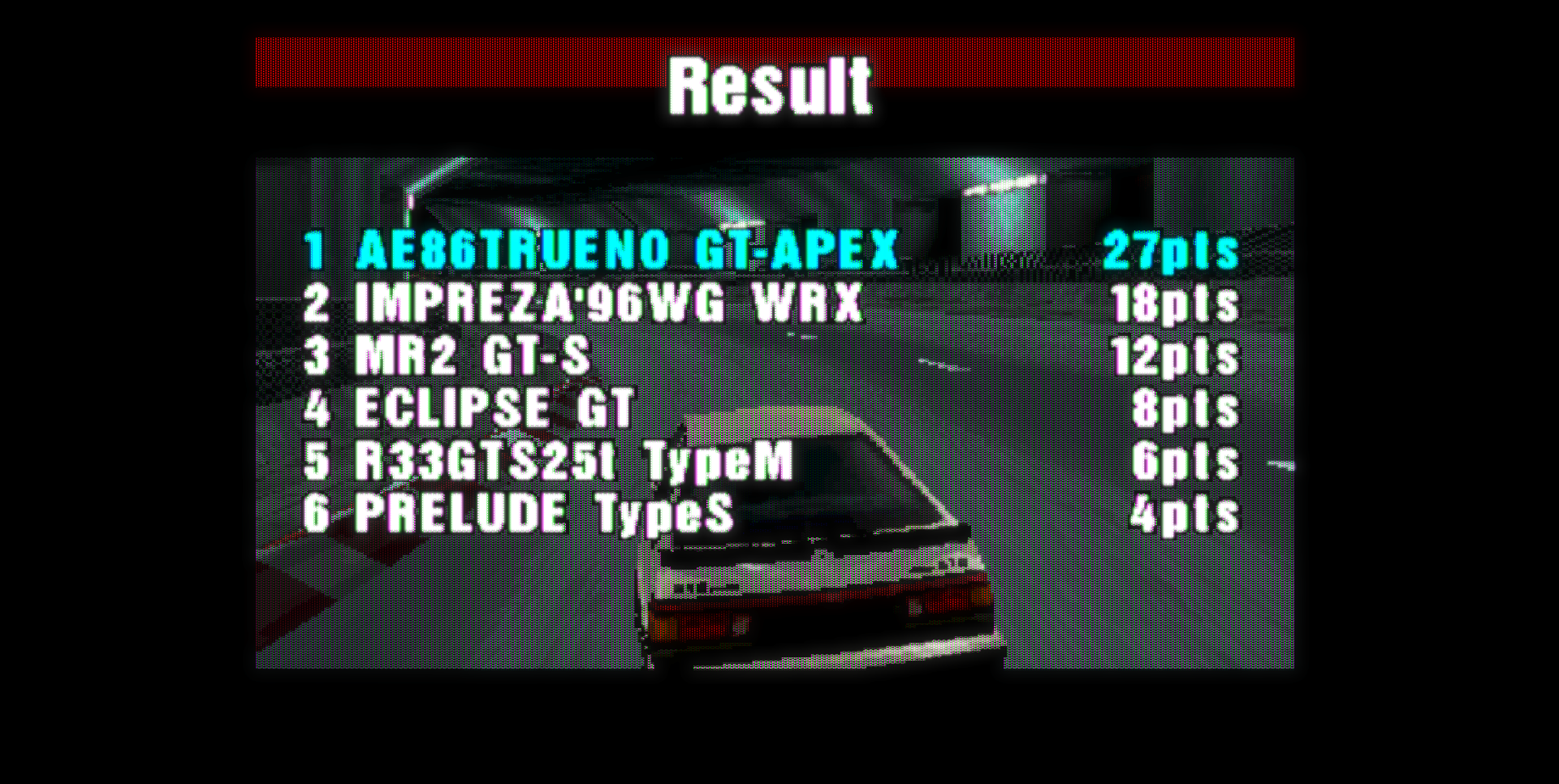
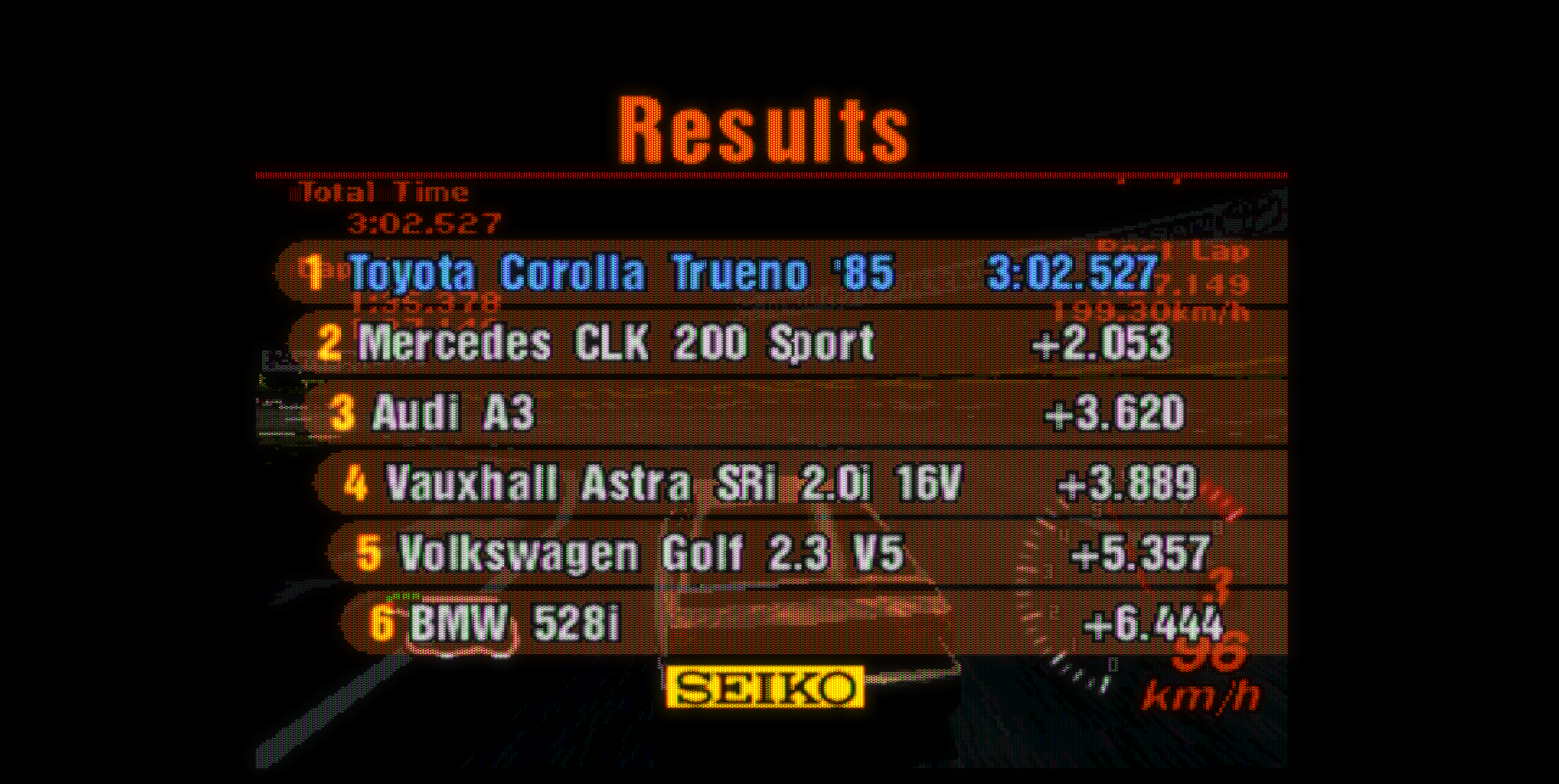
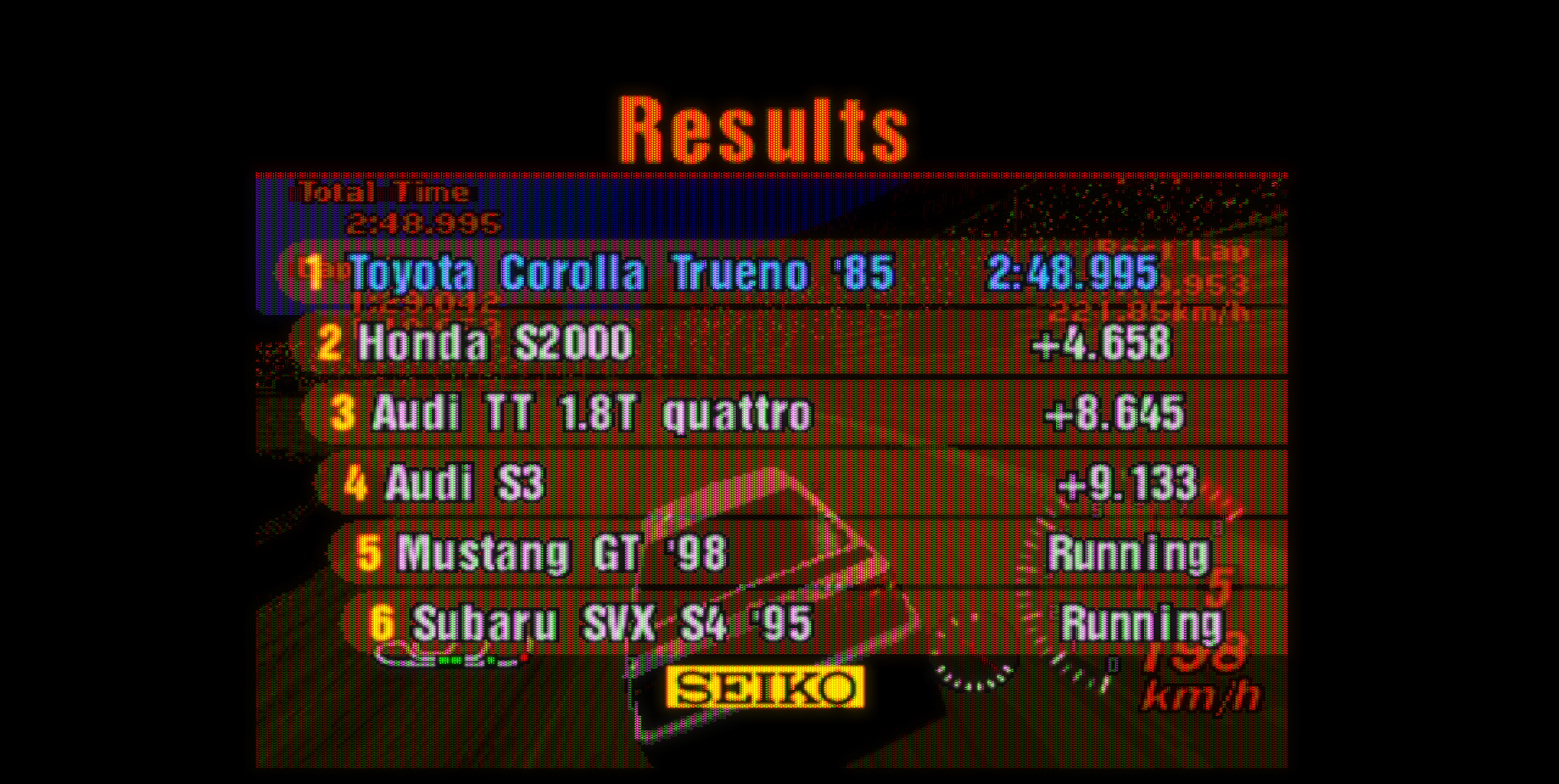
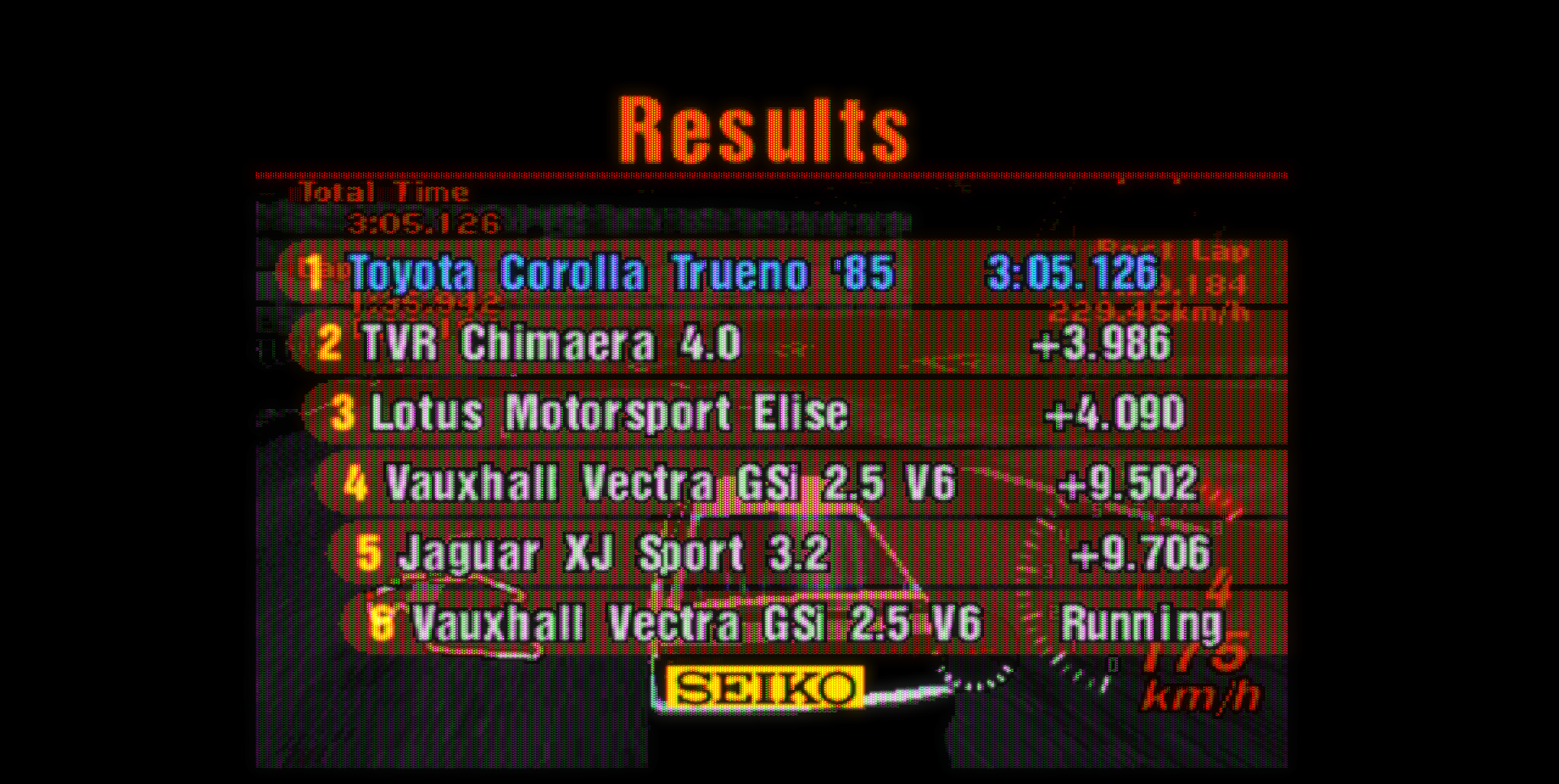
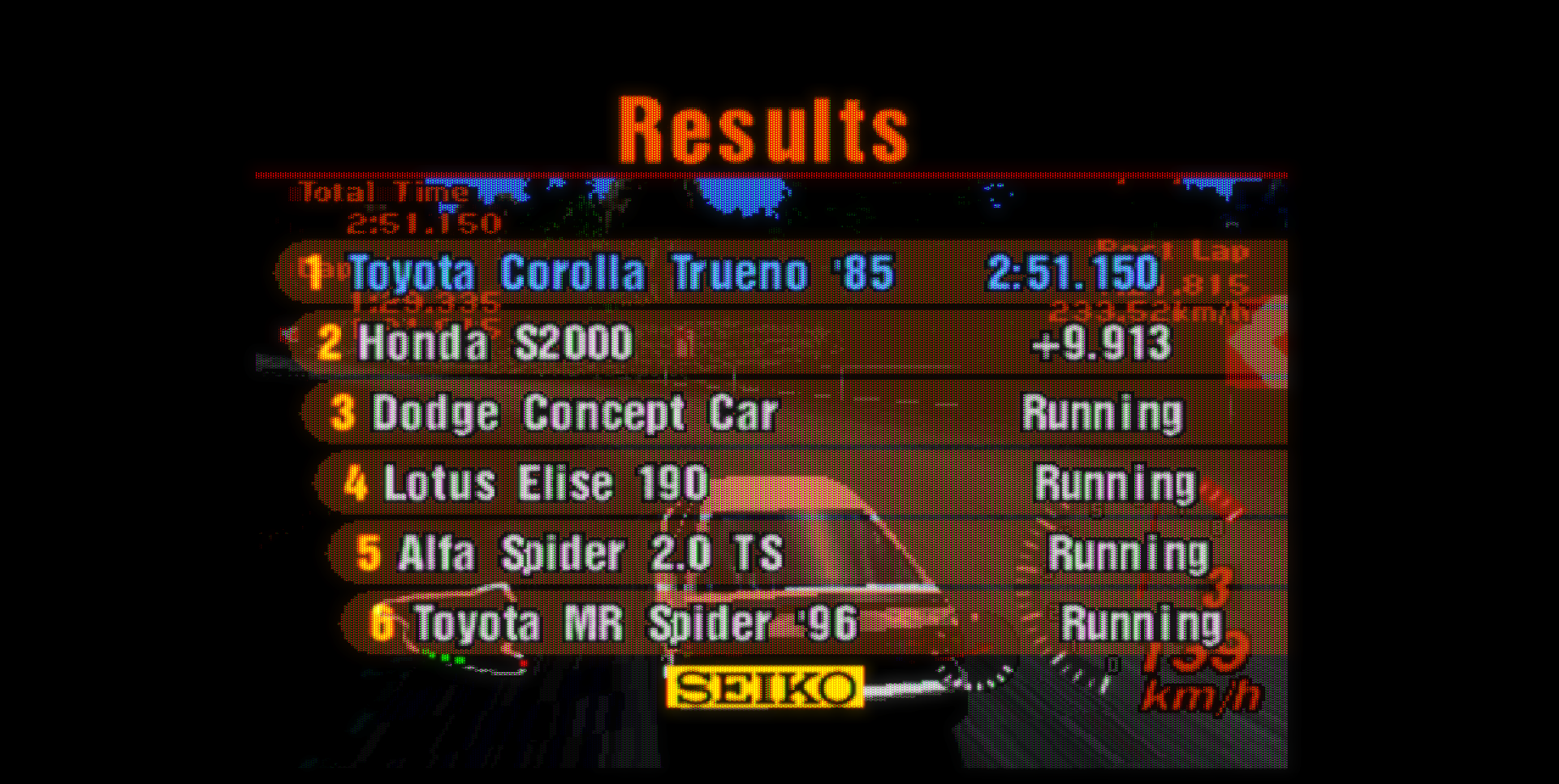
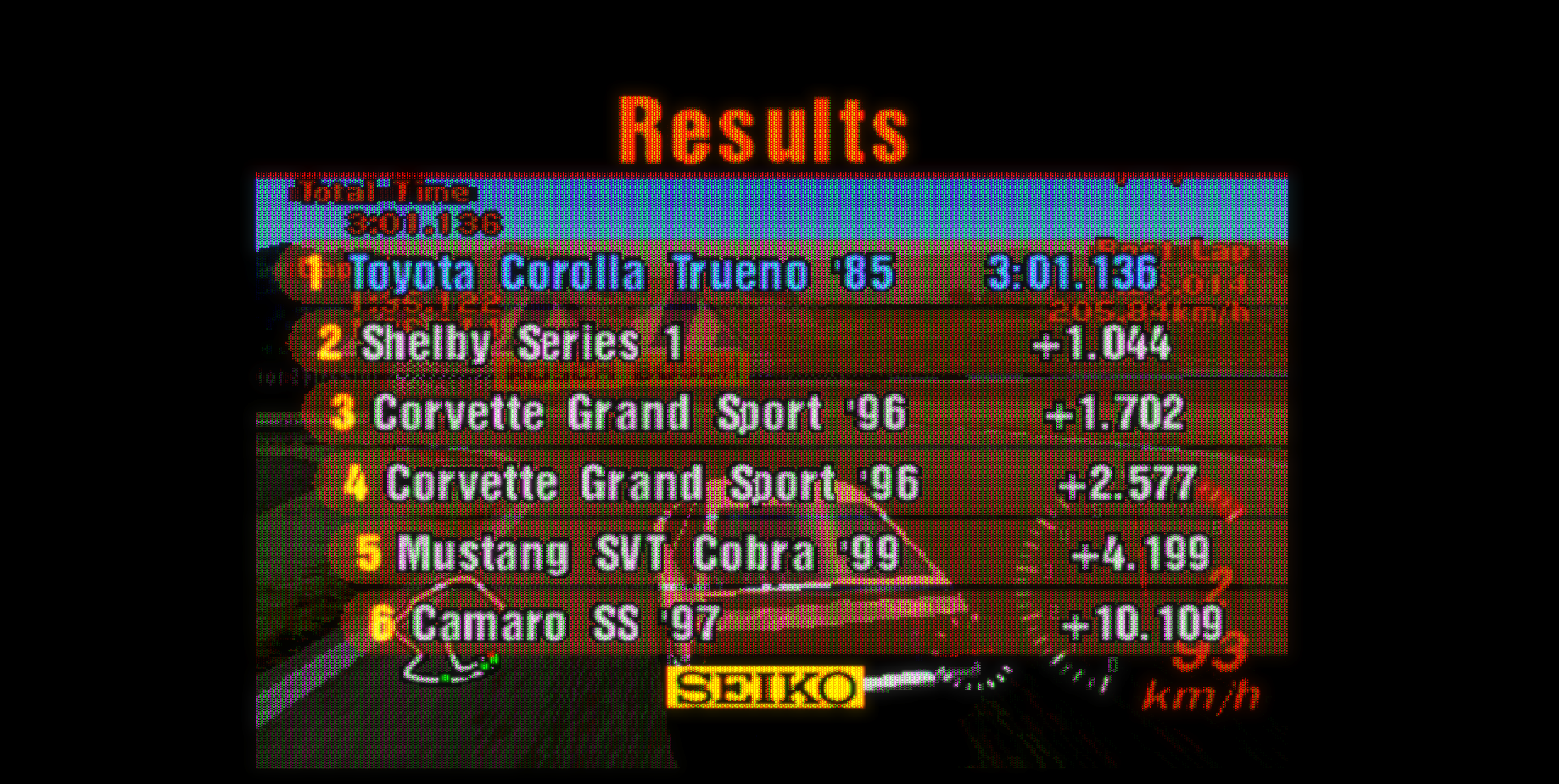
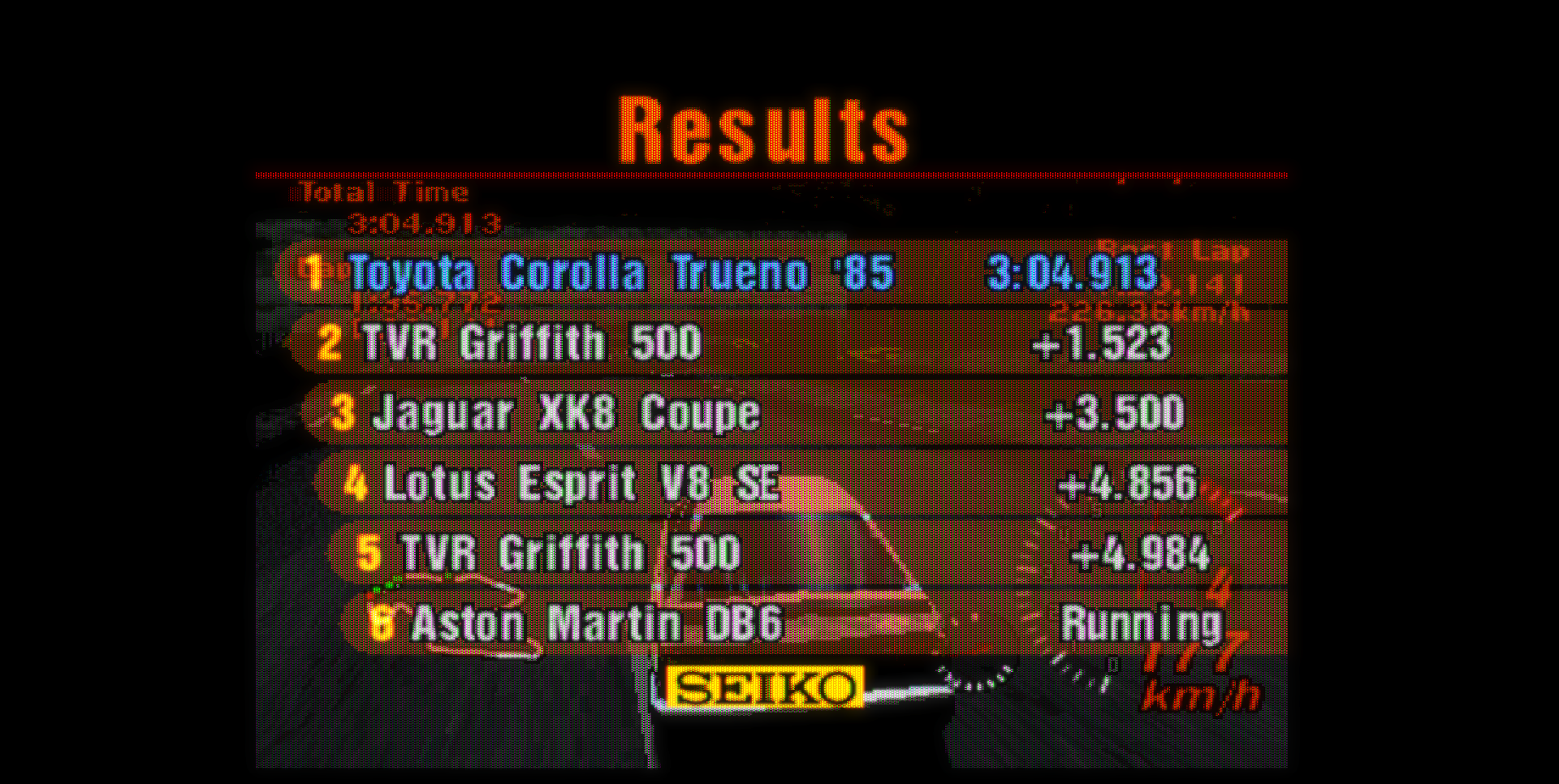
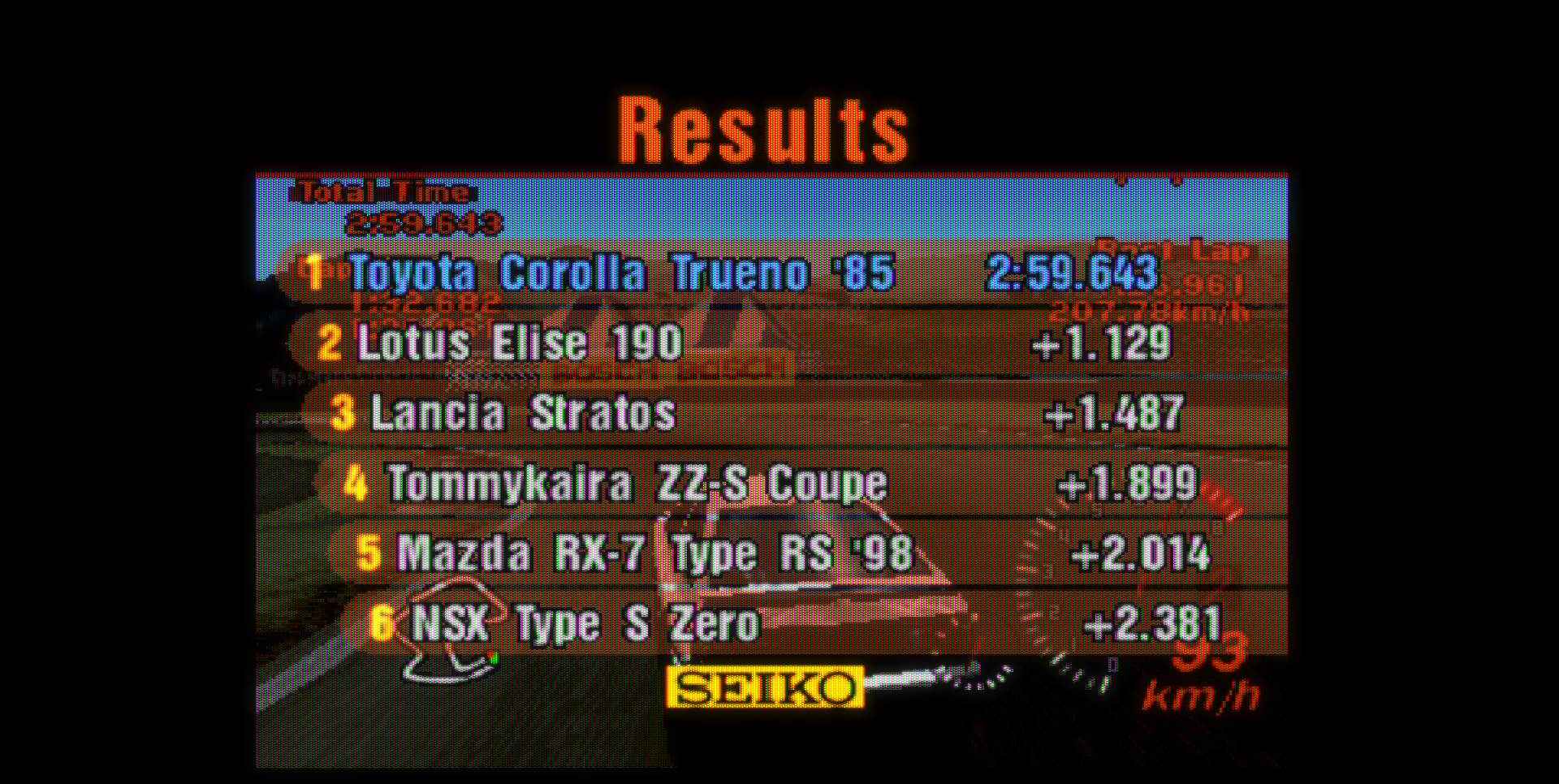
The last of the national GT League races is completed as I win race 3 in Germany. Then, after I do a few more 443hp and 493hp special events as a warm-up, I take on the Pacific League, featuring Japanese and American cars. With a power limit of 542hp, this is, on paper, the most difficult event I have tackled up to this point, but I win all three races on the first attempt. The European League for, well, European cars is ostensibly another step up, with a power limit of 591hp, but once again my Trueno is more than up to the task.
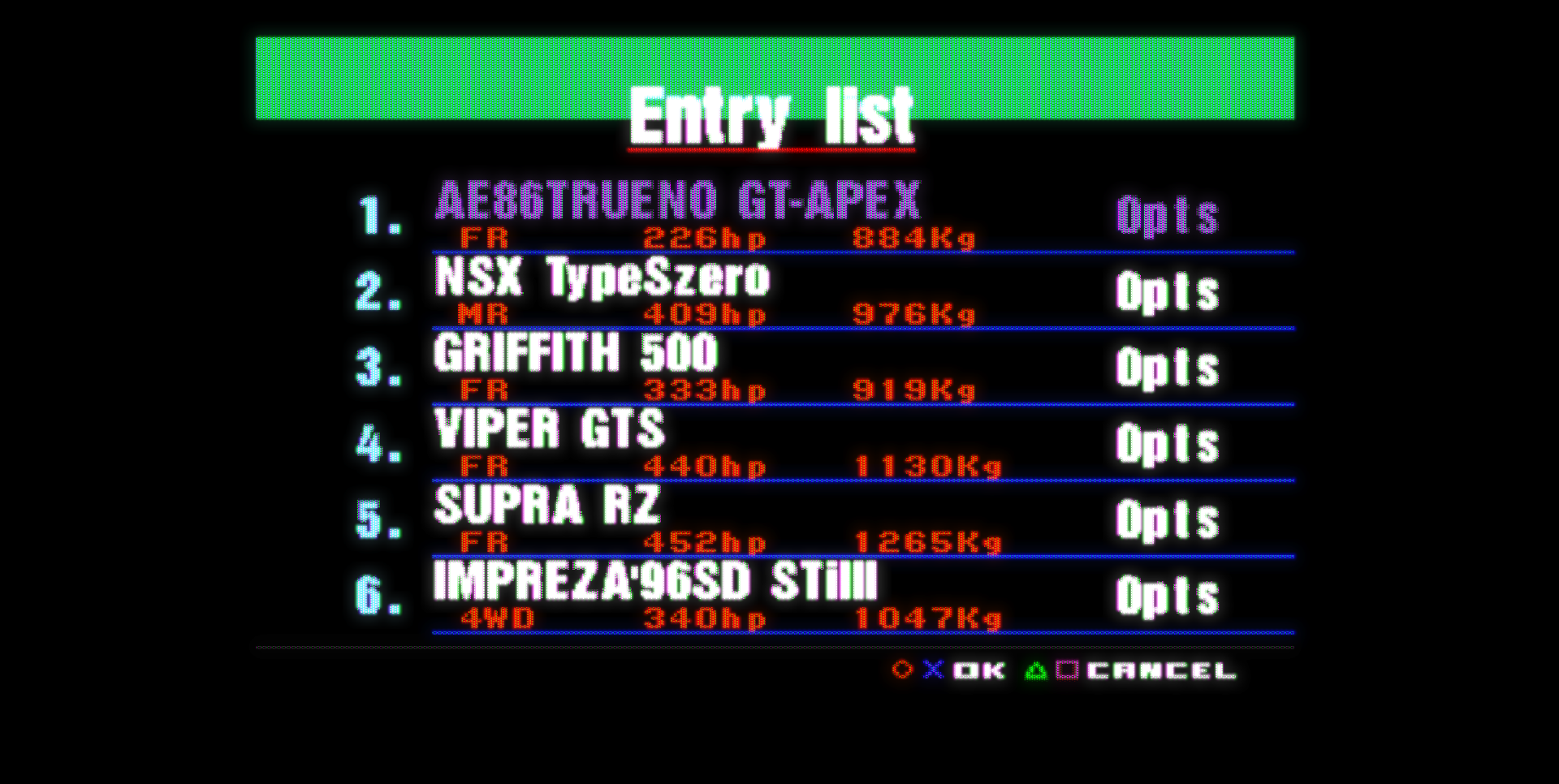
With the National, Pacific, and European Leagues conquered, I am now, in theory, able to take on the GT World League. But even after applying the racing modification, I don't like my chances of success in a series where even the least powerful opponent will have easily more than double my car's power.
However, I have a plan.
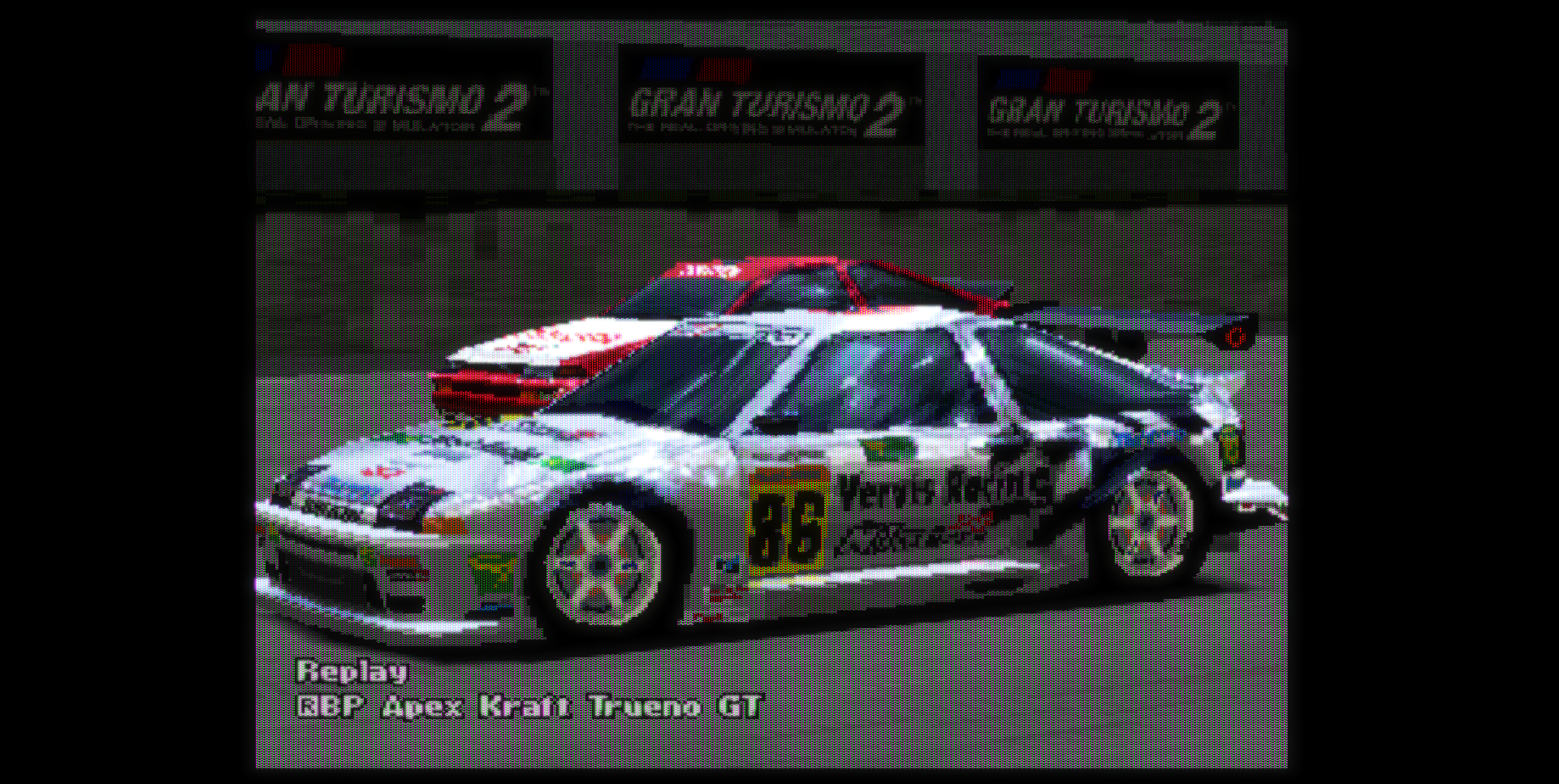
Remember when I said that "as late as 2001 it was being raced in the All Japan Grand Touring Car Championship"? Well, GT2 contains a number of cars from the 1999 season of the JGTC (as well as a few from previous seasons), from both the GT500 and GT300 classes (so called because when these classes were established in 1996, the cars in each class had around 500hp and 300hp respectively. Nearly 30 years and several regulation changes later, the GT500 cars have over 600hp, while in the GT300 class, even the least powerful cars will have nearly 500hp, and some of the more powerful cars aren't that far off the GT500 cars in terms of engine power). There are GT500 and GT300 championships in the special events section, and among the four possible prize cars for winning the GT300 series is this bad boy:
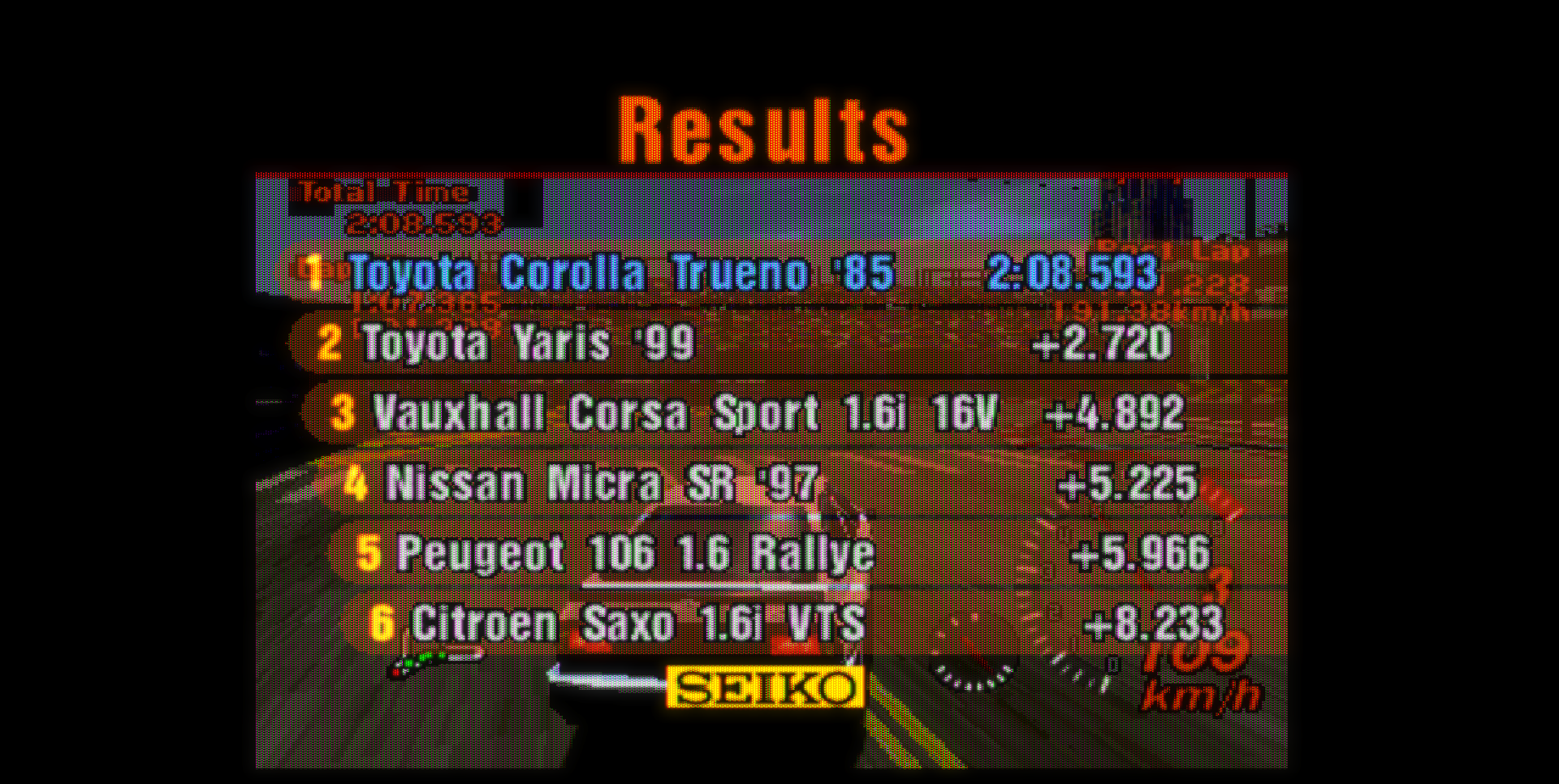
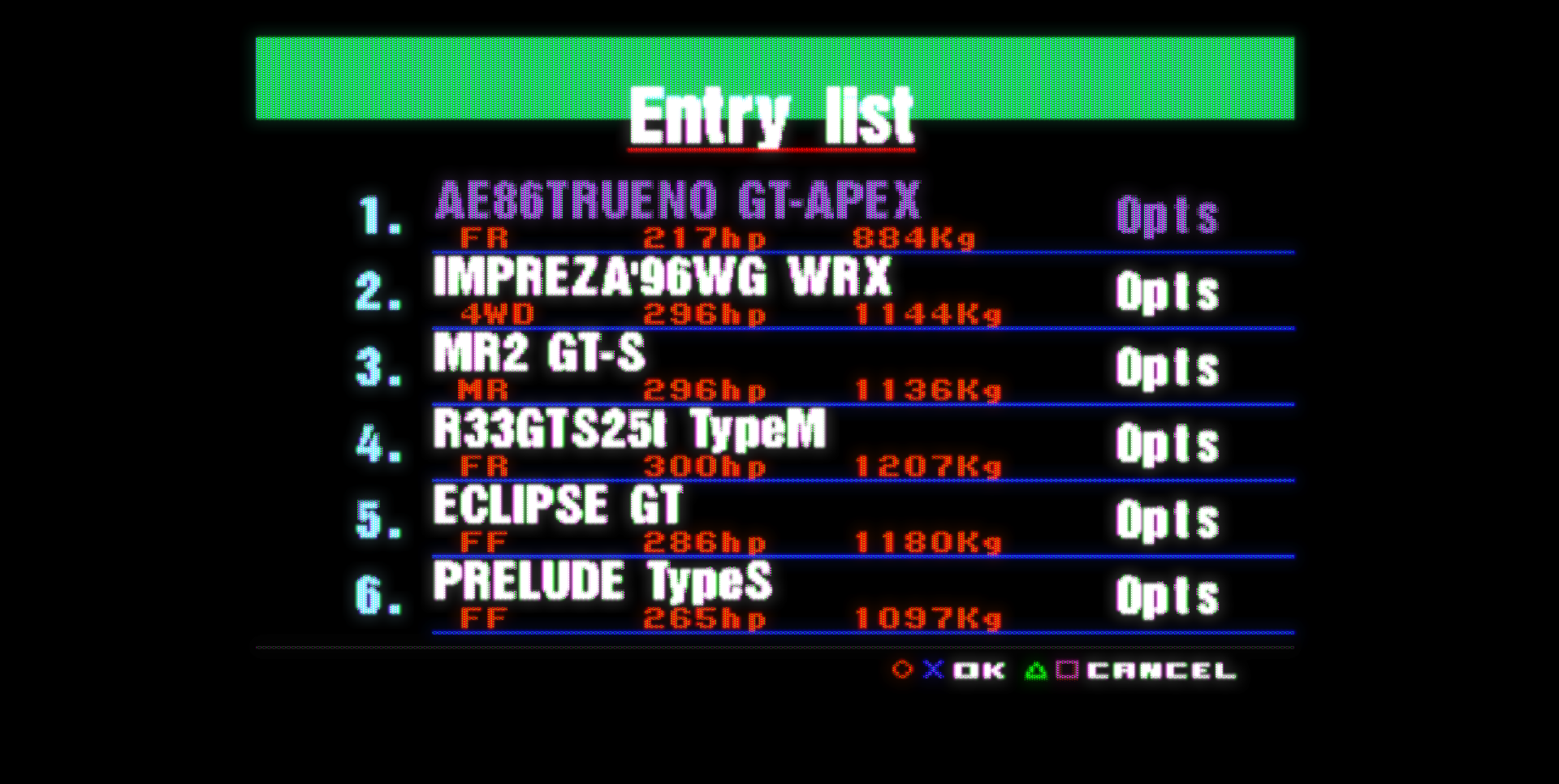
To warm up, I contest the five races of the Super Touring Trophy - essentially the Gran Turismo version of the '90s British Touring Car Championship - and win them all by at least five seconds, and a couple by over ten seconds. On paper, the GT300 cars should be faster than the Super Touring cars, but not overwhelmingly so - around this time they performed similarly in a straight line, with the GT300 cars having a handling advantage due to having more advanced aerodynamics. However, quite a few racing cars in GT2, mostly JGTC and rally cars, have significantly increased performance over their real-life counterparts. In the case of the GT300 cars, they're generally around 100hp up on the actual cars (Although these cars would generally have more accurate specs in future GT games, the most egregious example of this is still a couple of games away). This wasn't going to be easy, but I reckoned it was doable.
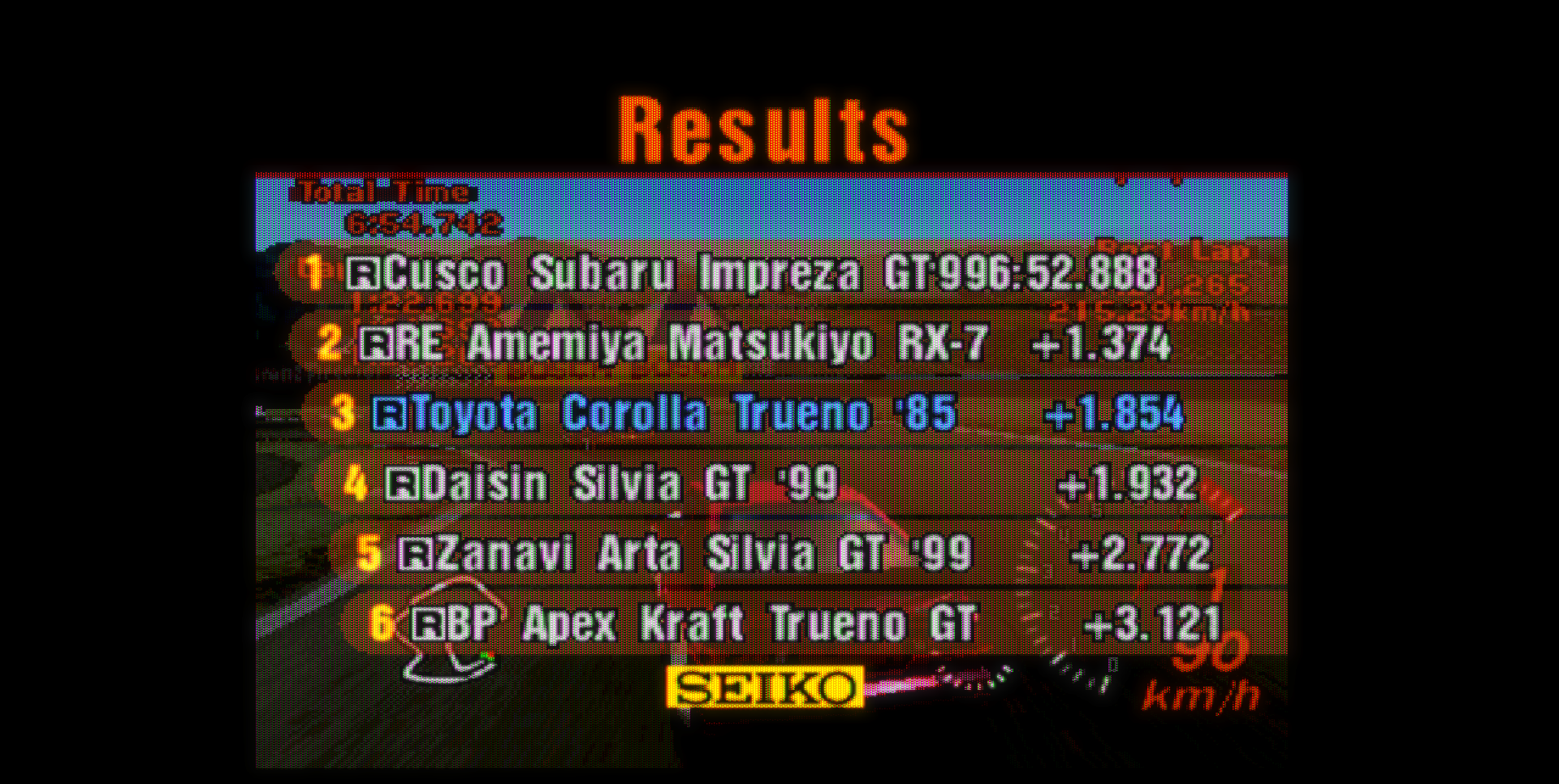
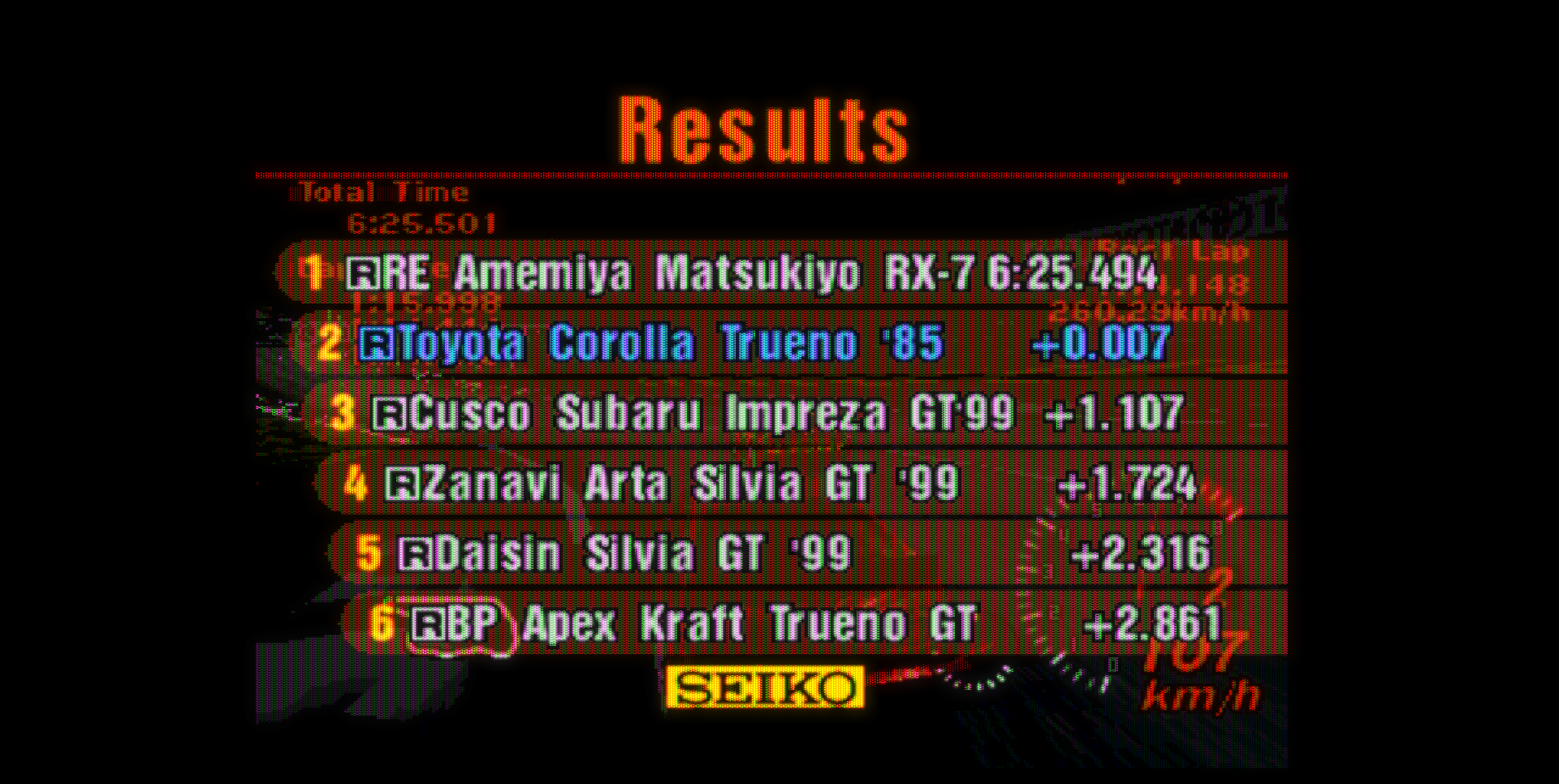
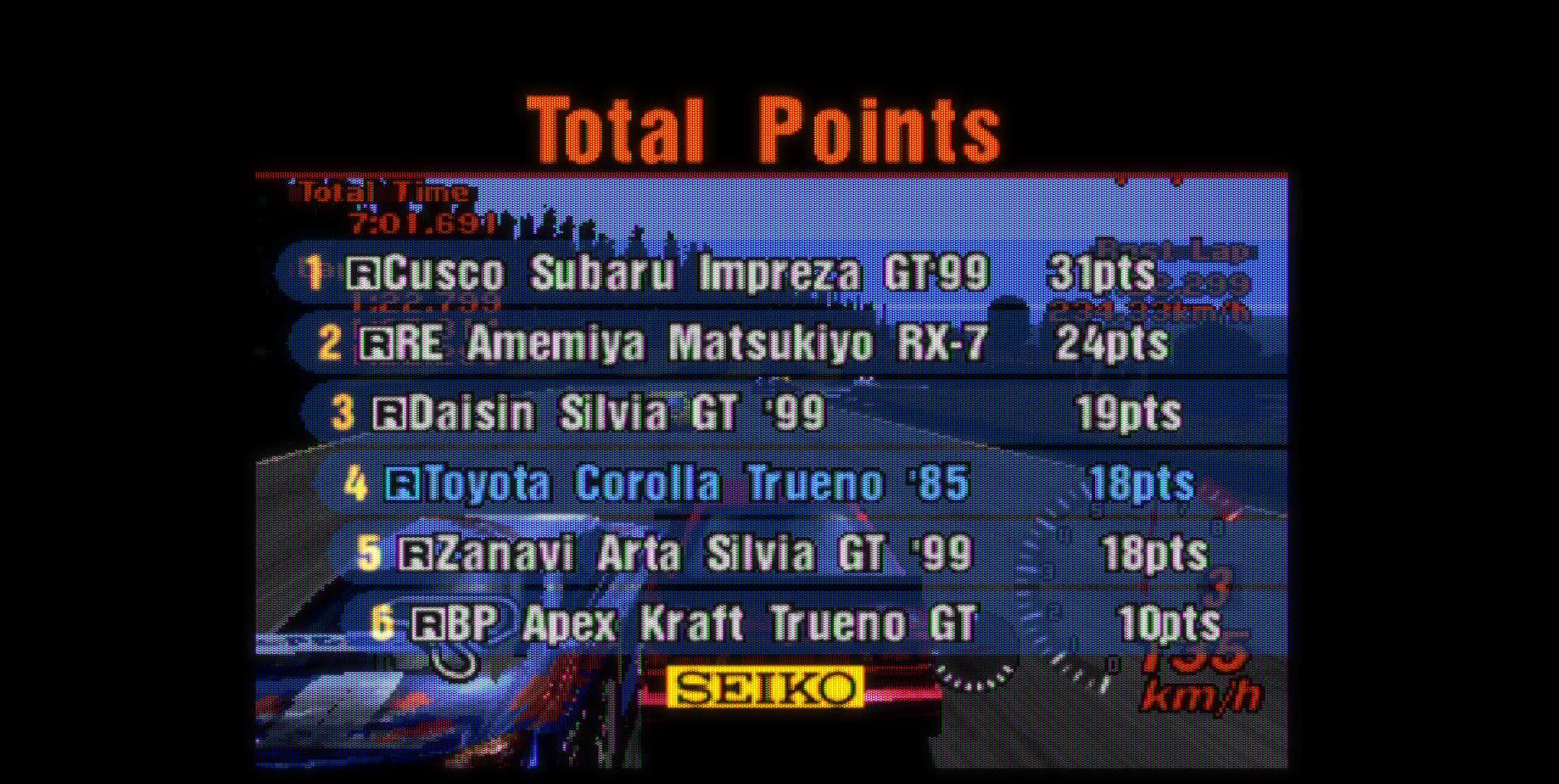
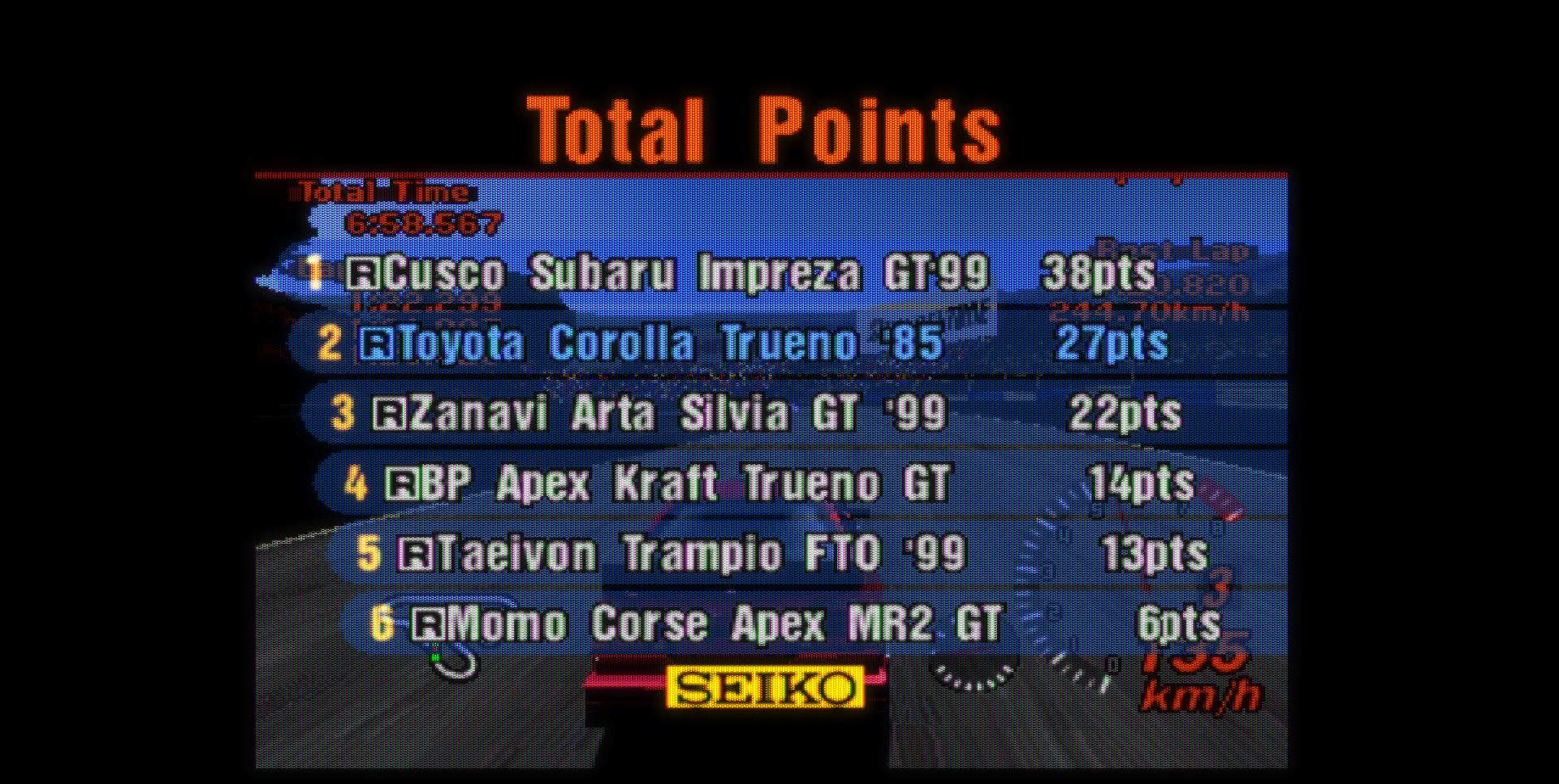
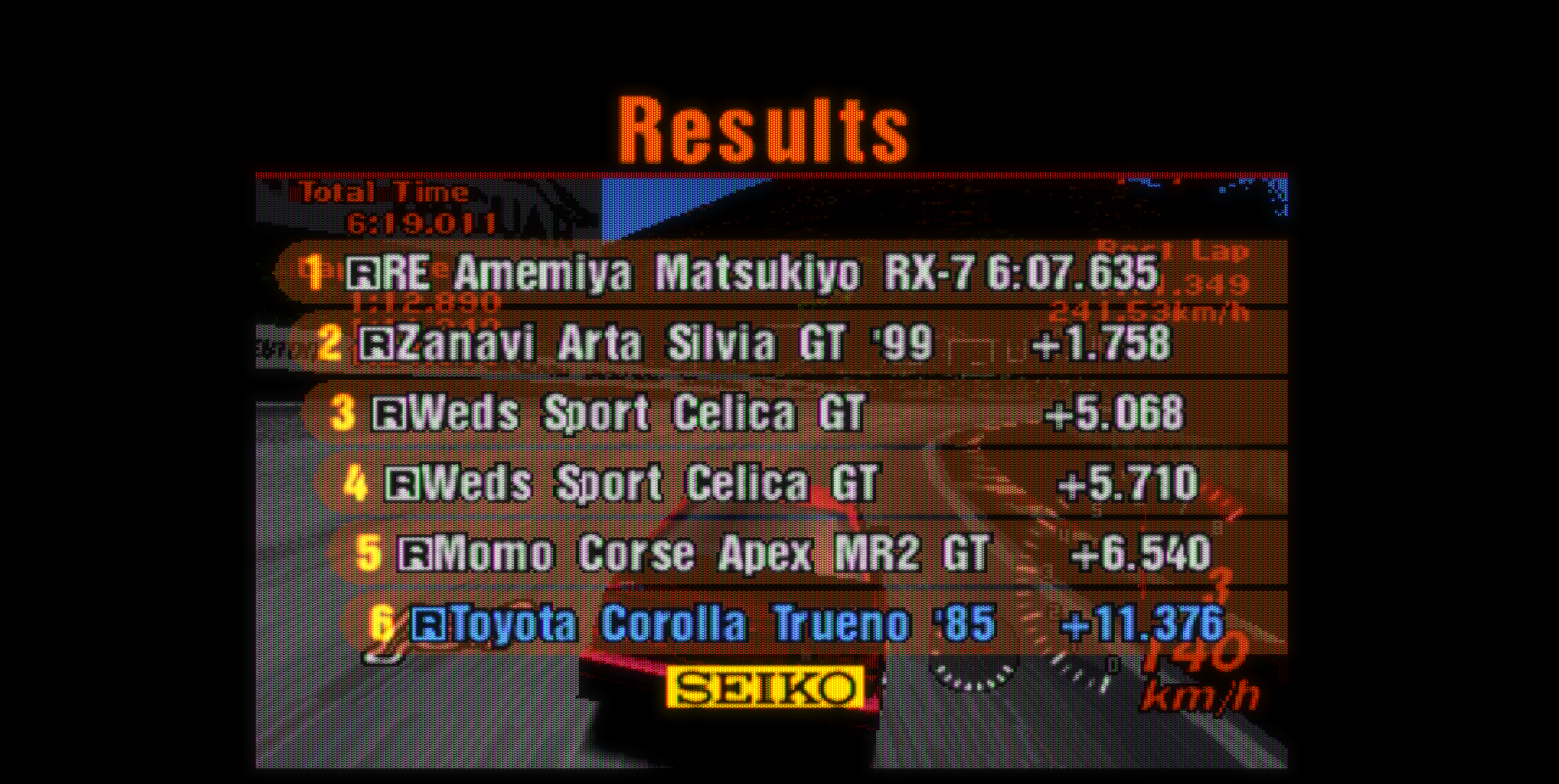
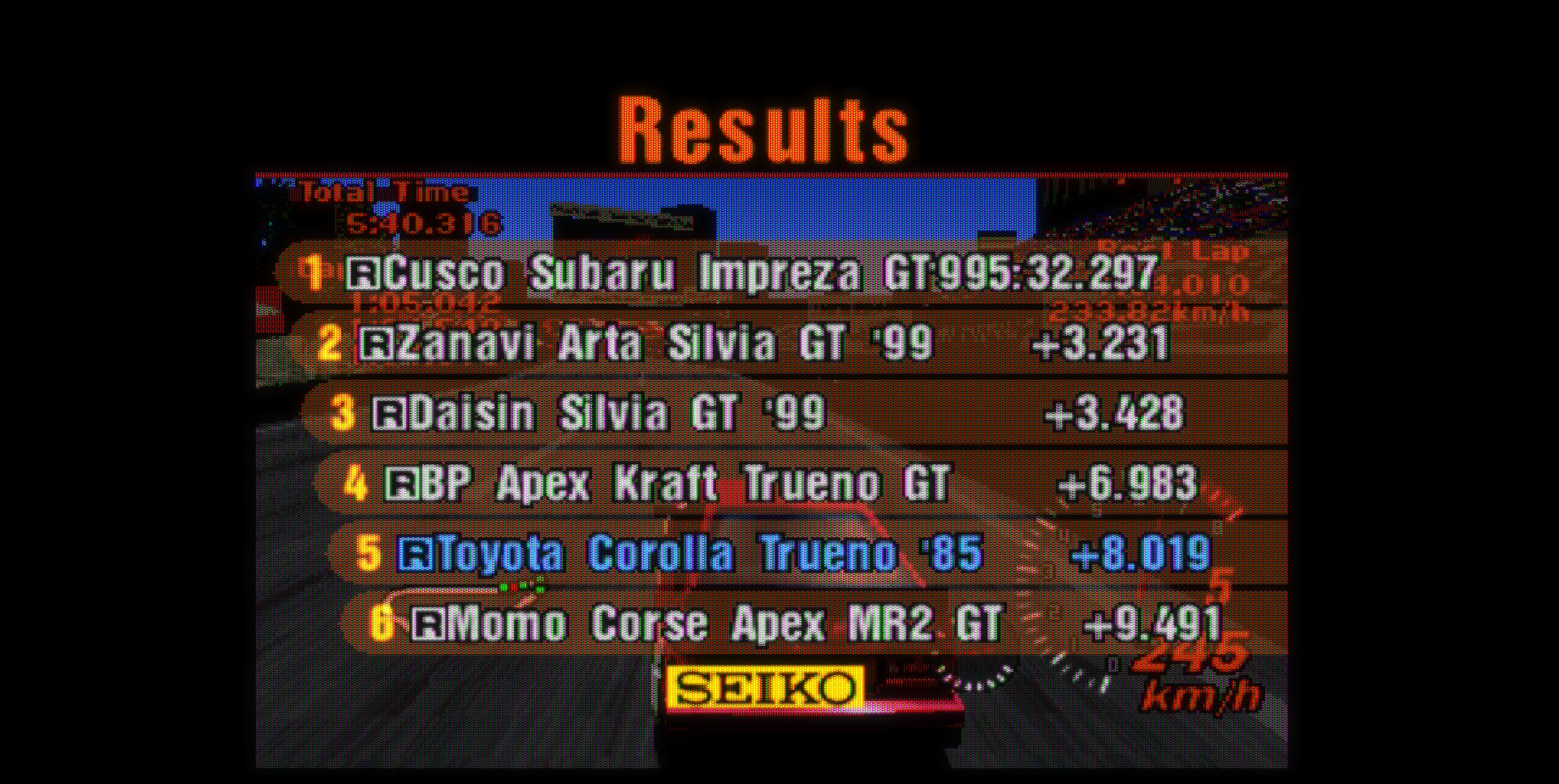
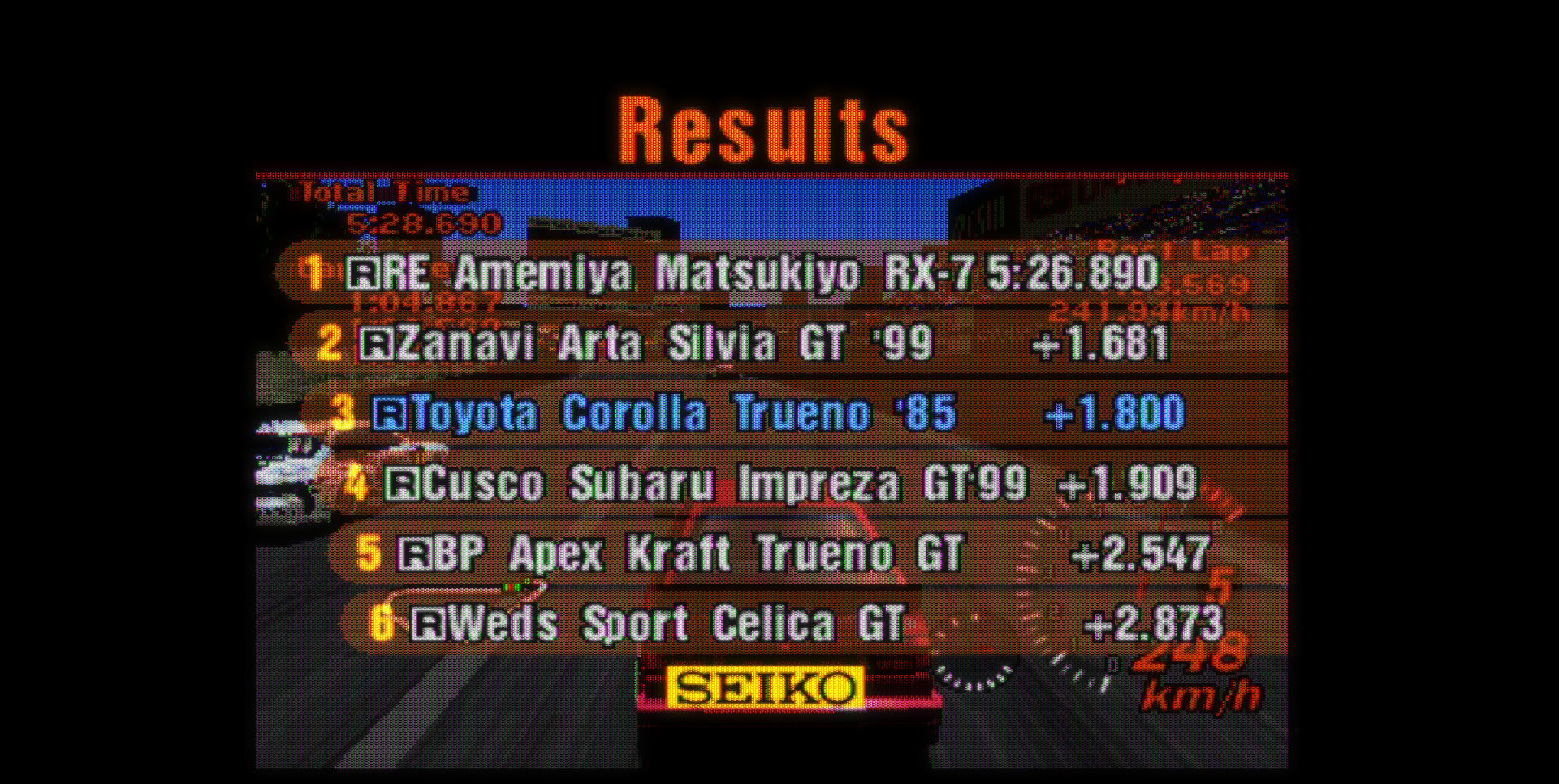
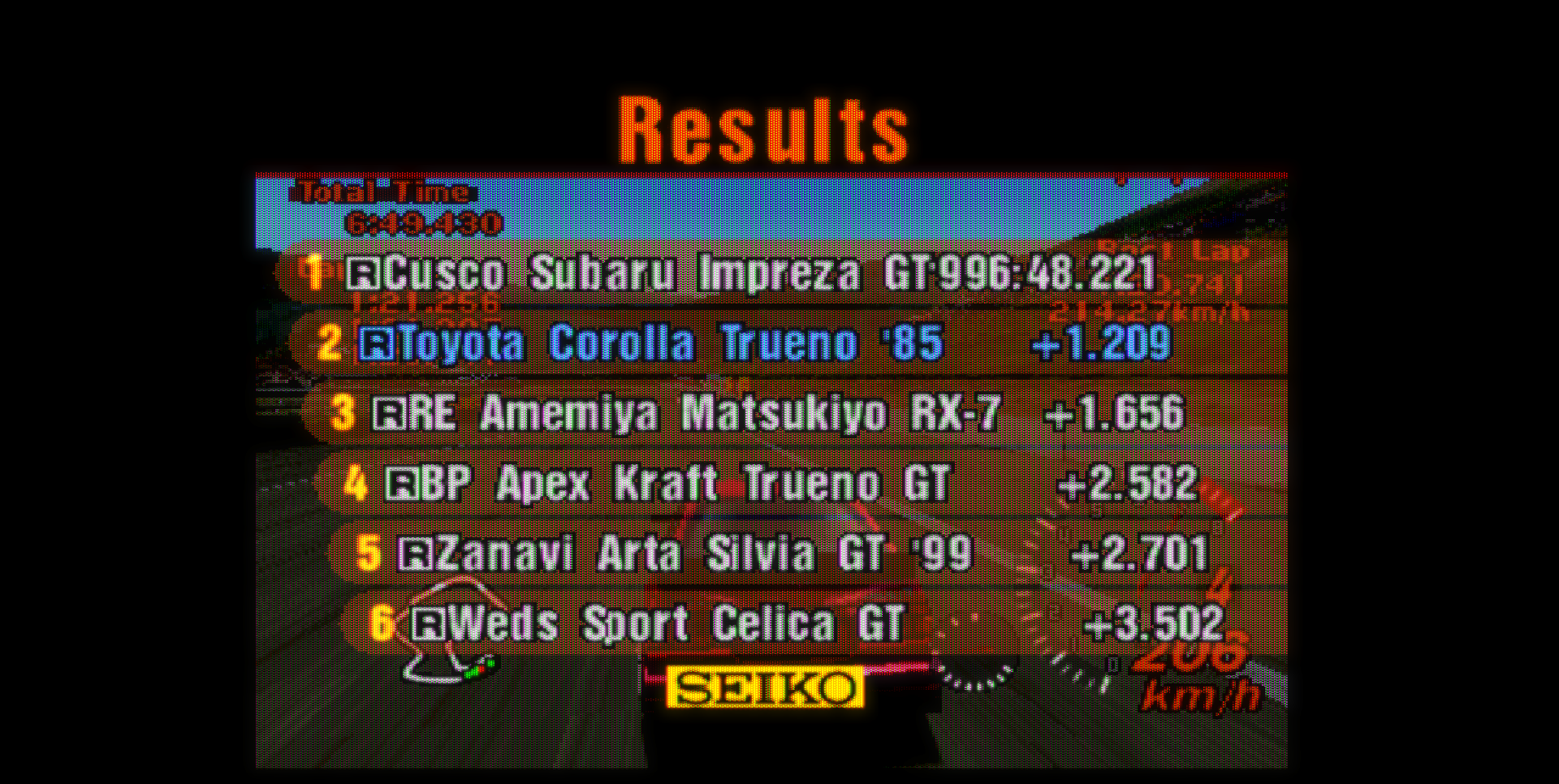
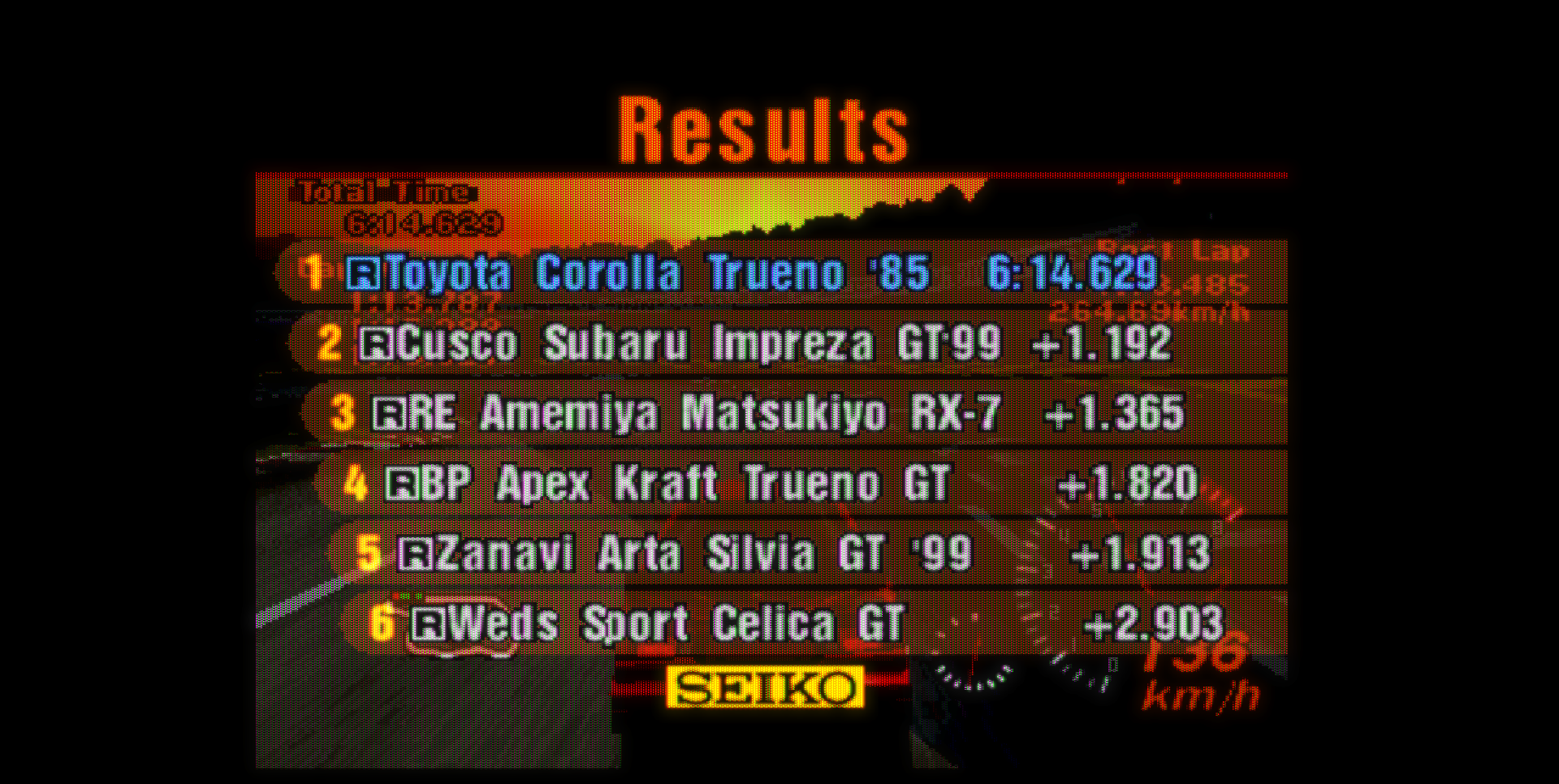
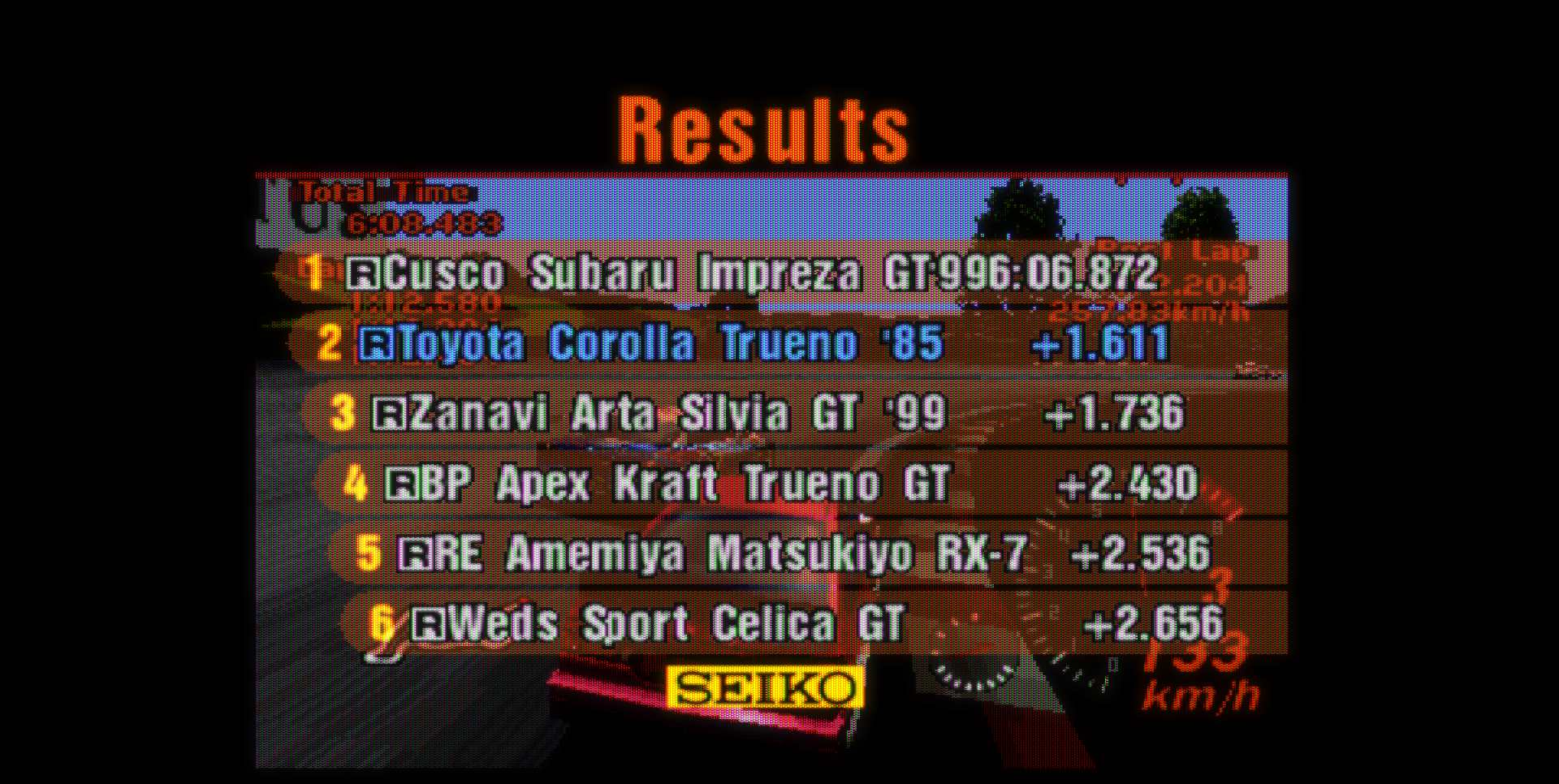
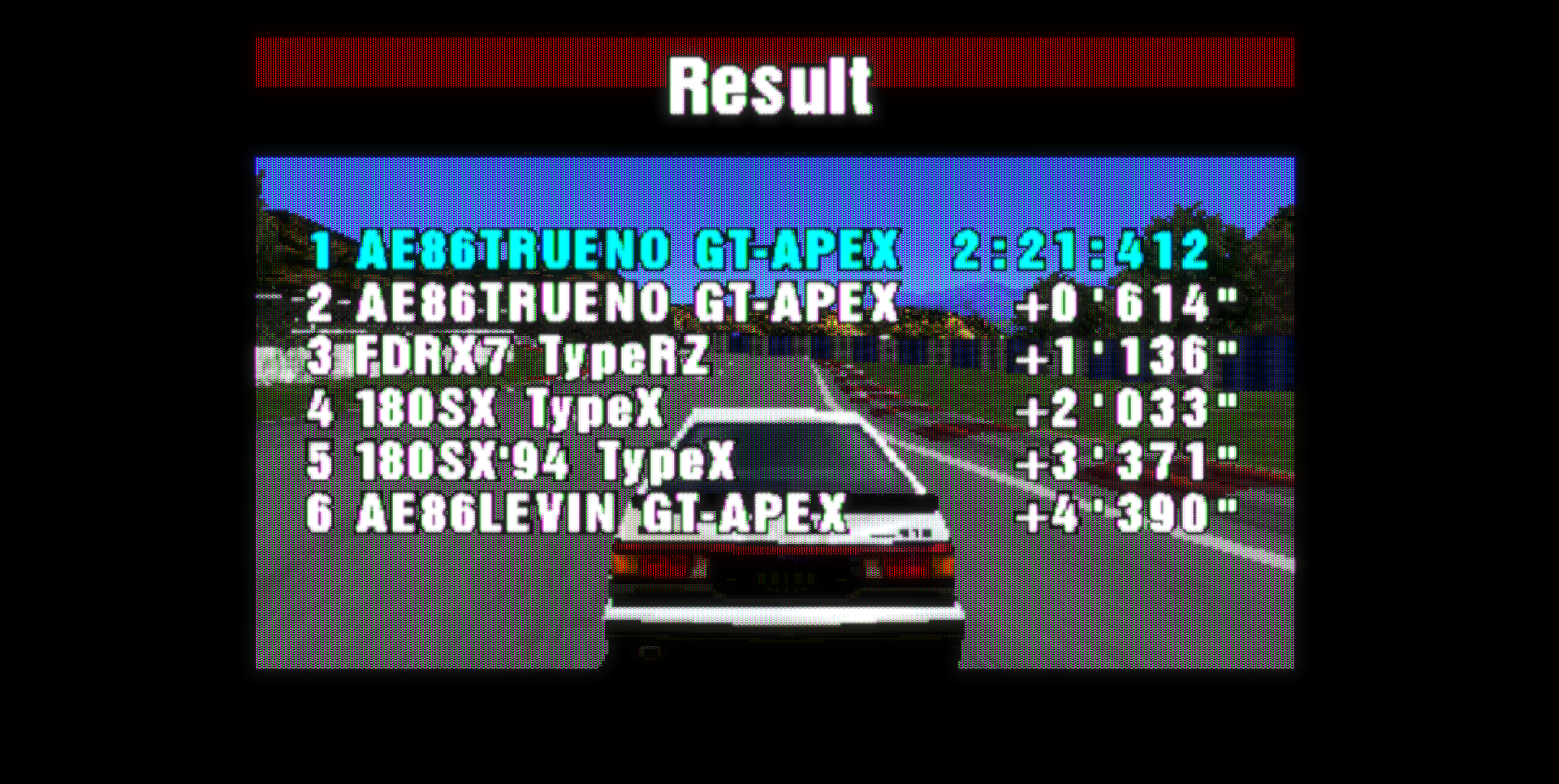
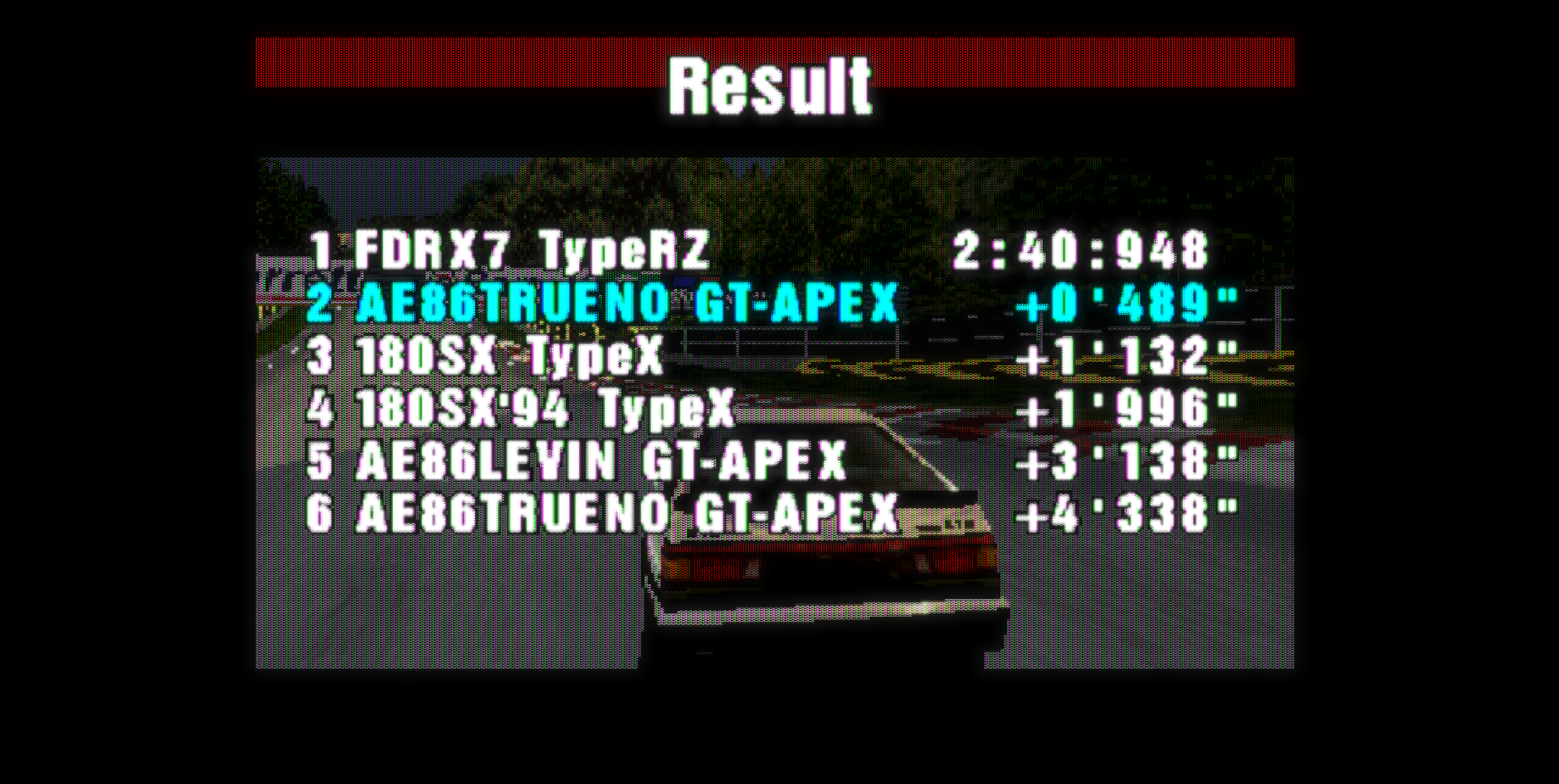
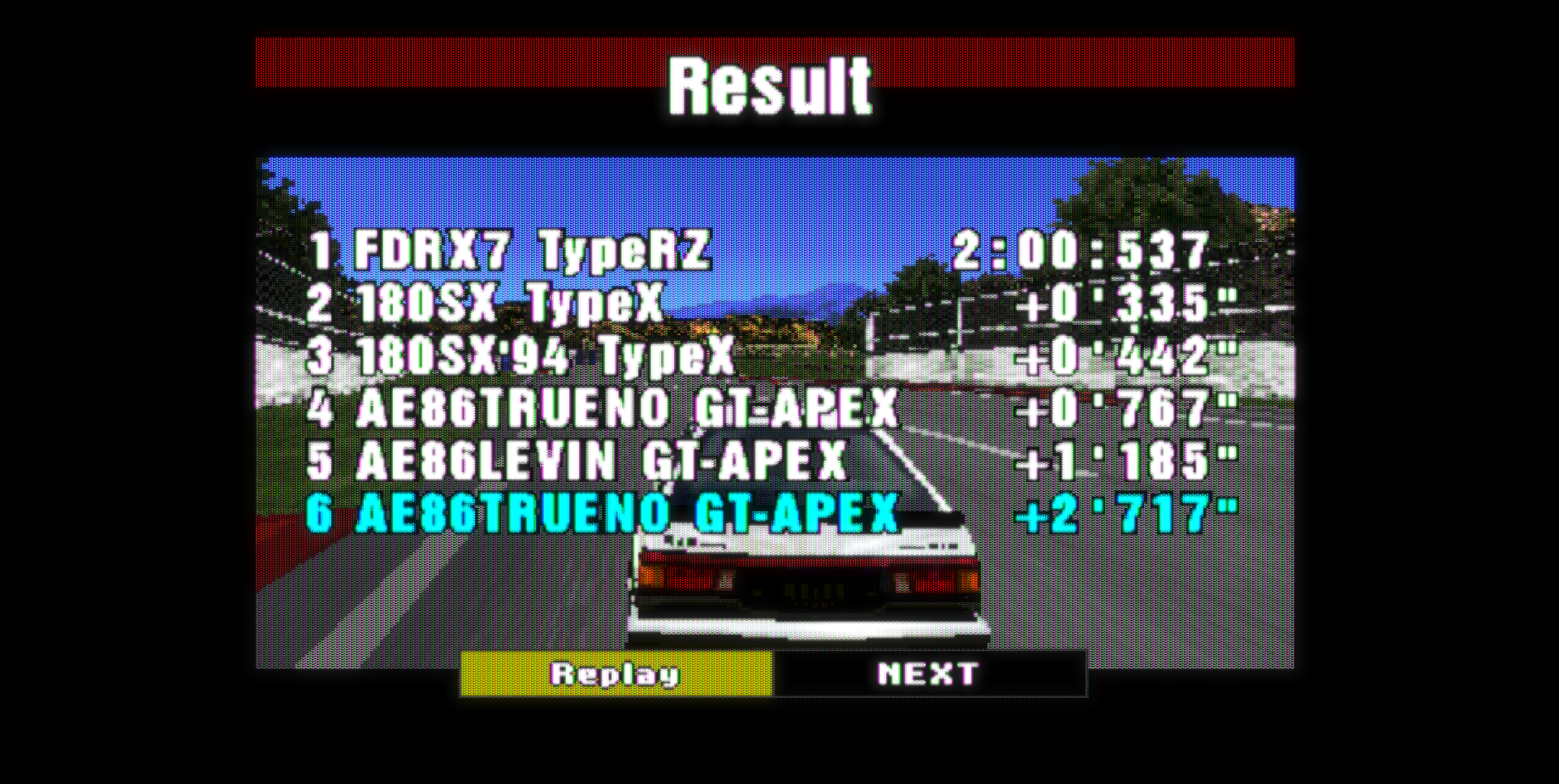
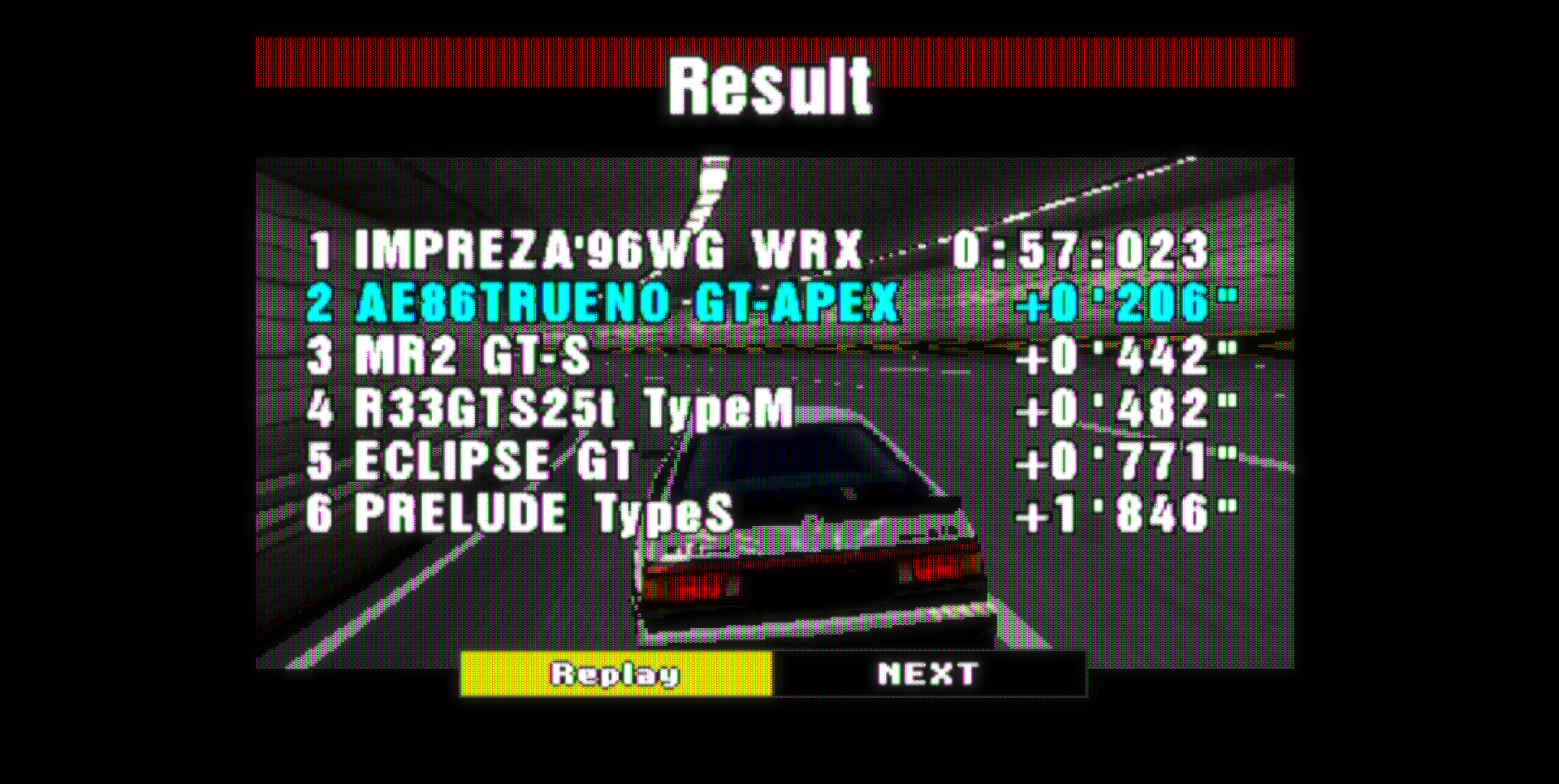
Race 1 at Grand Valley East put that idea in serious doubt, as I finished 5th, side-by-side with the GT300 Trueno. Race 2 at Laguna Seca went somewhat better, as I came in 3rd, and I was only .007 seconds away from a win at Deep Forest. However, another 3rd place at Mid-Field eliminates me from title contention and after a 5th in the final round at Apricot Hill I finish the series in 4th place. My second attempt at the series sees me get the win at Deep Forest along with two second place finishes, but that Impreza is just too fast, winning every other race this time. A third attempt ended with a win at Apricot Hill, but a terrible start with two 5th places meant that it was too little, too late.
At this point I was ready to give up on this challenge, but while looking through TeaKanji's channel for those GT40 videos, I came across this:
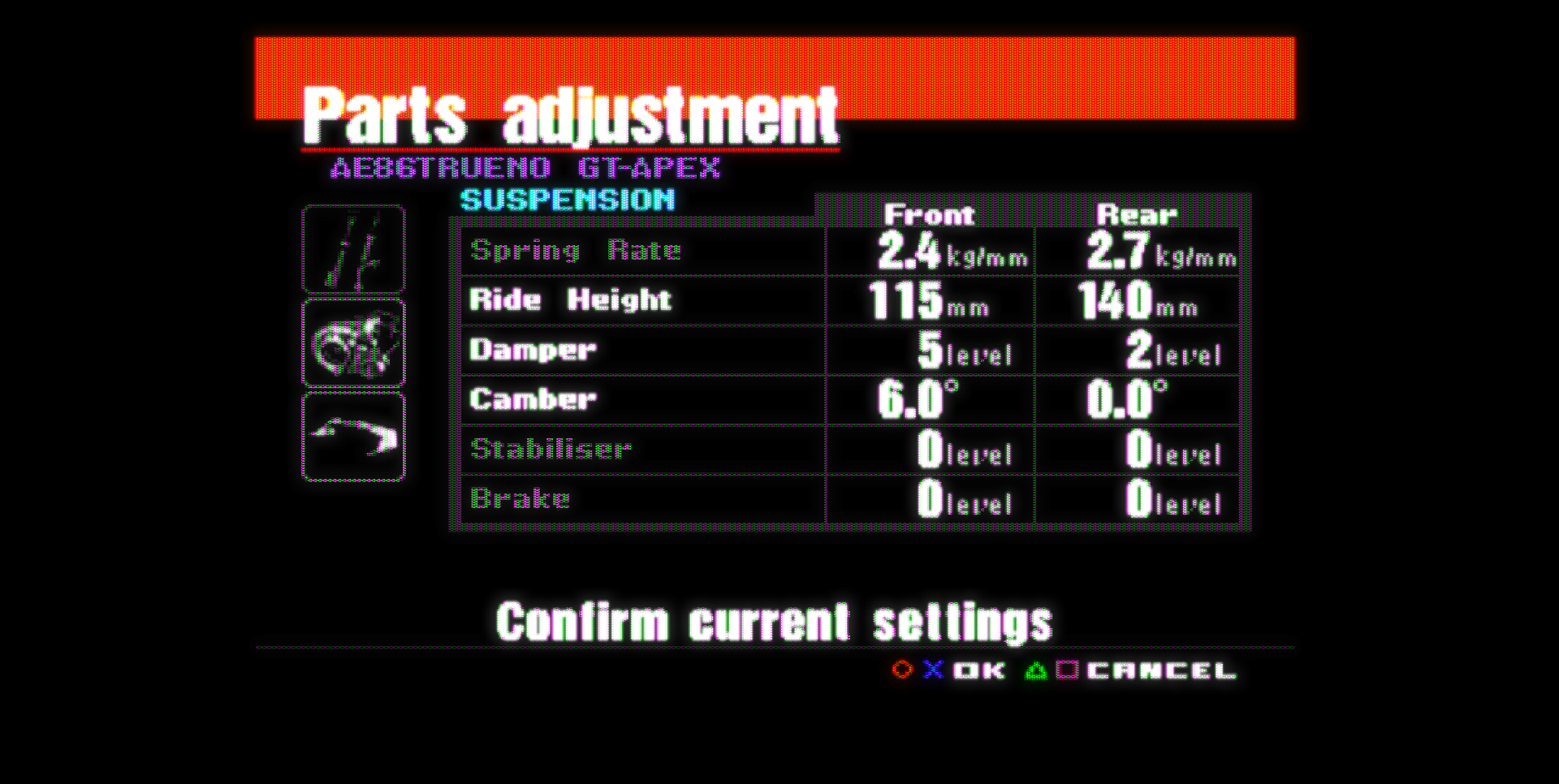
It's a Corolla Levin rather than the Trueno, but it's got the same specs, and the video shows the Grand Valley East race - the most difficult race in the series - so I changed my Trueno from the setup I was using (which was itself based on the advice given in TeaKanji's GT2 guide) to the setup shown in the video, and found that I was about a second a lap quicker around Grand Valley East. Not only that, but there was no Impreza on the grid for this attempt, so I was feeling optimistic. Third place in the first race was better than I had managed before, but the RX-7 (and a yellow RX-7, too - damn you Keisuke Takahashi!) proved to be too consistent, and a spin towards the end of race 4 ended my title hopes. A further attempt ended with me finishing six points behind the winning Impreza - the closest I had come yet, but I felt like I had taken it as far as I could with my current skill level.
That was until I realised something - all the gameplay in TeaKanji's GT2 videos uses a frame rate mod, and he says right at the beginning of his GT2 guide that this mod vastly improves the handling. This has to be worth a try, surely?
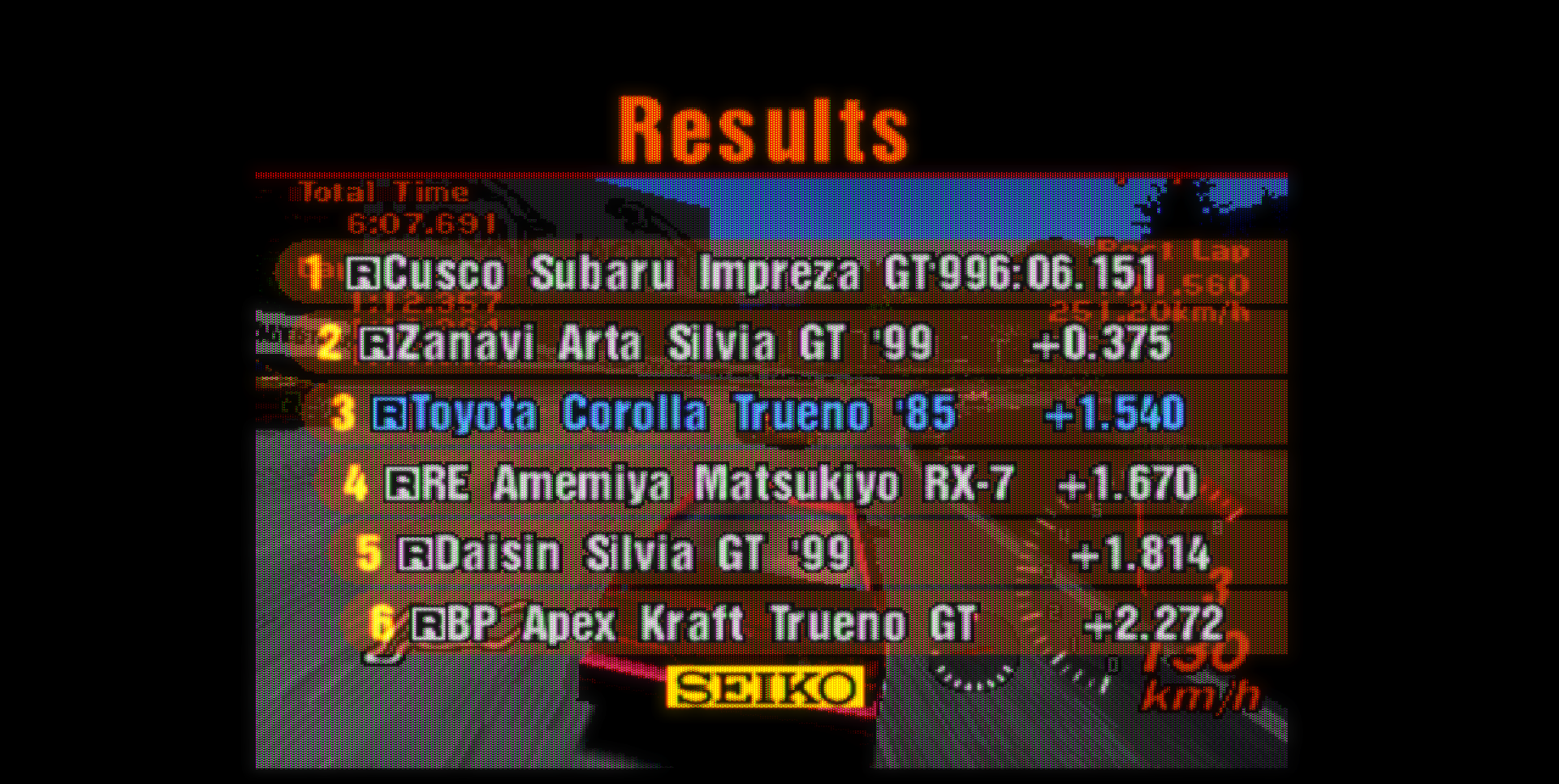
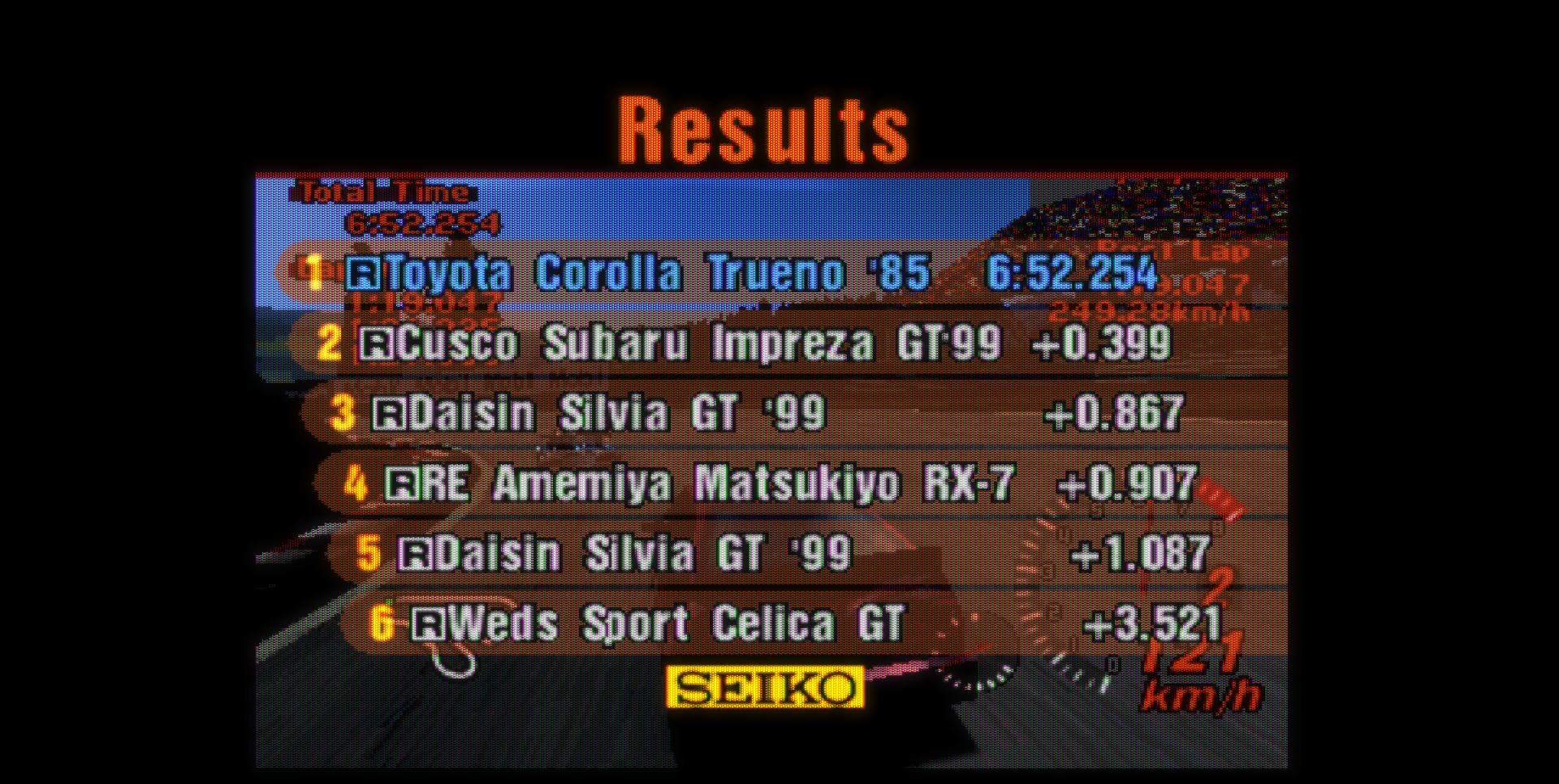
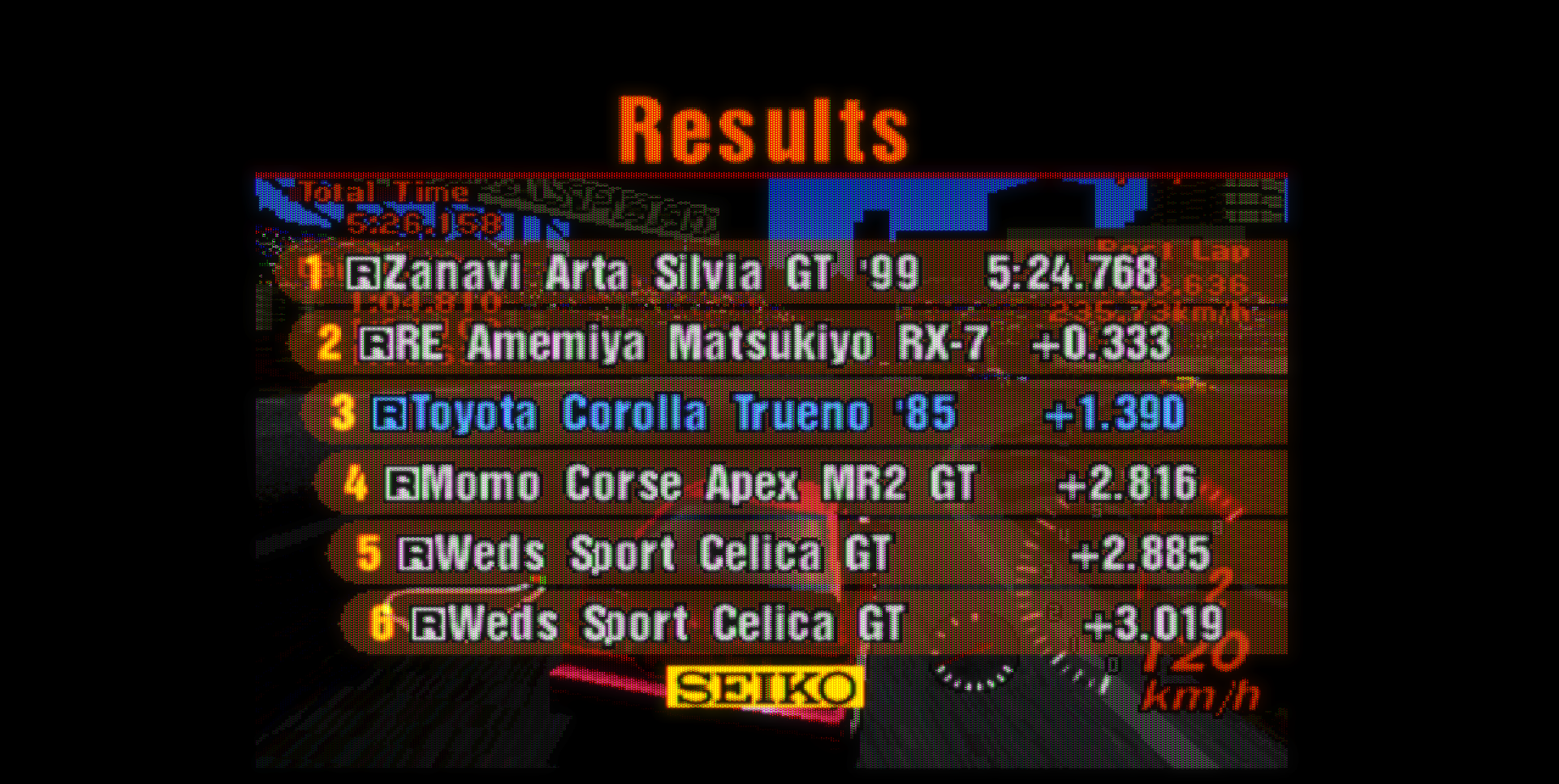
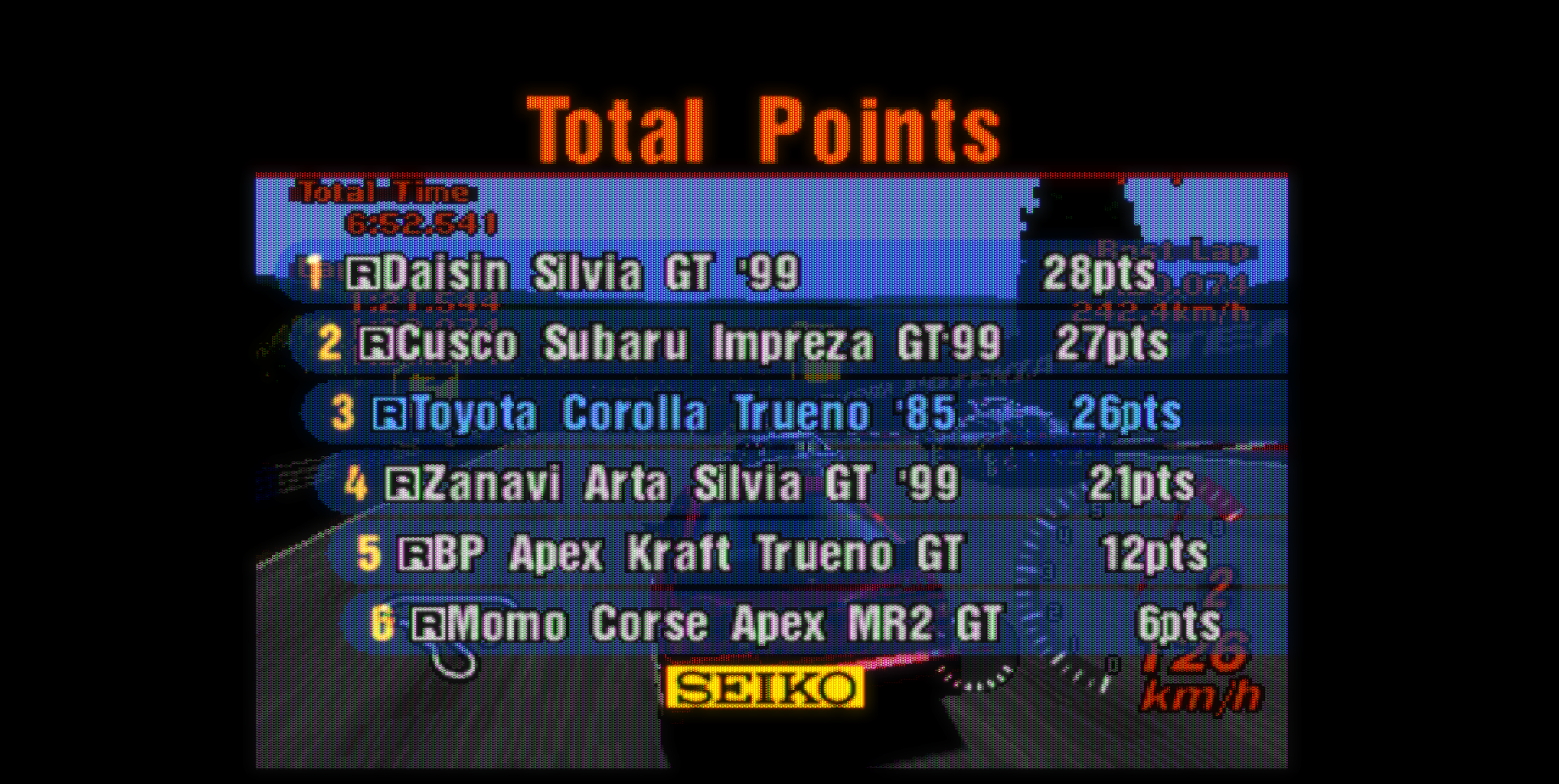
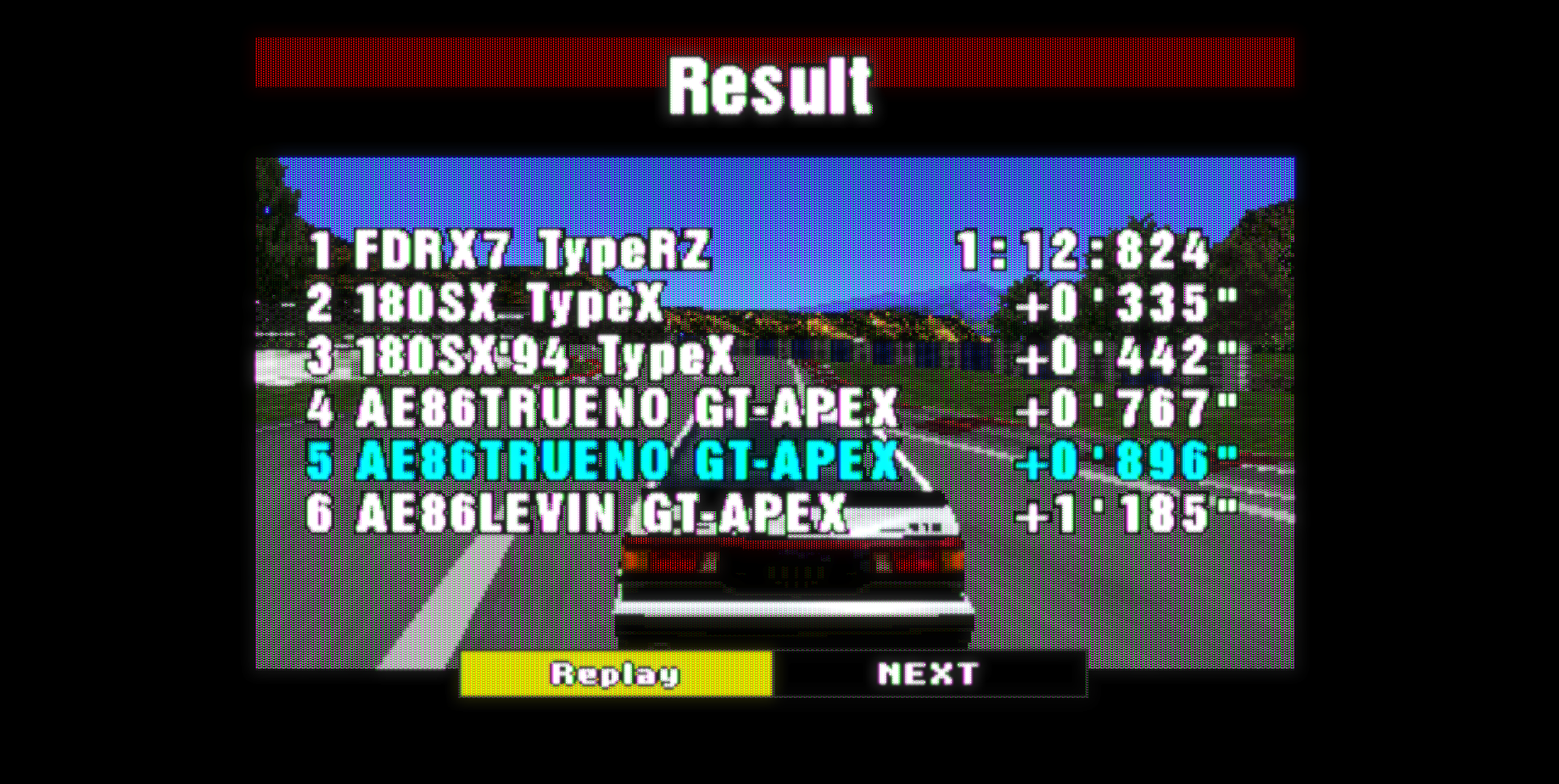
The first attempt didn't get off to the best of starts, but after getting used to the change in the car's handling I finished the series just two points behind the winning Silvia. I reckoned one more attempt was all I would need. Third place at Grand Valley East was a decent start, and was followed by a second place at Laguna Seca. Importantly, each race was won by a different opponent - as a result, I was only one point off the series lead. The Impreza and RX-7 may be the fastest posssible opponents, but it may be beneficial to have them both appear on the grid so that they can take points off each other like this. Another win at Deep Forest followed before a pivotal race at Mid-Field, where I would have to finish second in order for the championship outcome to remain in my hands going into the final race at Apricot Hill. However, the Mid-Field race is the second-hardest race in the series after Grand Valley East, as the track heavily favours power, and in my previous attempt I finished fifth. This time, though, I navigated the twistier middle section of the track to perfection, and drove defensively when needed, to just about hold off the Silvia for that all-important second place. As an added bonus, the RX-7 finished down in fifth, all but eliminating it from title contention.
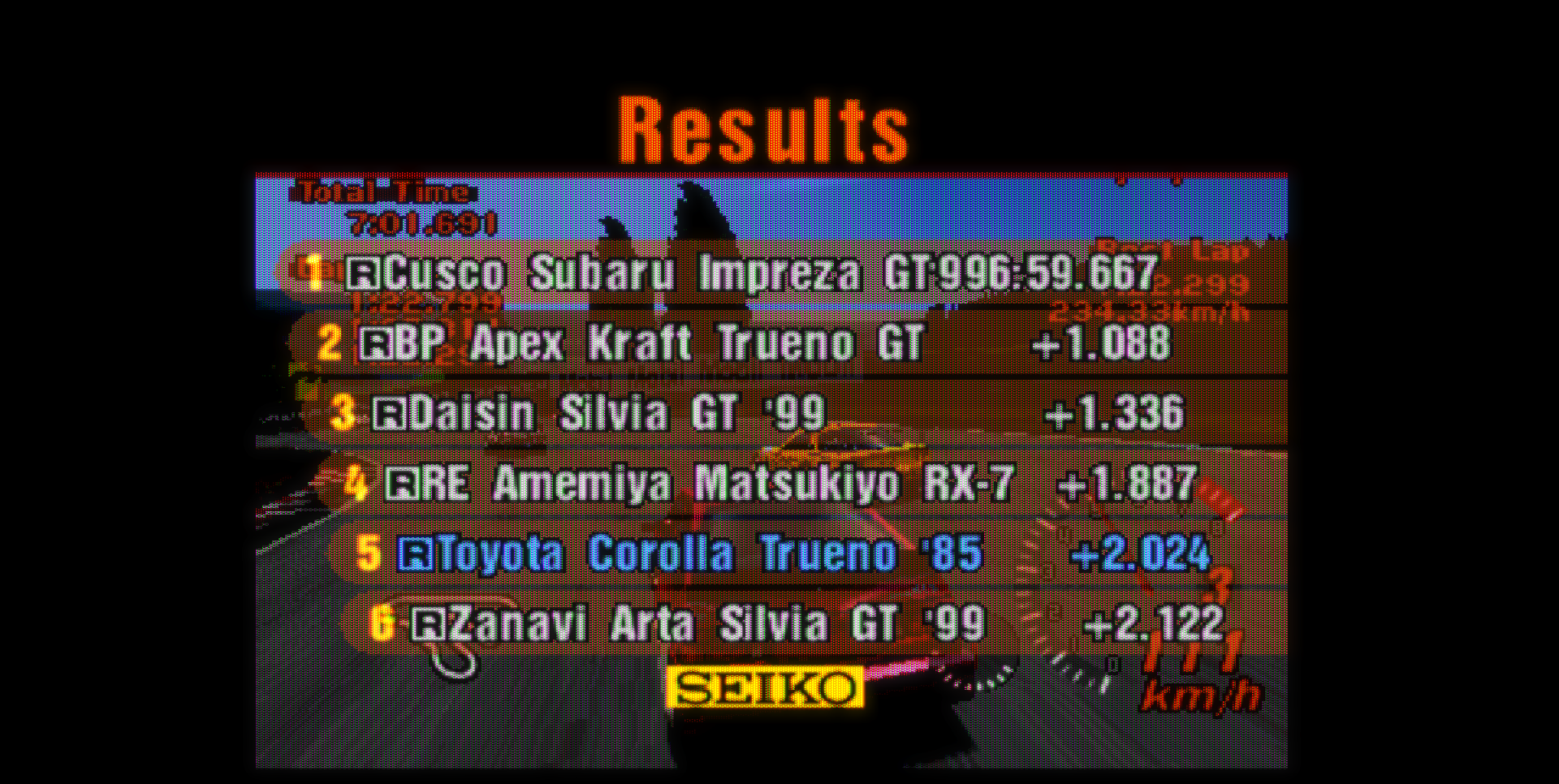
That meant a winner-takes-all showdown between my Trueno and the Impreza at Apricot Hill. I was in the lead by the end of the first lap, but the Impreza and RX-7 would get back in front at times during the middle stage of the race. By the end, though, I had built up enough of a lead in the more technical parts of the circuit that my rivals couldn't make it up on the home straight. With that, a major hurdle in this run had been cleared.
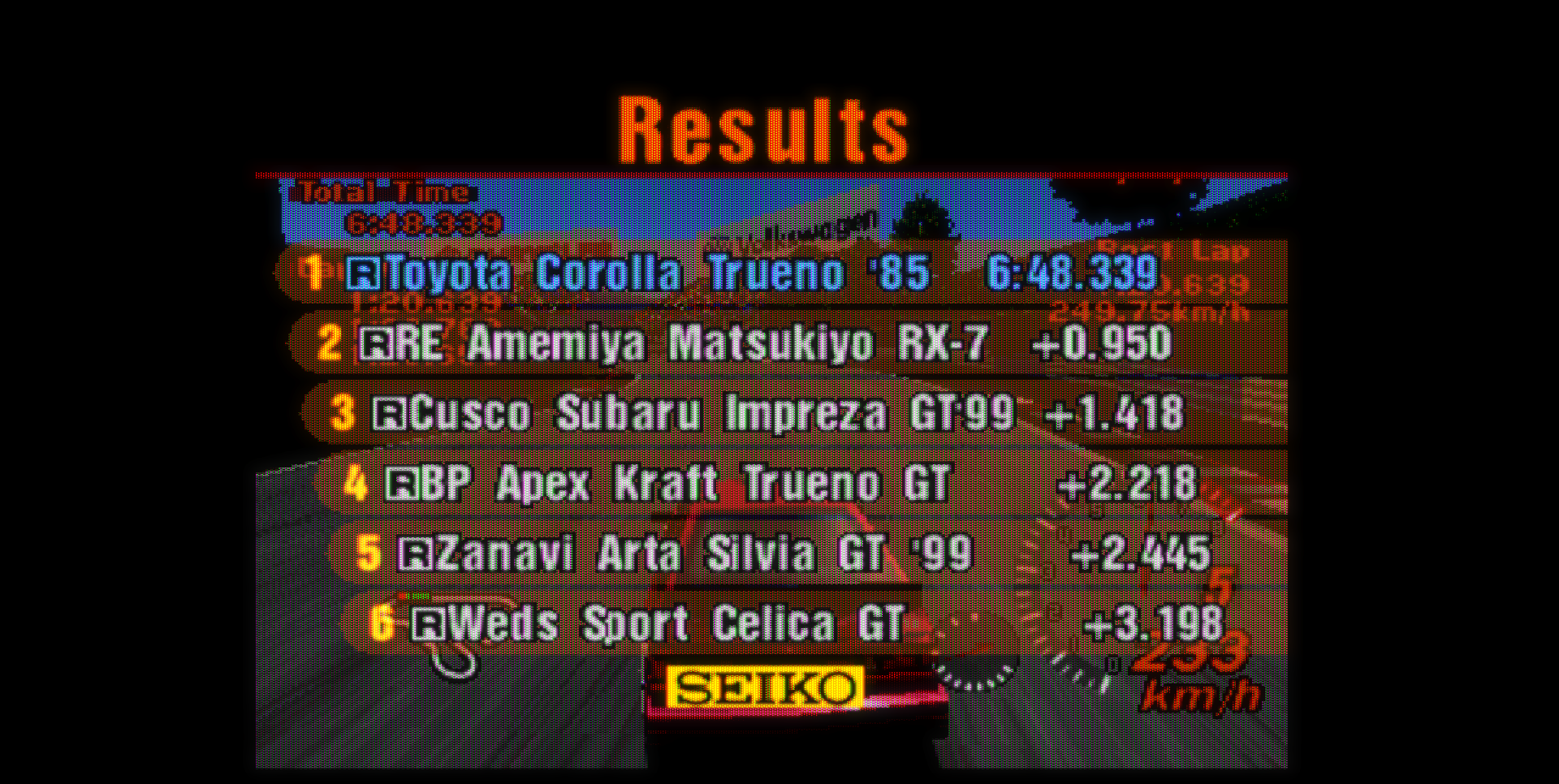

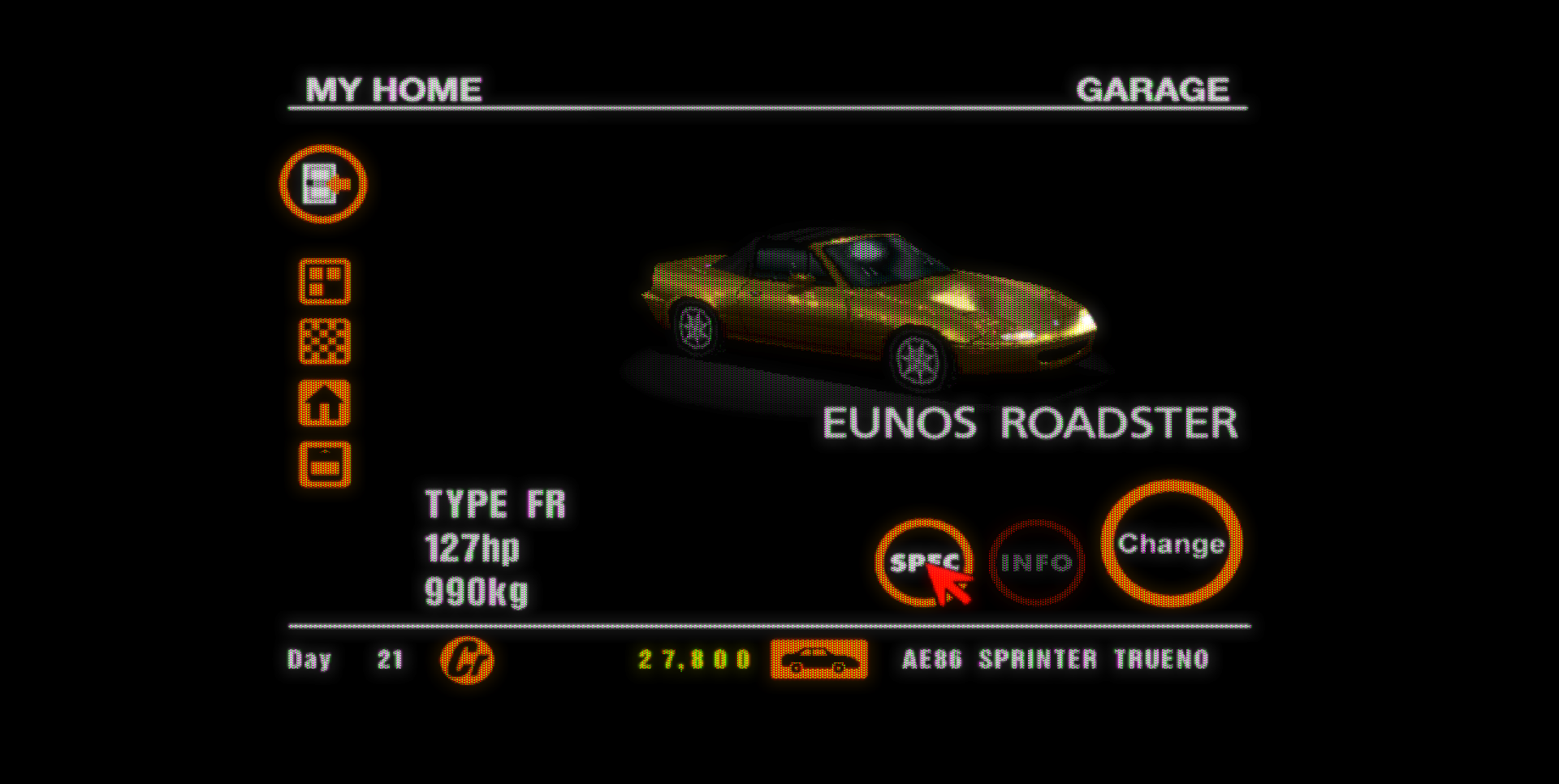
And look at what showed up in my garage...

There's only one thing left to do (well, aside from earning the International A licence that I need in order to enter the series) - take on the GT World League. I'll let this video explain how that went:
Conclusion
When GT1 came out, it was a generational leap for the racing game genre and many thought there was no way it could be improved upon, at least not in this console generation. GT2 came along and proved them all wrong. With its greater variety of cars, tracks, and races, GT2 builds on the platform created by GT1 in a way I don't think anyone but Polyphony Digital saw coming. I also noticed that the racing was a lot closer than in GT1, although this is probably a result of more aggressive rubberbanding rather than a substantial improvement in the opponent AI. Either way, there's a good reason why this remains the peak of the GT series in the eyes of so many people.
Next up: a new console generation looms large, and so does a GT sequel. Until next time...
A consequence of this was a massive explosion of interest in Japanese cars in the rest of the world - for example, the Official UK Playstation Magazine's review of GT2 noted an influx of companies dedicated to importing Japanese cars in the two years since GT1's launch. Just across the Irish Sea, this video essay - aside from mentally transporting me to one night in summer of 2004, when, as a teenager on holiday in Tramore, I came across a tuned car meet in a car park - directly credits Gran Turismo with a shift in focus towards Japanese cars in the Irish car scene:
In contrast, GT2's car list is much more balanced in geographical terms - while enough Japanese cars have been added to the point that GT2 is practically a playable encyclopaedia of the '90s Japanese car industry, a much wider range of European and American manufacturers are now represented. Nevertheless, I'm sticking with my trusty AE86 as I tackle the sequel to "The Real Driving Simulator".
What's changed since GT1?
Not only has the car count massively increased, but so has the variety of tracks, with a real-world track appearing for the first time (Laguna Seca), another one kinda-sorta appearing (the oval track at Motegi), and a few others based on real-life locations. This means more events to accommodate them, and not only that, but these events generally take the form of several individual races rather than multi-race championships. Within each event, except for some of the late-game events, each race is more difficult than the last, with faster opponent cars and higher licence requirements to enter. There are also maximum power levels for each race, starting at 98hp for some of the kei car races and going up in nearly-but-not-quite 50hp intervals (since these would have been 100ps, 150ps, 200ps, etc., in the Japanese version, with "ps" being a rough equivalent to horsepower - ps is short for pferdestärke, which is German for horsepower - based on metric units) until the Grand Valley 300 endurance race and race 3 of the 4WD Challenge, with the highest power limit in the game at 690hp, while the Sunday Cup, Clubman Cup, and some late-game events have no power limit at all. Finally, although it isn't relevant to this playthrough, rallying (or at least driving on loose surfaces, as the rally events aren't structured like actual rallies at all) appears in the GT series for the first time. Some aspects of GT1 did not make it into the sequel, though - most notably, there are no qualifying sessions, so you start every race in 6th place.
Starting out
GT2 included a feature where you can carry over the B and A licences from a GT1 save - I take advantage of this to speed up the early game. I then head to the Toyota used car dealership, where I find the two-tone Trueno for 7,718 credits.
My first order of business is to head to the Sunday and Clubman Cups. I win race 1 of the Sunday Cup without difficulty, but have to settle for fourth in race 2 and second in race 1 of the Clubman Cup.
Not so much Initial D as Mr Bean. Also, notice that at some points in the game the car is referred to as the "Corolla Trueno" - I believe this is because Polyphony Digital made more of an effort to localise the names of the cars, so the Mazda Roadster is now known as the MX-5 in the PAL version of GT2, and the Mitsubishi GTO as the 3000GT. As the Sprinter appears only to have been sold in Japan and Australia, it's renamed as the Corolla in international versions, leading to oddities like this.
Going forward, the plan for this run is to tackle the events in order of their power limit. Since the Trueno starts off with 125hp, I will start with the sole 147hp event in the game, race 1 of the Lightweight K Cup for kei cars. Erm, hang on...
| Toyota Sprinter Trueno | Kei car (maximum allowed) | |
| Length (mm) | 4,205 | 3,400 |
| Width (mm) | 1,625 | 1,480 |
| Engine displacement (cc) | 1,600 | 660 |
Obviously the Trueno isn't a kei car, but for the majority of GT2's special events - everything except for the drivetrain (FF/FR/MR/4WD) and aspiration (NA/Turbo) races - there is no requirement that your car actually fits into the category that the event is for. Over the course of this run, the Trueno will race against four-door saloons, convertibles, and estate cars, among others. Unsurprisingly, I win the race without much difficulty.
197hp races
I now start working on the GT League, the main meat of the playthrough. It consists of three stages which must be completed in order (unless you're playing the Japanese version):
- the National Leagues, which consist of two or three races in each of six countries
- the European and Pacific Leagues, with three races each, and finally;
- the World League, a five-race championship against the fastest racing cars in the game
246hp races
I continue to work my way through the National Leagues, winning race 1 in each of the USA and France, as well as race 1 of the Compact Car World Cup at the Rome Short Course, but just falling short at race 2 at the Seattle Short Course. Another round of upgrades, resulting in a significant power increase later, I finish off the last of the Sunday Cup races before returning to claim victory in Seattle. The first races of the Convertible and Historic cups are taken care of, both at Tahiti Road.
295hp races
Five more National League races, race 1 of the FR Challenge, and race 3 of the Compact cup are taken care of with ease, but now I arrive at one of the most infamous races in the entire GT series - race 2 of the Historic cup at Rome Circuit.
In this race, your opposition consists of pre-1980 sports cars with around 200hp - various Lotuses, a Toyota 2000GT and a Lancia Stratos, for example. Oh, and a Ford GT40 Mk1 with 305hp (10 more than any car you can enter with) and with stock tyres that are equivalent in grip to racing medium tyres on most other cars. Unsurprisingly, this is considered the most difficult race in the game (unless you had the early US version where a Vector M12 race car could show up as an opponent in the Trial Mountain 30-lap endurance race), and the first time most players win this race is when the GT40 doesn't show up on the grid. Nevertheless, skilled players can beat the GT40, even with further handicaps. TeaKanji on YouTube has quite a few videos of this, such as beating the GT40 with stock tyres, or with a car with only 142hp, or while only using first gear, or even while giving the GT40 a 30-second head start:
I don't manage to beat the GT40 on my first attempt, but I'll leave it for now as it isn't essential to this run.
345hp races
After selling off my prize cars, I have more than enough credits to fully upgrade my car, except for the racing modification (and stability control and traction control, but they're very expensive and not that useful). In the GT League, race 3 in Japan and race 2 in the UK are taken care of, and in the special events, race 2 of the Convertible cup and races 2 and 3 of the 80s cup are all won easily.
394hp races
The USA and UK leagues are finished off, while a whole host of special events are ticked off - the entirety of the Wagon Cup, the remaining races in the 80s and Historic cups (although there was no GT40 in the field for race 2 at Rome this time) and the first races of the 4-Door Cup, Grand Touring Car Trophy, and Pure Sports Car Cup.
443+hp races, and the final push
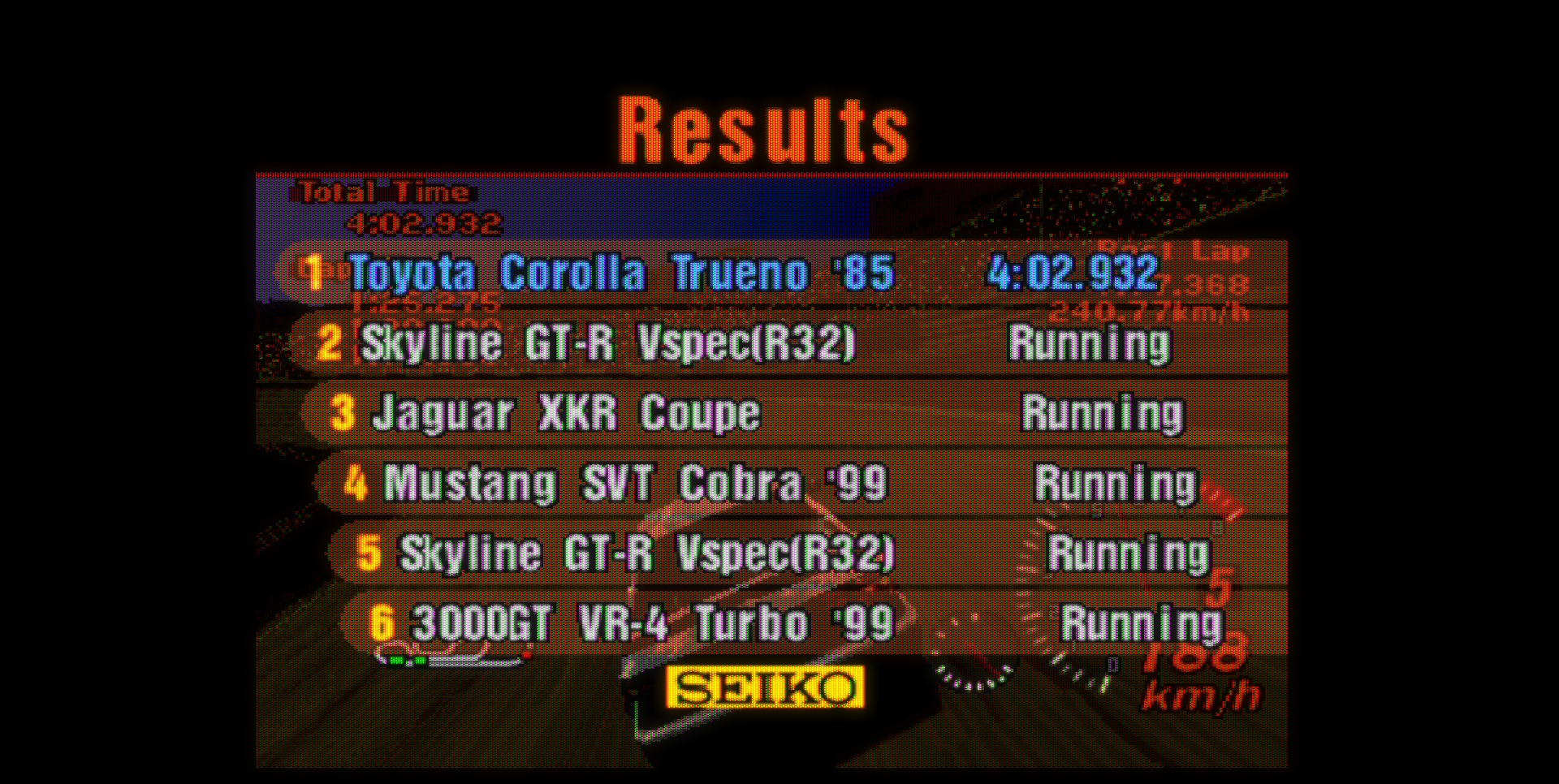
The last of the national GT League races is completed as I win race 3 in Germany. Then, after I do a few more 443hp and 493hp special events as a warm-up, I take on the Pacific League, featuring Japanese and American cars. With a power limit of 542hp, this is, on paper, the most difficult event I have tackled up to this point, but I win all three races on the first attempt. The European League for, well, European cars is ostensibly another step up, with a power limit of 591hp, but once again my Trueno is more than up to the task.
With the National, Pacific, and European Leagues conquered, I am now, in theory, able to take on the GT World League. But even after applying the racing modification, I don't like my chances of success in a series where even the least powerful opponent will have easily more than double my car's power.
However, I have a plan.
Remember when I said that "as late as 2001 it was being raced in the All Japan Grand Touring Car Championship"? Well, GT2 contains a number of cars from the 1999 season of the JGTC (as well as a few from previous seasons), from both the GT500 and GT300 classes (so called because when these classes were established in 1996, the cars in each class had around 500hp and 300hp respectively. Nearly 30 years and several regulation changes later, the GT500 cars have over 600hp, while in the GT300 class, even the least powerful cars will have nearly 500hp, and some of the more powerful cars aren't that far off the GT500 cars in terms of engine power). There are GT500 and GT300 championships in the special events section, and among the four possible prize cars for winning the GT300 series is this bad boy:
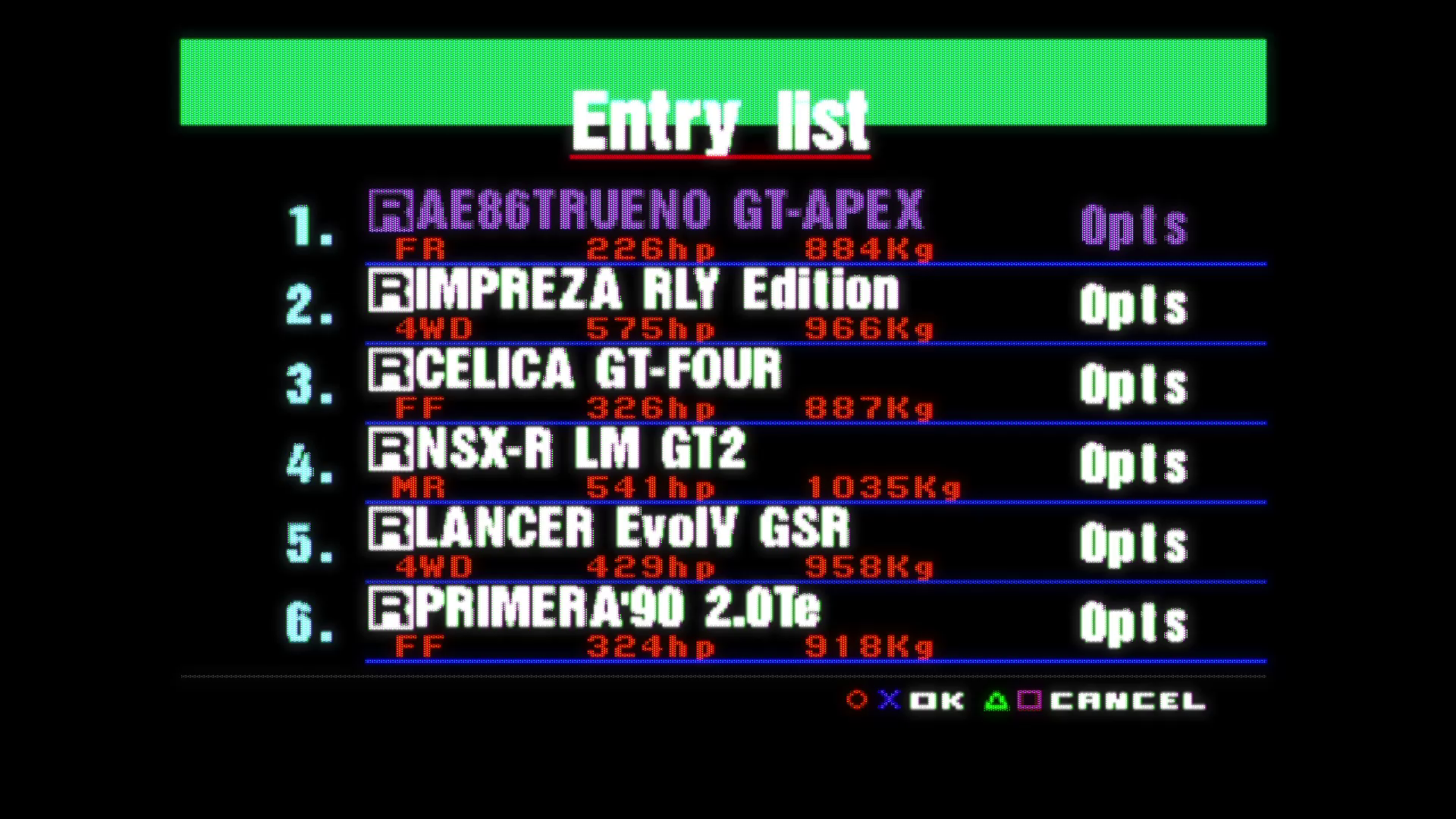
To warm up, I contest the five races of the Super Touring Trophy - essentially the Gran Turismo version of the '90s British Touring Car Championship - and win them all by at least five seconds, and a couple by over ten seconds. On paper, the GT300 cars should be faster than the Super Touring cars, but not overwhelmingly so - around this time they performed similarly in a straight line, with the GT300 cars having a handling advantage due to having more advanced aerodynamics. However, quite a few racing cars in GT2, mostly JGTC and rally cars, have significantly increased performance over their real-life counterparts. In the case of the GT300 cars, they're generally around 100hp up on the actual cars (Although these cars would generally have more accurate specs in future GT games, the most egregious example of this is still a couple of games away). This wasn't going to be easy, but I reckoned it was doable.
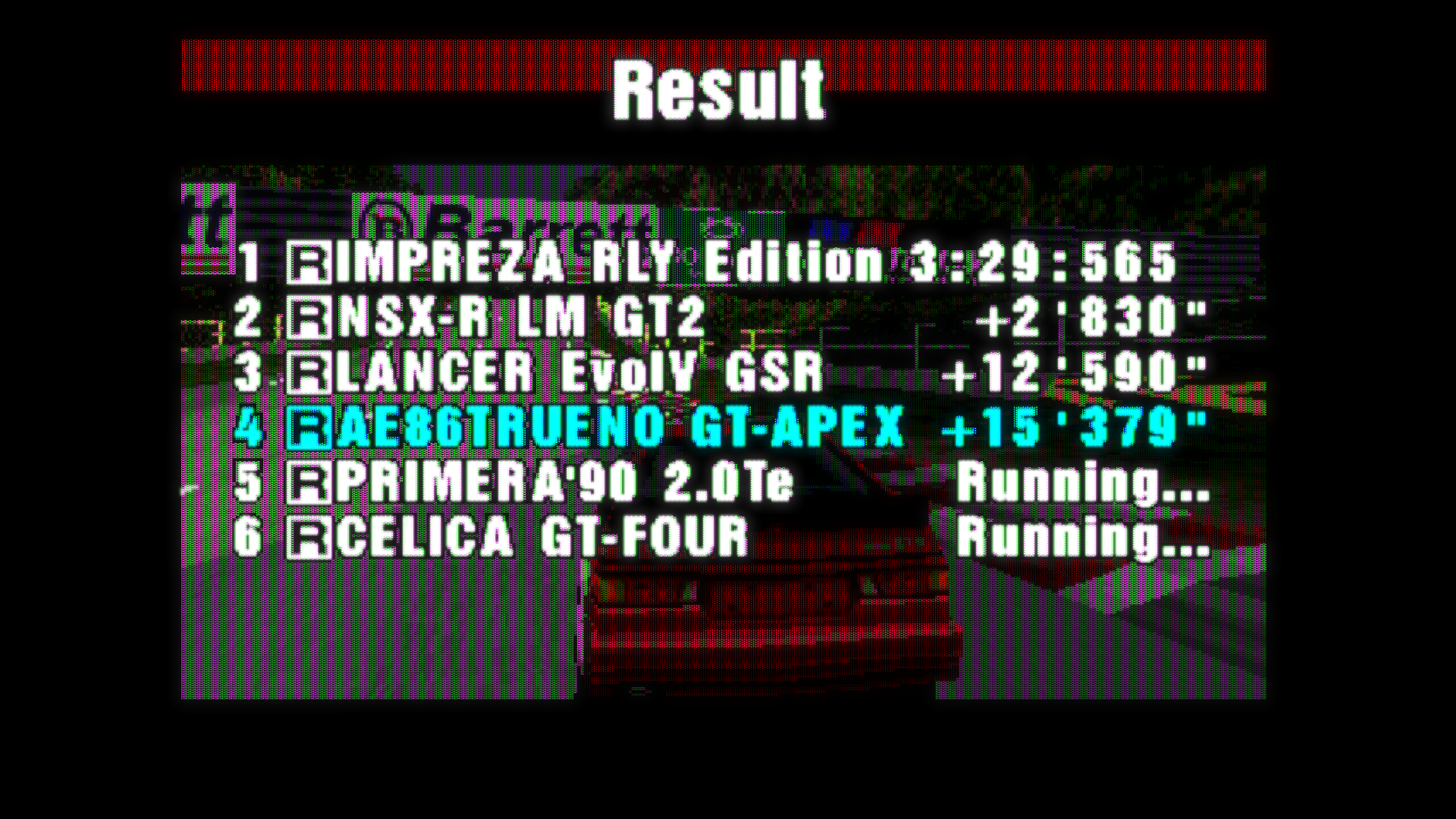
Race 1 at Grand Valley East put that idea in serious doubt, as I finished 5th, side-by-side with the GT300 Trueno. Race 2 at Laguna Seca went somewhat better, as I came in 3rd, and I was only .007 seconds away from a win at Deep Forest. However, another 3rd place at Mid-Field eliminates me from title contention and after a 5th in the final round at Apricot Hill I finish the series in 4th place. My second attempt at the series sees me get the win at Deep Forest along with two second place finishes, but that Impreza is just too fast, winning every other race this time. A third attempt ended with a win at Apricot Hill, but a terrible start with two 5th places meant that it was too little, too late.
At this point I was ready to give up on this challenge, but while looking through TeaKanji's channel for those GT40 videos, I came across this:
It's a Corolla Levin rather than the Trueno, but it's got the same specs, and the video shows the Grand Valley East race - the most difficult race in the series - so I changed my Trueno from the setup I was using (which was itself based on the advice given in TeaKanji's GT2 guide) to the setup shown in the video, and found that I was about a second a lap quicker around Grand Valley East. Not only that, but there was no Impreza on the grid for this attempt, so I was feeling optimistic. Third place in the first race was better than I had managed before, but the RX-7 (and a yellow RX-7, too - damn you Keisuke Takahashi!) proved to be too consistent, and a spin towards the end of race 4 ended my title hopes. A further attempt ended with me finishing six points behind the winning Impreza - the closest I had come yet, but I felt like I had taken it as far as I could with my current skill level.
That was until I realised something - all the gameplay in TeaKanji's GT2 videos uses a frame rate mod, and he says right at the beginning of his GT2 guide that this mod vastly improves the handling. This has to be worth a try, surely?
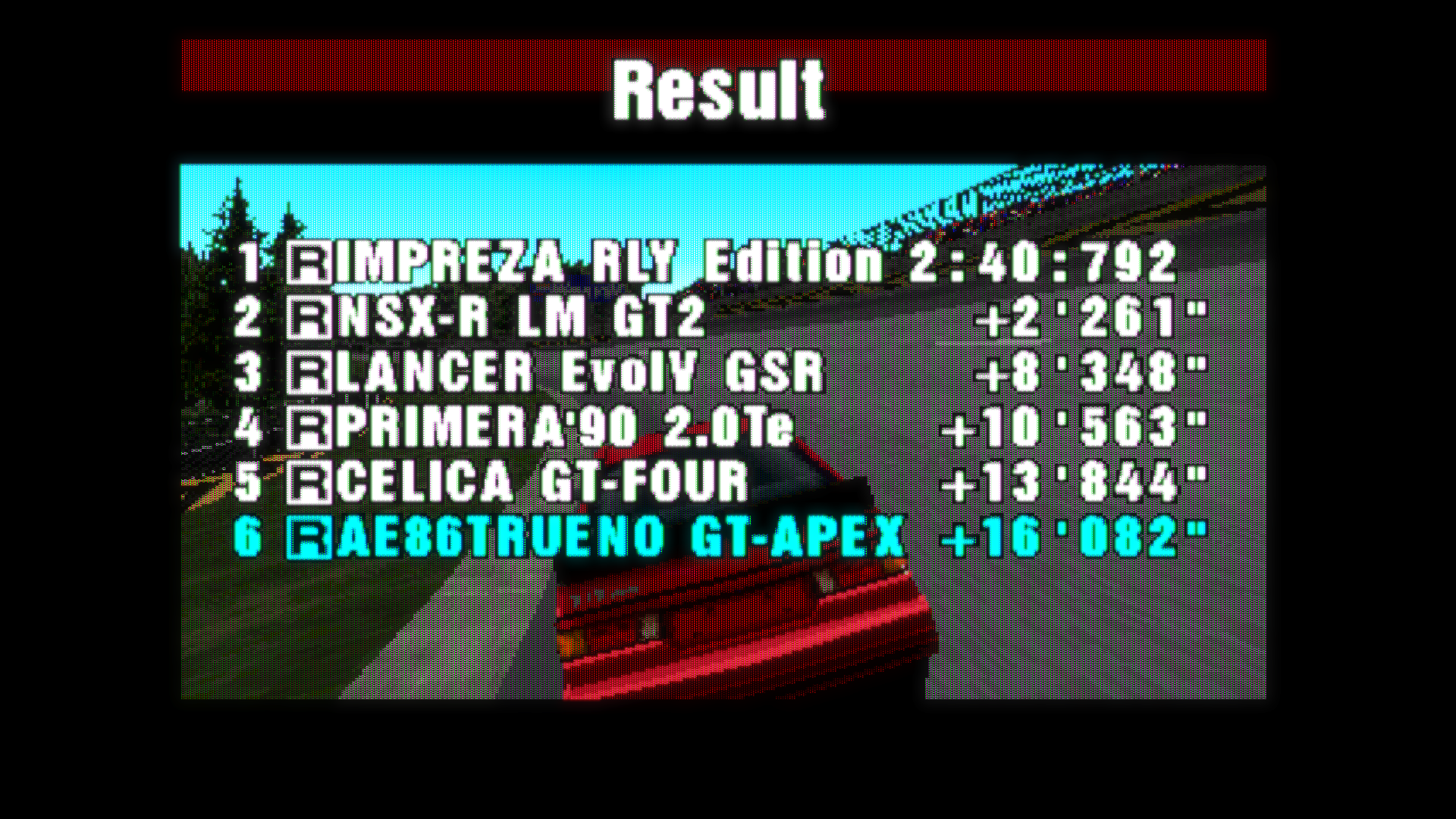
The first attempt didn't get off to the best of starts, but after getting used to the change in the car's handling I finished the series just two points behind the winning Silvia. I reckoned one more attempt was all I would need. Third place at Grand Valley East was a decent start, and was followed by a second place at Laguna Seca. Importantly, each race was won by a different opponent - as a result, I was only one point off the series lead. The Impreza and RX-7 may be the fastest posssible opponents, but it may be beneficial to have them both appear on the grid so that they can take points off each other like this. Another win at Deep Forest followed before a pivotal race at Mid-Field, where I would have to finish second in order for the championship outcome to remain in my hands going into the final race at Apricot Hill. However, the Mid-Field race is the second-hardest race in the series after Grand Valley East, as the track heavily favours power, and in my previous attempt I finished fifth. This time, though, I navigated the twistier middle section of the track to perfection, and drove defensively when needed, to just about hold off the Silvia for that all-important second place. As an added bonus, the RX-7 finished down in fifth, all but eliminating it from title contention.
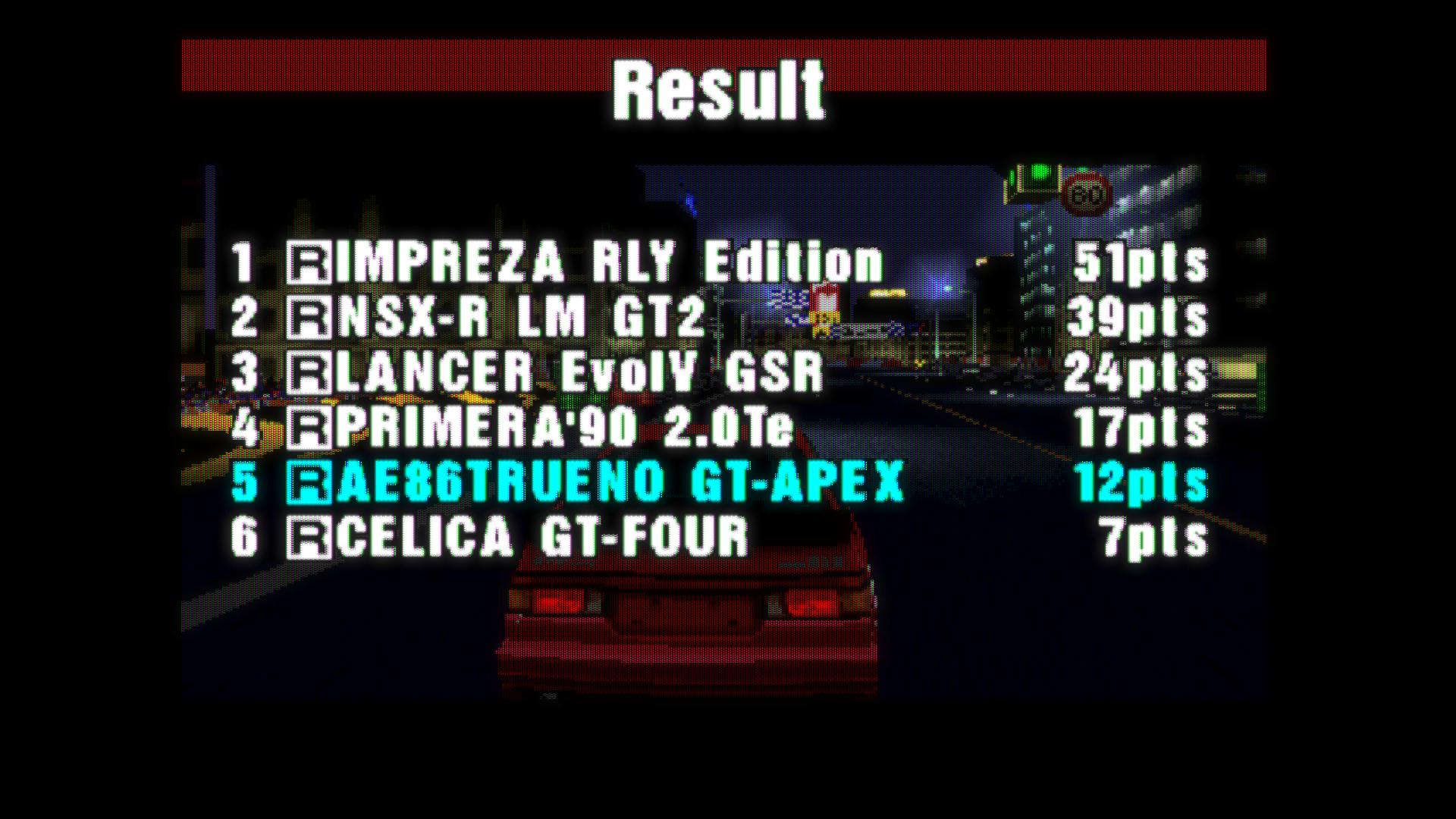
That meant a winner-takes-all showdown between my Trueno and the Impreza at Apricot Hill. I was in the lead by the end of the first lap, but the Impreza and RX-7 would get back in front at times during the middle stage of the race. By the end, though, I had built up enough of a lead in the more technical parts of the circuit that my rivals couldn't make it up on the home straight. With that, a major hurdle in this run had been cleared.
And look at what showed up in my garage...
There's only one thing left to do (well, aside from earning the International A licence that I need in order to enter the series) - take on the GT World League. I'll let this video explain how that went:
Conclusion
When GT1 came out, it was a generational leap for the racing game genre and many thought there was no way it could be improved upon, at least not in this console generation. GT2 came along and proved them all wrong. With its greater variety of cars, tracks, and races, GT2 builds on the platform created by GT1 in a way I don't think anyone but Polyphony Digital saw coming. I also noticed that the racing was a lot closer than in GT1, although this is probably a result of more aggressive rubberbanding rather than a substantial improvement in the opponent AI. Either way, there's a good reason why this remains the peak of the GT series in the eyes of so many people.
Next up: a new console generation looms large, and so does a GT sequel. Until next time...